US-Iran Conflict Escalates as Strikes on Infrastructure Raise War Crime Concerns
Legal experts and the United Nations warn that attacks on power plants, bridges and transport networks may breach international humanitarian law as casualties mount in both nations.
The United States and Iran have entered a renewed phase of full-scale military hostilities following the collapse of a memorandum of understanding signed in Islamabad on 17 June 2026. The breakdown of the truce, which both sides accused each other of violating, has precipitated a cycle of strikes targeting critical infrastructure, drawing sharp criticism from the United Nations and legal scholars over potential breaches of international humanitarian law.
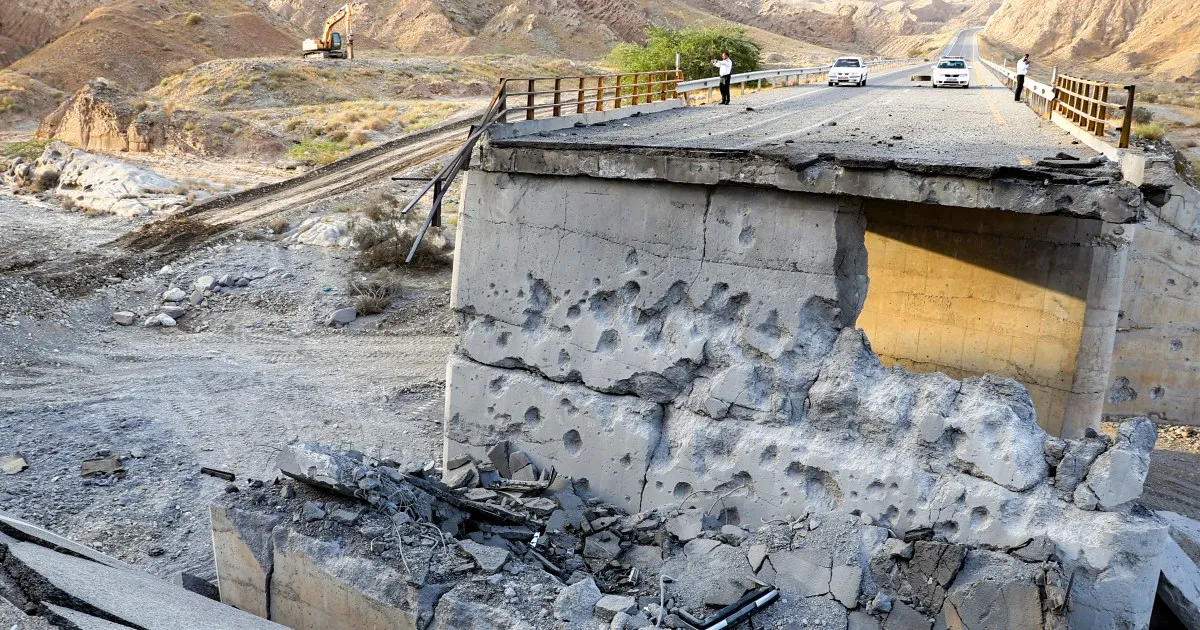
US President Donald Trump has explicitly threatened to destroy Iranian civilian infrastructure to compel a return to negotiations. In a Fox News interview last week, Trump stated, “We’re going to knock out all their power plants. We’re going to knock out all their bridges unless they get to the table and negotiate.” These remarks echo similar threats made in April, signalling a hardening of Washington’s stance as diplomatic efforts stall.
The conflict, which initially began on 28 February 2026 following joint US-Israeli strikes on Iranian nuclear and missile programmes, has seen a significant escalation since mid-July. Iranian authorities report that at least 50 people have died and 500 have been wounded in Iran since 15 July 2026. Dozens of locations in southern and northwestern Iran have been hit in the past week, including military command centres, railways, and airports.
In response, Iran’s Islamic Revolutionary Guard Corps (IRGC) has targeted US military bases in Kuwait, Oman, Jordan, and Qatar. These counter-strikes have resulted in the deaths of at least two US military personnel and have strained regional security. The IRGC insists its operations are directed at US military assets, though the proximity of these bases to civilian populations has raised further concerns.
International humanitarian law, particularly the 1949 Geneva Conventions and their Additional Protocols of 1977, explicitly forbids attacks on civilian infrastructure unless it is being used for military purposes and its destruction offers a definite military advantage. Luke Moffett, a law professor at Queen’s University Belfast, noted that indiscriminate attacks on civilian infrastructure can be prosecuted as war crimes if the risk to civilians outweighs military gains.
The United Nations has expressed particular concern over the targeting of civilian infrastructure in Iran and across the region. A spokesperson for UN Secretary-General Antonio Guterres stated that such attacks are unacceptable. Analysts suggest that US military lawyers may be classifying some targets as “dual-use,” a designation that complicates the legal distinction between civilian and military infrastructure under international law.
Casualty figures from the broader conflict indicate that since the resumption of hostilities in late February 2026, there have been at least 17 US military deaths and over 420 wounded. The intensification of strikes on roads, bridges, and power plants has further destabilised the Strait of Hormuz, a critical artery for global energy supplies, as both nations seek to assert military dominance in the region.