US Inflation Accelerates to Two-Year High Amidst Geopolitical Energy Disruption
Consumer prices rose 3.8 per cent year-on-year, driven largely by surging fuel costs linked to tensions in the Middle East
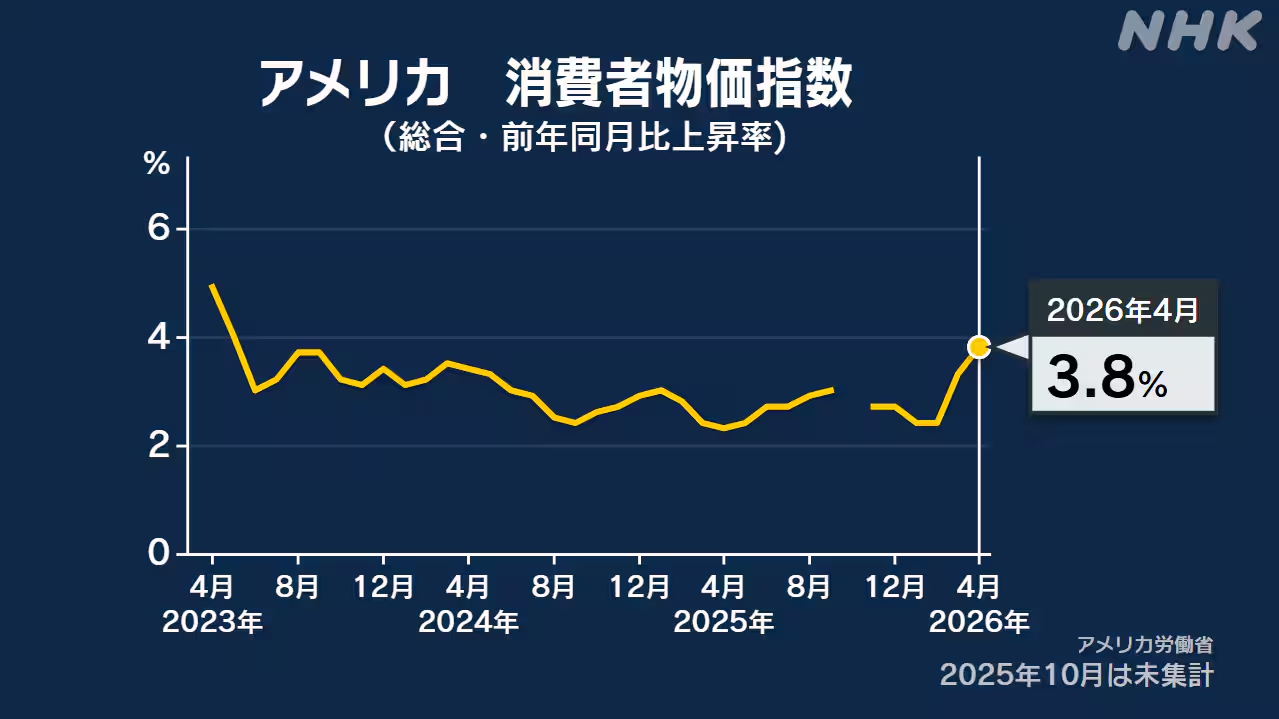
The US Consumer Price Index recorded a sharp increase of 3.8 per cent compared to the same month last year, marking the highest inflation rate in two years and 11 months. This acceleration represents a 0.5 percentage point expansion from the March figure, signalling a renewed upward pressure on domestic purchasing power.
According to data reported by NHK News, the surge in the inflation metric was driven largely by significant rises in gasoline prices. These cost increases are directly attributed to the ongoing geopolitical situation in Iran, which has disrupted global energy markets and forced higher domestic fuel costs for American consumers.
The statistical trajectory indicates that the current inflationary pressure is the most severe seen in nearly three years. While the specific calendar month of the data remains referenced as the previous month relative to the report date, the magnitude of the 3.8 per cent year-on-year jump underscores the volatility currently affecting the US economy.
Concurrent with these economic indicators, significant developments have occurred within the US federal governance structure regarding the Federal Reserve. The United States Justice Department has formally dropped its criminal probe into Federal Reserve Chair Jerome Powell, which had investigated cost overruns in renovations at the central bank's Washington headquarters.
This decision by the Justice Department removes a critical legal obstacle to the confirmation of Kevin Warsh, the nominee for Federal Reserve Chair put forward by President Donald Trump. US Attorney Jeanine Pirro transferred the matter to the Fed's Office of Inspector General, clearing the path for the appointment of the new central bank leader.
The convergence of rising consumer prices and shifts in federal oversight highlights the complex interplay between external geopolitical instability and internal institutional governance. As energy markets remain sensitive to the situation in Iran, the Federal Reserve faces the challenge of managing an economy where inflation has once again accelerated to levels not seen since late 2024.