US House votes to curb Trump on Iran war as talks stall
The US House of Representatives has passed a resolution invoking the War Powers Act to halt military action in Iran, dealing a political blow to President Donald Trump as negotiations with Tehran remain deadlocked.
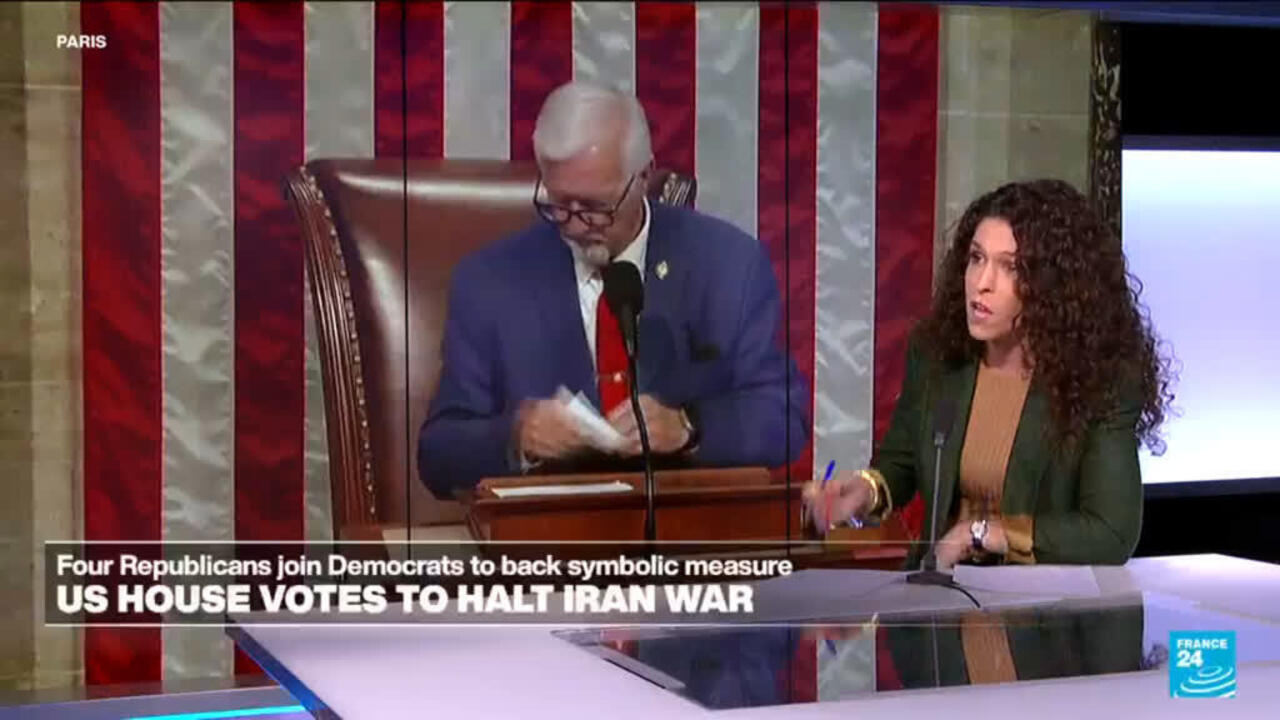
The US House of Representatives has voted 215 to 208 to invoke the War Powers Act, a legislative measure aimed at halting President Donald Trump’s military operations in Iran. The resolution passed after four Republican lawmakers joined Democrats in support, marking a rare bipartisan rebuke of the administration’s conduct of the conflict, which has now entered its fourth month.
This symbolic move deals a political blow to President Trump as efforts to find a deal with Tehran stagnate. The narrow margin of the vote highlights the significant political division within Congress regarding the ongoing hostilities. By invoking the War Powers Act, lawmakers sought to check presidential power in matters of war, although the resolution is widely understood as a symbolic gesture rather than an immediate operational constraint.
Concurrently, diplomatic efforts to end the war have failed to produce a breakthrough. Weeks of complicated talks, characterised by sharp rhetoric and intermittent flare-ups of violence, have not managed to secure an agreement to cease hostilities. The failure to reach a deal has left the Strait of Hormuz closed, a critical chokepoint for global energy markets that is essential to oil supplies.
The inability to reopen the Strait of Hormuz poses significant economic concerns, given its role in global energy distribution. While the specific terms of the stalled negotiations and the exact nature of the recent violence are not detailed, the stagnation in diplomacy underscores the deepening impasse between Washington and Tehran.
The outcome of the House vote reflects the growing pressure on the executive branch to justify the continuation of military action without explicit Congressional approval. As talks remain deadlocked, the resolution serves as a formal expression of legislative dissent, though its long-term impact on the actual conduct of military operations remains unclear.