US House invokes War Powers Act in symbolic rebuke of Trump’s Iran policy
The United States House of Representatives voted 215 to 208 on Wednesday to invoke the War Powers Act, seeking to halt military operations in Iran. However, the resolution is widely viewed as symbolic given the Republican majority in the Senate and President Donald Trump’s veto authority.
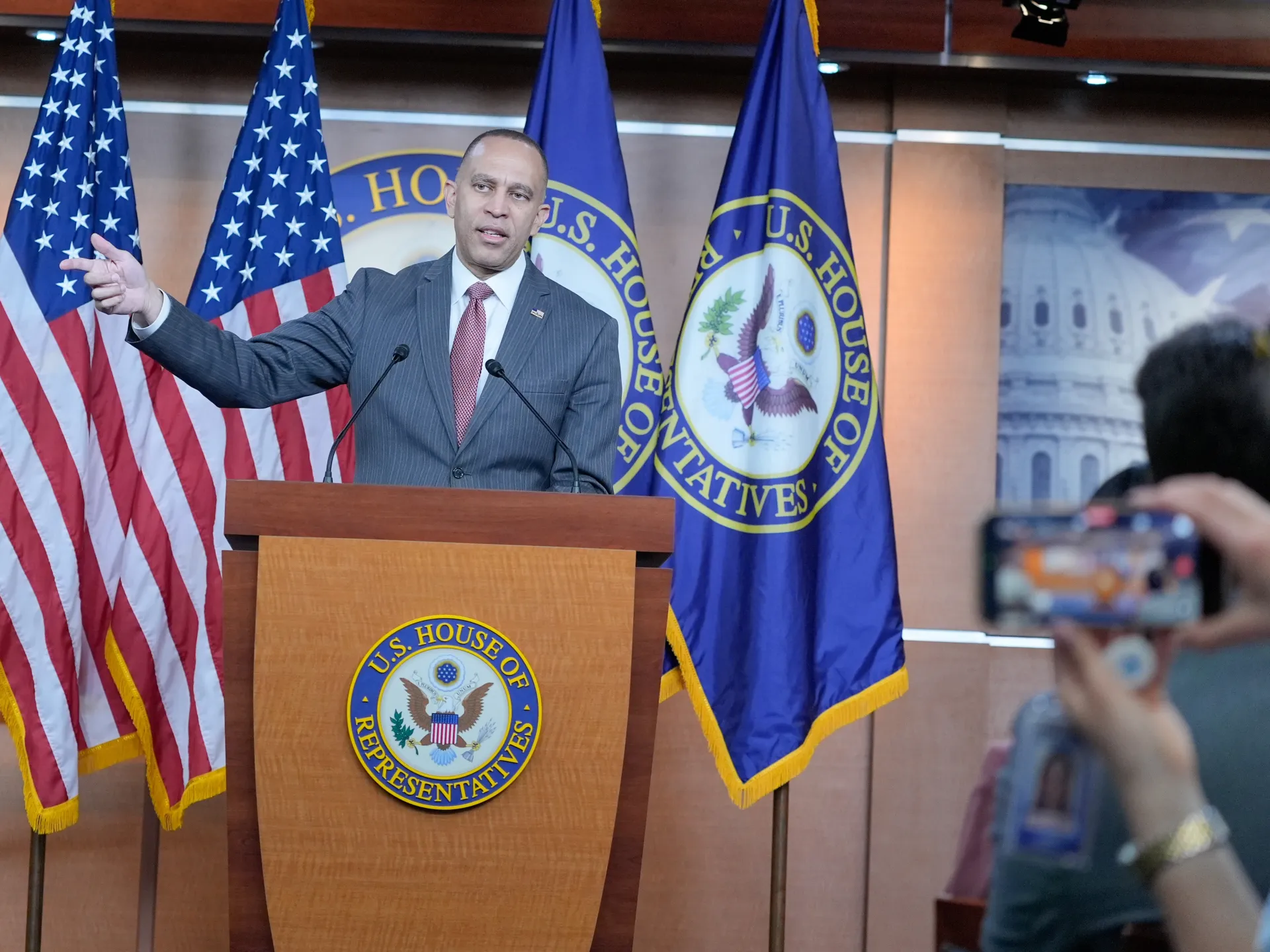
The United States House of Representatives voted 215 to 208 on Wednesday to invoke the War Powers Act, a legislative move aimed at halting President Donald Trump’s military operations in Iran. The resolution passed after four Republican lawmakers joined Democrats in a rare rebuke of the administration’s conduct of the conflict, which has now entered its fourth month. Despite the narrow margin and the bipartisan crossover, the measure is considered largely symbolic, as the Republican-controlled Senate is unlikely to pass the resolution and President Trump retains the power to veto any resulting legislation.
The vote marks the first successful effort by lawmakers to force an end to hostilities under the 1973 Act, which requires the president to seek congressional authorisation before entering an armed conflict unless there is an imminent attack on the United States. Democrats had previously attempted to invoke the Act three times since the conflict began on 28 February, but all prior efforts failed. Wednesday’s success followed a shift in sentiment within the Republican Party, driven by mounting catastrophic effects including thousands of civilian deaths and significant disruptions to global trade.
Four Republicans broke party lines to support the resolution: Tom Barrett of Michigan, Warren Davidson of Ohio, and Thomas Massie of Kentucky, who had previously opposed the war, were joined by Brian Fitzpatrick of Pennsylvania. Their defection highlights growing internal opposition to Trump’s policies, particularly as the president’s approval ratings have dropped and critics argue he failed to secure a concrete, lasting deal with Iran. The administration maintains that the war ended following an April 8 ceasefire, although military blockades and strikes continue.
Tensions between the executive branch and Congress remain high regarding the legal status of the conflict. US Secretary of State Marco Rubio declared to lawmakers that the war is over, arguing that the ceasefire reset the 60-day timeline under the War Powers Act. However, Defense Secretary Pete Hegseth testified that the administration may begin striking Iran again without congressional approval, asserting that the ceasefire terminated hostilities and reset the clock. Hegseth stated that should the president decide to recommence the war, the administration would possess the necessary authorities to do so.
Senator Jeanne Shaheen accused Rubio of lacking accountability and failing to provide Congress with accurate information regarding active hostilities. She cited instances where the administration claimed no active hostilities existed while US forces conducted strikes and Iranian forces attacked US embassies and bases. Lawmakers also requested details on US exit plans for Iran and information regarding the abduction of Venezuelan President Nicolas Maduro in January. While the House vote signals a political shift, the path to legally ending the conflict remains blocked by Senate Republican opposition and the potential for a presidential veto.