US-guided vessels transit Strait of Hormuz as Tehran escalates regional tensions
Two US-flagged merchant ships completed the passage on 4 May 2026, but Iranian officials warn that any foreign intrusion will be met with attack.
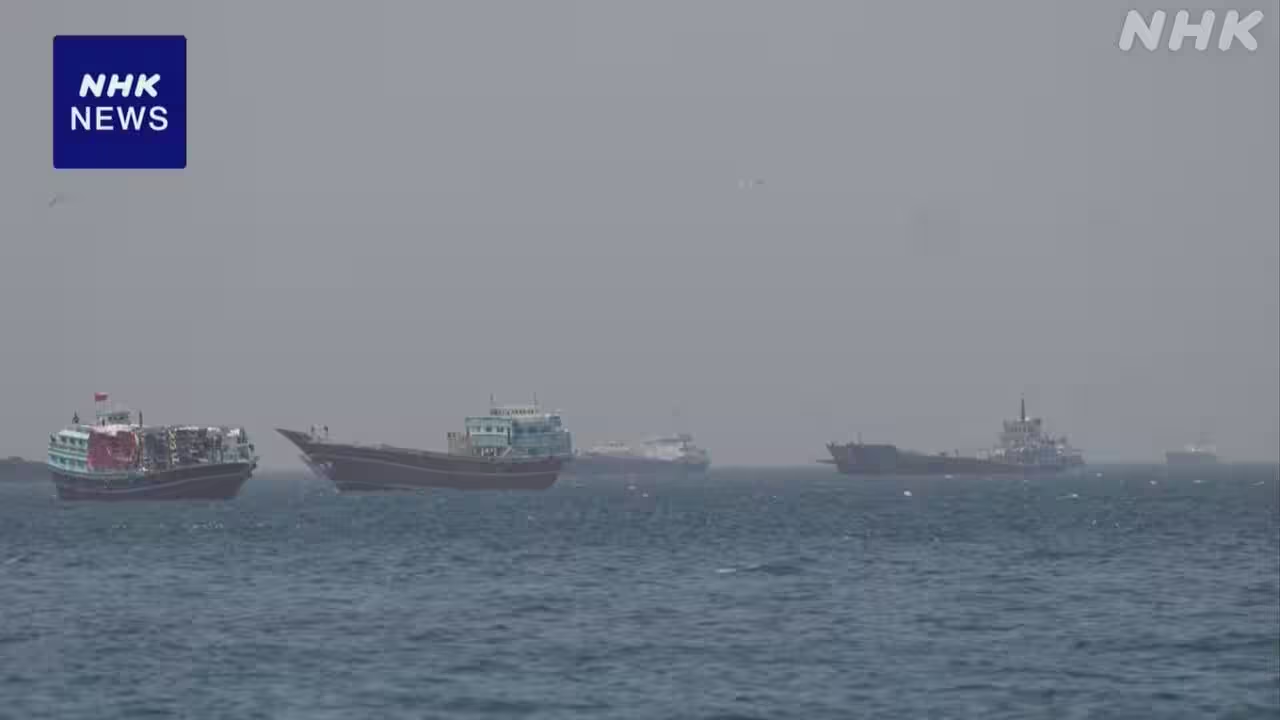
The United States initiated a new operation on 4 May 2026 to guide merchant vessels through the Strait of Hormuz, a move designed to enforce freedom of navigation and counter potential blockades in the Persian Gulf. The strategic waterway, which connects the Gulf to the open ocean, remains a focal point of friction between Washington and Tehran, with the American administration seeking to break through restrictions that have hampered overall traffic flow.
Despite the broader suspension of general shipping activity through the strait, the US effort achieved a specific objective on the day of the operation. Two US-flagged merchant vessels successfully completed the transit under American guidance, marking a tangible step in the administration's policy to ensure the waterway remains open to international commerce. This achievement, however, has not been met with universal acceptance in the region.
Tehran has reacted with strong opposition to the American initiative, viewing the guidance of foreign ships as an unacceptable intrusion into the waterway. Iranian officials have stated explicitly that any approach or intrusion by foreign vessels would be met with attack, a statement that has rapidly intensified regional tensions. This hardline response underscores the deepening divide between the two nations regarding control and access to the strategically vital strait.
The situation now involves a complex dynamic between the United States, Iran, and the United Arab Emirates, with reports indicating active coordination between Washington and the UAE regarding the security of the passage. While the US operation aligns with historical efforts such as Project Freedom to move overall traffic, independent tracking data suggests that the successful transit of the two US-flagged ships does not necessarily signal a full reopening of the route for all vessels.
As the diplomatic row escalates, the focus remains on whether the US can maintain the momentum of its navigation policy without triggering a military confrontation. The Iranian threat of attack represents a stated policy position that has not yet resulted in direct military engagement in this specific incident, but the risk of escalation looms large over the region.
The successful passage of the two merchant ships serves as a test of the US commitment to breaking the blockade, yet the Iranian response highlights the limited scope of the current operation. Until broader traffic flows are restored and the threat of attack is de-escalated, the Strait of Hormuz remains a volatile flashpoint in the ongoing geopolitical struggle between Washington and Tehran.