US expands refugee cap for white South Africans amid suspension of conflict zone admissions
The State Department cites an "unforeseen emergency" to allocate 10,000 spots exclusively to white South Africans, a move experts describe as politicising refugee protection while suspending resettlement for those from Afghanistan, Sudan, and the Democratic Republic of the Congo.
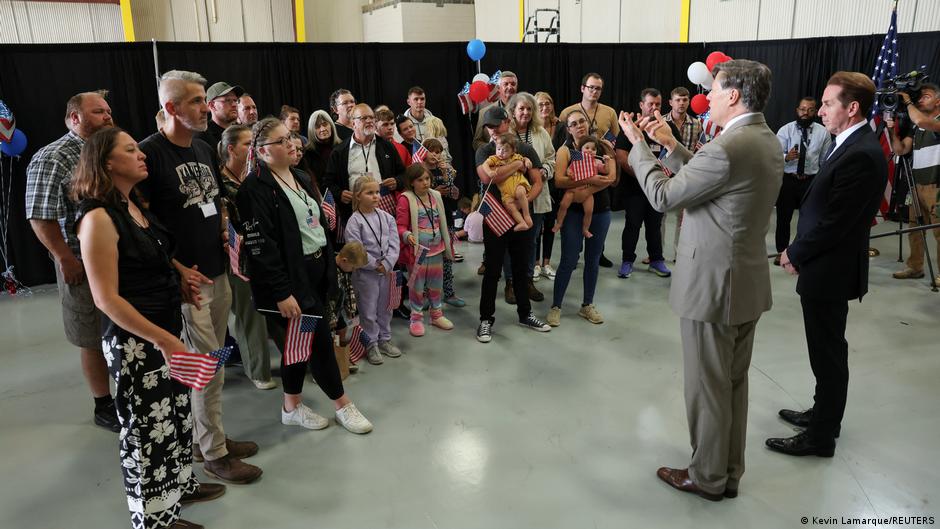
The US government has increased the annual refugee admission cap for the 2026 fiscal year from 7,500 to 17,500, reserving the additional 10,000 spots exclusively for white South Africans. The State Department justified the expansion by citing an "unforeseen emergency" and alleged persecution of white Afrikaners, claims that the South African government and independent experts have rejected due to a lack of statistical evidence. The policy is estimated to cost approximately $100 million, a figure that contrasts sharply with the suspension of resettlement programs for refugees fleeing conflict in Afghanistan, the Democratic Republic of the Congo, and Sudan.
Data indicates a significant shift in the geographic origin of US refugee admissions under the current administration. Between October 2025 and May 2026, the US admitted roughly 6,700 refugees, with all but three originating from South Africa. This stands in stark contrast to the 2024 fiscal year, which saw over 100,000 refugees admitted, including a substantial number from Africa. Gustavo De Carvalho of the South African Institute of International Affairs (SAIIA) argued that the selective nature of the policy violates core principles of refugee protection, which should be based on exposure to risk rather than ethnic criteria.
Oscar van Heerden, a research fellow at the University of Johannesburg, suggested the policy is designed to undermine South Africa’s international standing. He argued that the administration aims to counter the "moral authority" Pretoria gained through its legal case against Israel at the International Court of Justice (ICJ). By framing South Africa as committing genocide against its white minority, Van Heerden stated the administration seeks to portray the country’s accusations against Israel as hypocritical.
The refugee policy adjustment occurs amidst broader diplomatic friction between Washington and Pretoria. The Trump administration has previously cut aid to South Africa, boycotted the 2025 G20 summit in Johannesburg, and excluded the country from the 2026 G20 conference in Miami. Experts note that South Africa’s membership in BRICS, which advocates for trading in local currencies and reducing reliance on the US dollar, has contributed to this deterioration in relations.
Van Heerden described the approach as a punitive measure targeting a smaller BRICS partner to avoid direct confrontation with major powers like China, Russia, or India. He noted that the administration’s focus on "America First" fiscal consolidation has led to cuts in foreign aid and civil service programs. De Carvalho warned that this selective humanitarianism risks undermining the US’s ability to present itself as a global moral authority, suggesting the move is an attempt to gain political influence rather than provide genuine protection.