US demands greater Asian defence spending as Asia-Pacific rearmament accelerates
Defense ministers gather in Singapore as military budgets surge, with Washington pushing for shared burden while Beijing seeks stability through diplomatic channels.
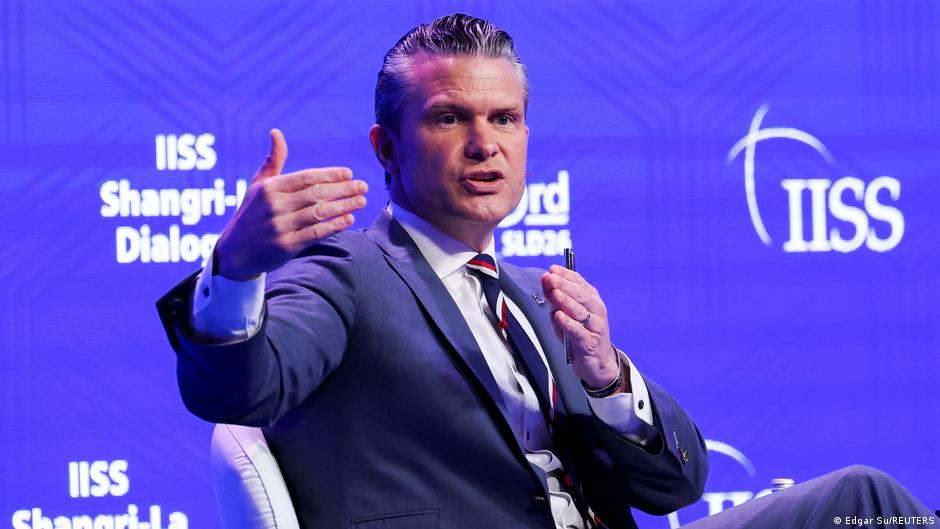
Defense ministers and security experts convened in Singapore for the 2026 Shangri-La Dialogue, hosted by the International Institute for Strategic Studies, to address a security environment defined by escalating military expenditures and intensifying rivalry between the United States and China. The conference, which has been held annually since 2002, served as a platform for leaders to navigate a region marked by volatility, from ongoing conflicts in Myanmar to historical tensions between India and Pakistan, and Thailand and Cambodia.
US Secretary of War Pete Hegseth used the platform to announce plans for a $1.5 trillion US defence budget and urged Asian allies to significantly increase their own military spending. Hegseth argued that a favorable balance of power requires capable allies with real military strength and political resolve, noting that for too long the security of the region has rested disproportionately on American power while other partners allowed their capabilities to atrophy. He explicitly praised nations including Australia, Japan, the Philippines, Singapore, Malaysia, Thailand, Vietnam, and India for recognising that peace requires strength.
Asian leaders, including Vietnamese President To Lam and Australian Defence Minister Richard Marles, linked security to development but acknowledged the deteriorating regional environment. President Lam stressed that competition between states is natural but must be contained within a legal framework to ensure it remains limited and predictable. Marles echoed this sentiment, stating that security is utterly linked to development, and that where prosperity and human development are questioned, volatility and instability follow.
Despite these diplomatic appeals for stability, the primary response to the worsening security environment is rearmament. According to the Stockholm International Peace Research Institute, military spending in the Asia-Pacific rose by 8.1% in 2025 to $681 billion. Hegseth stated this figure was insufficient, calling on allies to invest more in their own security. The idea that more weapons do not automatically create more security played only a marginal role, with only the International Committee of the Red Cross President Mirjana Spoljaric voicing concerns about the human and material loss associated with massive arms production.
While Hegseth avoided direct mention of Taiwan, referencing a new vision of "constructive strategic stability" agreed upon by Presidents Trump and Xi, Chinese officials called for an end to arms sales to the island. Former Vice Foreign Minister Cui Tiankai described such sales as detrimental to stability. Meanwhile, Germany reaffirmed its commitment to regional security, citing new funding for the Bundeswehr and participation in maritime exercises like RIMPAC, signalling a broader international effort to manage strategic complexity in the Pacific.