US Defence Department adds Chinese tech giants to military-linked blacklist
The Pentagon’s updated entity list targets Alibaba, Baidu, and Tencent, reigniting tensions just weeks after President Donald Trump and President Xi Jinping met in Beijing.
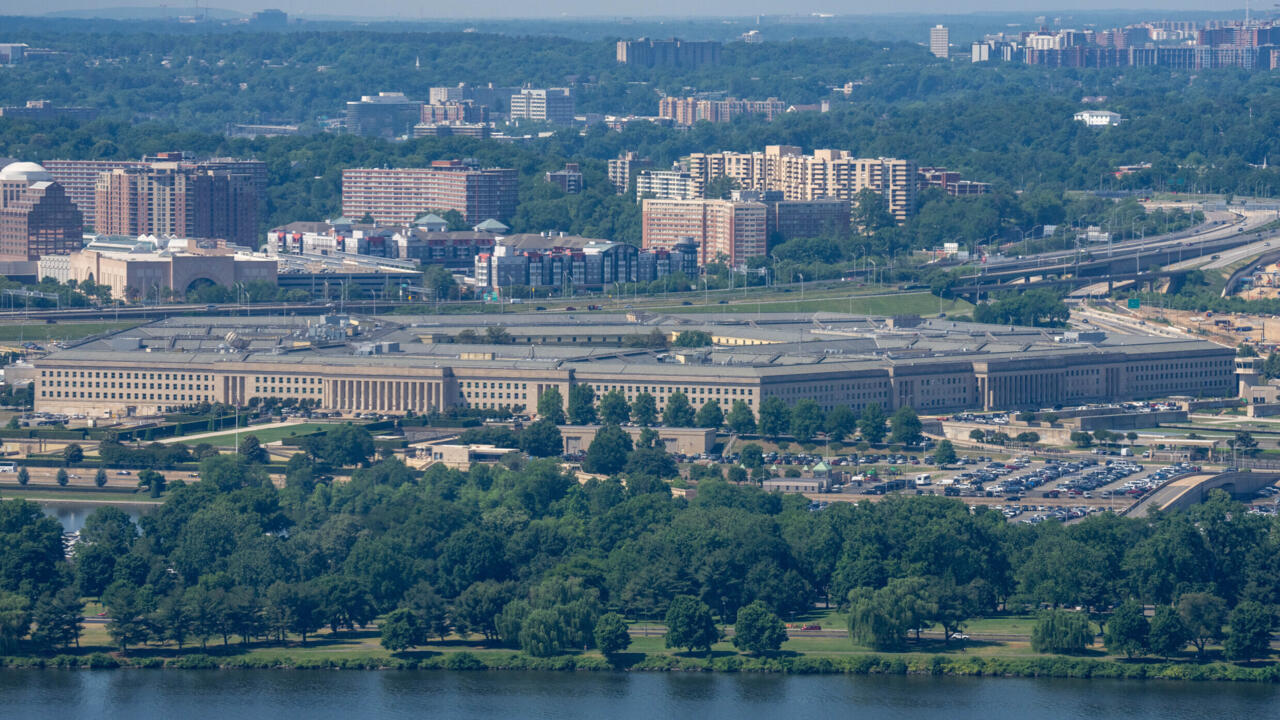
The US Department of Defence has formally added major Chinese technology firms, including Alibaba, Baidu, and Tencent, to a blacklist of entities accused of supporting the Chinese military. The designation, unveiled by the Pentagon, has drawn sharp rebuke from Beijing, which described the move as part of a broader pattern of "unreasonable suppression" and urged Washington to correct its "erroneous practices".
Foreign Ministry spokesman Lin Jian stated during a news briefing that China consistently opposes the US generalisation of national security concepts to target Chinese enterprises. The announcement arrives in a delicate diplomatic window, coming just weeks after US President Donald Trump and Chinese President Xi Jinping met in Beijing to discuss stabilising bilateral relations. Trump has since invited Xi to visit Washington in September, though the latest sanctions risk complicating these efforts to maintain stability between the world’s two largest economies.
The updated list is largely consistent with a version briefly released and then withdrawn by the Pentagon in February. The primary deviation in this iteration is the reinstatement of two memory chipmakers, ChangXin Memory Technologies and Yangtze Memory Technologies, which had been removed from the previous draft. The Department of Defence asserts that these firms, alongside the major tech conglomerates, are aiding the Chinese military apparatus.
Representative John Moolenaar, chair of the House Select Committee on China, framed the designations as a critical warning to American businesses and government levels. In a statement, Moolenaar urged US entities to cease commercial ties with the listed companies, arguing that continued engagement risks enabling China’s military ascendance and threatening US national security.
The targeted firms have categorically rejected the accusations. Baidu described the allegations as "entirely baseless" on Chinese social media, stating there is no credible justification for its inclusion and promising to use all available options to secure its removal. Alibaba termed its placement on the list a "mistake" and threatened legal action, asserting that it is not part of any military-civil fusion strategy.
While the immediate legal implications for the blacklisted companies are described as limited, the move is widely interpreted as a precursor to more punitive measures. The list also includes pharmaceutical firm WuXi AppTec and humanoid robot start-up Unitree. Tencent was already subject to similar designations prior to this update, highlighting the ongoing scrutiny of China’s technology sector by US regulators.