US completes tenth night of strikes on Iran as regional conflict widens
President Masoud Pezeshkian declares full-scale war as diplomatic efforts intensify in Lebanon and Houthi threats loom over Saudi Arabia.
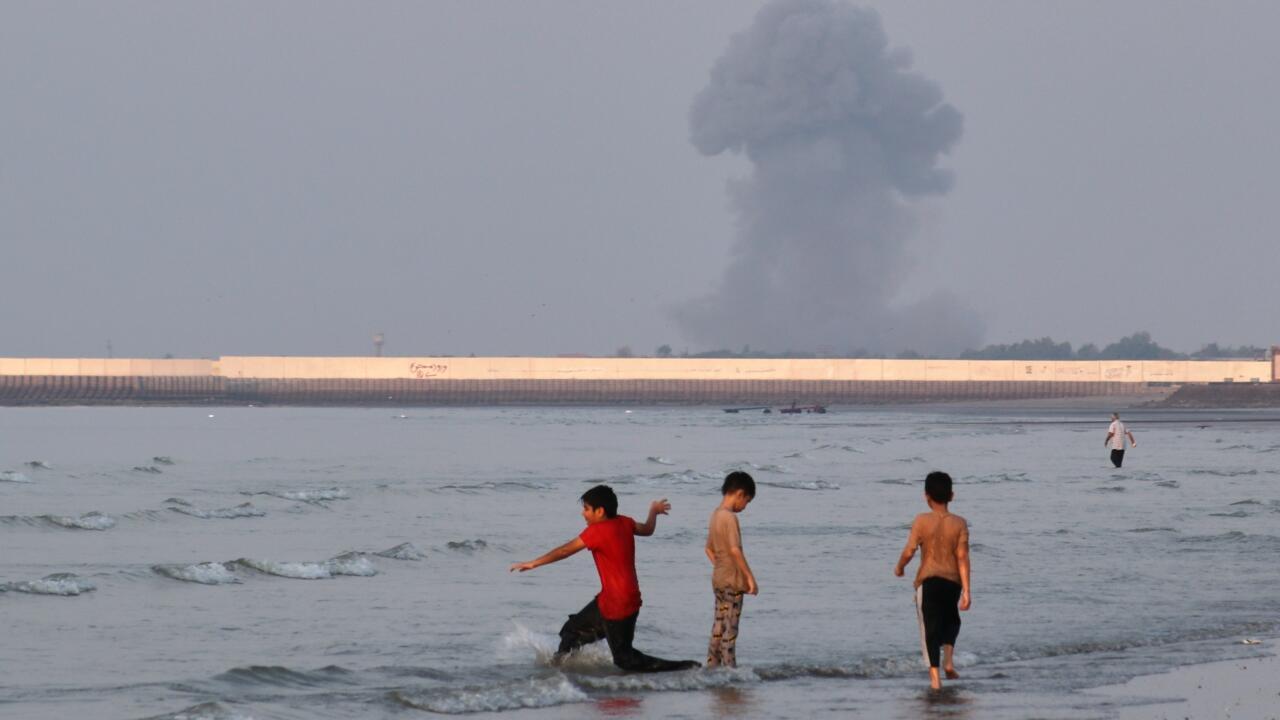
The United States military concluded its tenth consecutive night of airstrikes against Iran late on Monday, with US Central Command (CENTCOM) confirming that operations lasted approximately five hours. The strikes targeted Iranian military command centres, missile and drone launch sites, maritime capabilities, and air defence systems. According to CENTCOM, the primary objective of the campaign is to degrade Tehran’s capacity to attack commercial vessels transiting the Strait of Hormuz.
In response to the escalating hostilities, the Iranian army claimed early Tuesday that it had launched surface-to-surface missiles at the US Arifjan base in Kuwait. State news agency IRNA, quoting army public relations officials, stated that ground forces specifically targeted HIMARS mobile missile systems stationed at the facility. The base, located south of Kuwait City, hosts elements of the US Air Force, Navy, Marine Corps, and Coast Guard.
Iranian President Masoud Pezeshkian characterised the deteriorating situation as a "full-scale war," a sentiment echoed by US President Donald Trump, who warned Tehran it would pay "many times over" for every American soldier killed. The conflict has already triggered significant regional spillover, with Houthi rebels threatening to blockade Saudi ports in retaliation for the broader war, a move that could disrupt Riyadh’s oil exports and impact the global economy.
Diplomatic efforts are simultaneously underway to contain the violence in Lebanon. Lebanese President Joseph Aoun is scheduled to meet President Trump in Washington to discuss pressure on Hezbollah, Israel’s key ally in the region. The meeting follows the US announcement regarding the implementation of an agreement granting the Lebanese army control over "pilot zones" in southern Lebanon, areas situated just outside territories occupied by Israel since March.
Despite these diplomatic initiatives, Israel has maintained a firm stance, refusing to withdraw from occupied Lebanese lands as long as Hezbollah remains armed. This position aligns with Washington’s demands. Meanwhile, maritime security concerns persist in the Gulf, with the United Kingdom Maritime Trade Operations (UKMTO) reporting that a tanker was struck by an unknown projectile in the Strait of Hormuz, eight nautical miles northeast of Oman’s Limah. Authorities are currently investigating the incident.