US charges Kataib Hezbollah commander in global terror plot
Mohammad Baqer Saad Dawood al-Saadi faces life in prison after being arrested overseas in a joint operation credited to US diplomatic and intelligence assets.
The United States Department of Justice has arrested and charged Mohammad Baqer Saad Dawood al-Saadi, a 32-year-old Iraqi national and senior commander of the Iran-backed armed group Kataib Hezbollah. A criminal complaint unsealed in Manhattan federal court accuses al-Saadi of orchestrating at least 18 attacks and attempted attacks across the United States, Canada, and Europe. Prosecutors allege the campaign of violence was designed to compel the US and Israel to halt their recent military actions against Iran.
Federal prosecutors identify al-Saadi as a high-level leader within Kataib Hezbollah, an Iraq-based fighter group designated by the US as a foreign terrorist organisation. The FBI states that al-Saadi has been an active member of the group since at least 2017, working closely with Iran’s Islamic Revolutionary Guard Corps (IRGC) to advance regional operations. Investigators note he maintained personal relationships with top-tier military leaders, including the late IRGC-Quds Force commander Qassem Soleimani, and used social media platforms to promote their agendas.
Following the commencement of the military conflict between the US, Israel, and Iran in late February 2026, prosecutors allege al-Saadi became a central figure in coordinating international retaliation. The complaint outlines a violent trail of plots, including the mid-March firebombing of a Bank of New York Mellon building in Amsterdam, a shooting at the US consulate in Toronto, and a stabbing in London that wounded an American citizen. French police also thwarted an attack he allegedly coordinated against a Bank of America office in Paris, discovering a homemade bomb packed with explosives.
Last month, al-Saadi turned his attention to US soil. Working with an FBI informant and an undercover law enforcement officer, he allegedly offered $10,000 in cryptocurrency to launch simultaneous attacks on a New York City synagogue and Jewish centres in California and Arizona. Court documents note that al-Saadi told the informant he was willing to kill people and sent a text message to the undercover officer after making a $3,000 crypto down-payment, stating: “I wanna see good news tonight … not tomorrow bro.”
Al-Saadi was arrested overseas and brought to the US. FBI Director Kash Patel confirmed the arrest, describing al-Saadi as “another high-value target responsible for mass global terrorism.” In a post on X, Patel praised the tracking and capture as a “righteous mission executed brilliantly” by agents and tactical units, while extending special credit to US Ambassador Tom Barrack in Turkiye for leading the joint operation to bring the suspect home.
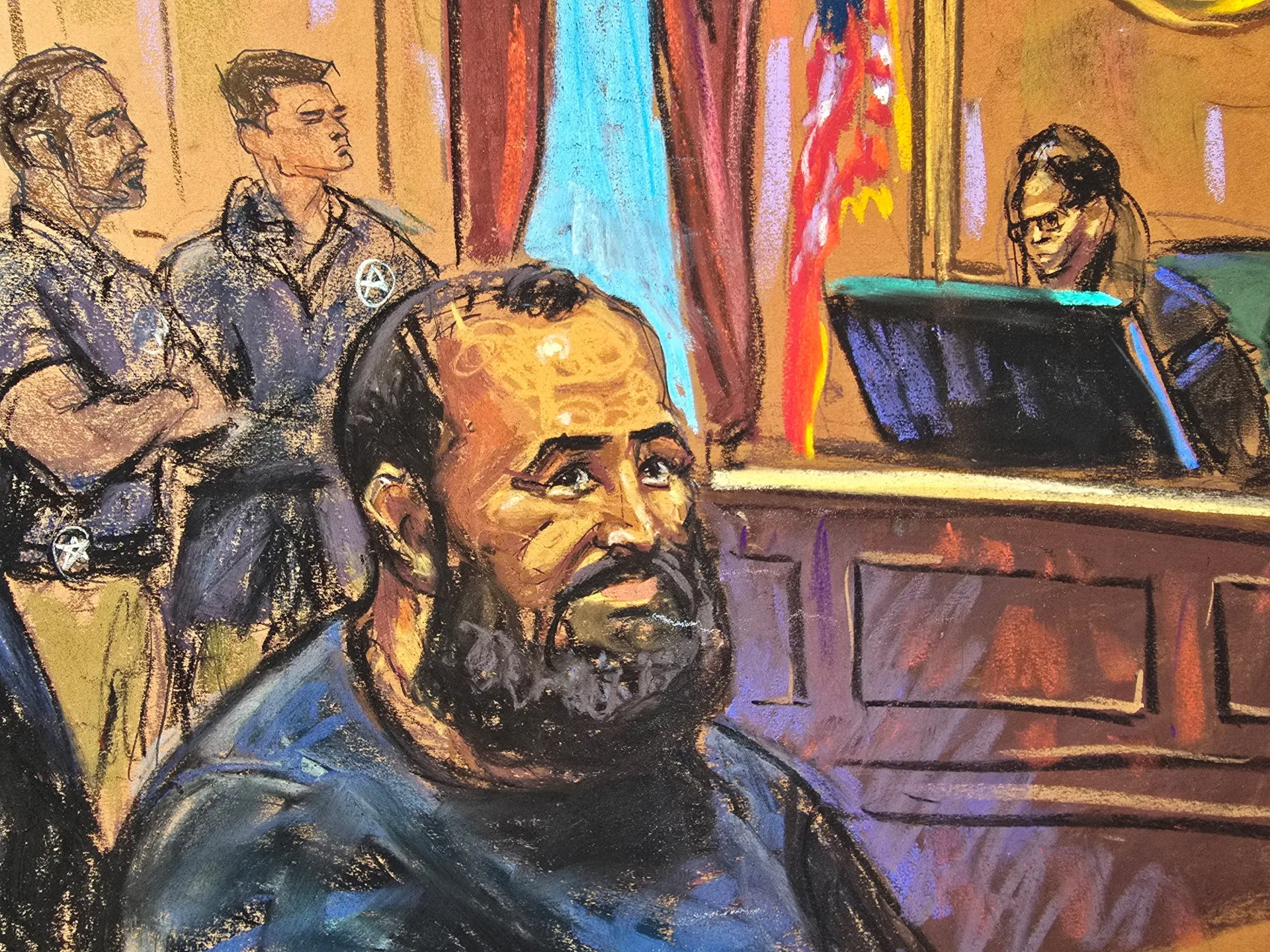
Al-Saadi appeared in Manhattan federal court on Friday, where he was hit with a six-count criminal complaint. The specific federal charges include terrorism and explosives counts. He smiled throughout the initial hearing but did not speak and was not required to enter a plea. He will remain jailed for the time being, though he retains the right to request a bail hearing.
Through his defence lawyer, Andrew Dalack, al-Saadi claimed he is a “political prisoner” and a “prisoner of war,” arguing that the US government is persecuting him solely because of his past ties to Soleimani. Dalack noted that al-Saadi has been kept in solitary confinement since arriving at a federal jail in Brooklyn on Thursday night, calling the treatment “unusual.” If the government secures a conviction on these counts, al-Saadi faces a maximum penalty of life in federal prison.