US CEOs join Trump to Beijing for trade and technology talks
President Donald Trump arrives in China with a roster of corporate leaders aiming to extend a tariff truce and secure investment commitments ahead of midterm elections.
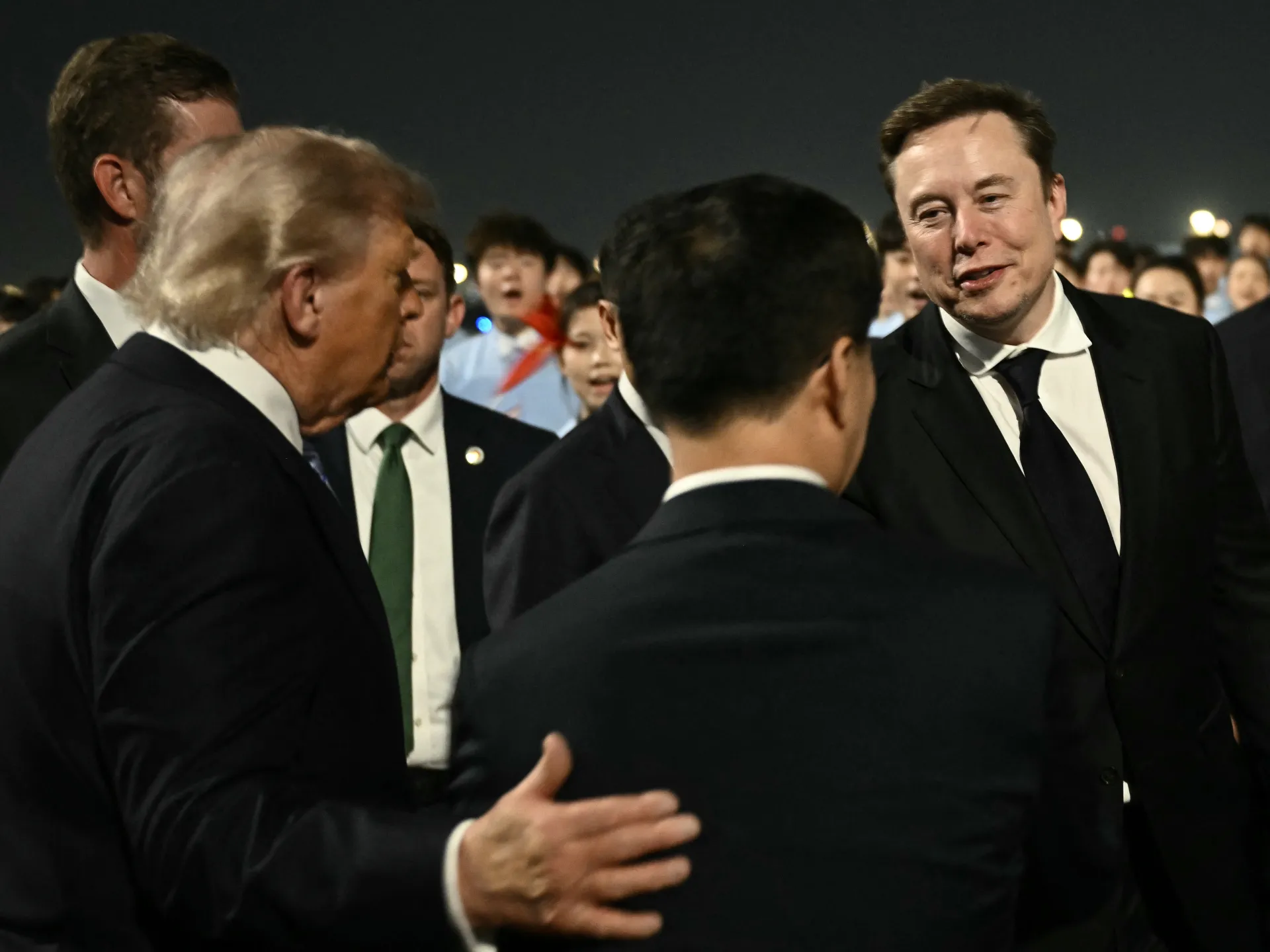
More than a dozen United States business leaders have accompanied President Donald Trump on a state visit to Beijing, where he is holding talks with Chinese President Xi Jinping regarding trade, technology, and artificial intelligence. The delegation, which includes executives from Tesla, Apple, Nvidia, and Boeing, arrived in the Chinese capital to discuss expanding business operations and resolving regulatory hurdles in a market that remains central to their global supply chains.
The visit occurs against the backdrop of a trade war characterised by reciprocal tariffs exceeding 100 per cent. Both leaders are expected to discuss the extension of a one-year truce on tariffs and the export of Chinese rare earth metals, an agreement initially reached during their previous meeting in South Korea last October. Chinese officials have welcomed the cooperation, assuring American companies of broader prospects in the Chinese market while seeking reciprocal economic concessions.
Key figures in the delegation include Tesla’s Elon Musk, Apple’s Tim Cook, and Nvidia’s Jensen Huang. Musk, who previously led the Department of Government Efficiency until its closure in November 2025, is reportedly seeking to purchase $2.9 billion worth of solar panel manufacturing equipment from Chinese suppliers. He is also seeking clearance from Chinese regulators to expand the adoption of Tesla’s Full Self-Driving assistance system, a move critical for the company’s operations at its Shanghai Gigafactory, which reported a 26.7 per cent increase in sales in the first four months of 2026.
Nvidia’s Huang joined the delegation late at a stopover in Alaska, aiming to unlock stalled sales of H200 AI chips in China following new US security requirements. Before export curbs were implemented earlier this year, Nvidia controlled approximately 95 per cent of China’s advanced chip market. The new rules require Nvidia to ensure adequate domestic supply and undergo third-party reviews before exporting components, a process Huang described as having gone "excellently" in initial meetings with Chinese officials.
Boeing’s CEO Kelly Ortberg expressed confidence that the summit would result in orders for approximately 500 737 Max jetliners and 100 wide-body aircraft. Meanwhile, Apple’s Cook, who announced his departure in September, has shifted iPhone production for the US market to India to mitigate tariffs, while promising $100 billion in other US investments. The presence of these executives underscores the administration’s focus on securing market access and investment commitments to bolster Trump’s popularity ahead of the November midterm elections.
During media interactions in Beijing on 14 May 2026, Trump declined to answer questions regarding Taiwan, marking the first US presidential visit to China since 2017. Independent China strategist Andrew Leung noted that the delegation signals Trump’s need to present tangible economic wins to his political base, while China presses for the relaxation of tariffs and sanctions. The summit represents a significant diplomatic shift, though significant geopolitical divisions remain regarding Iran, Ukraine, and artificial intelligence.