US and Israeli strikes compound Iran’s structural water crisis amid ceasefire talks
Iran’s baseline water stress is rated “extremely high” by the World Resources Institute, a situation worsened by military targeting of civilian assets including a Qeshm Island desalination plant.
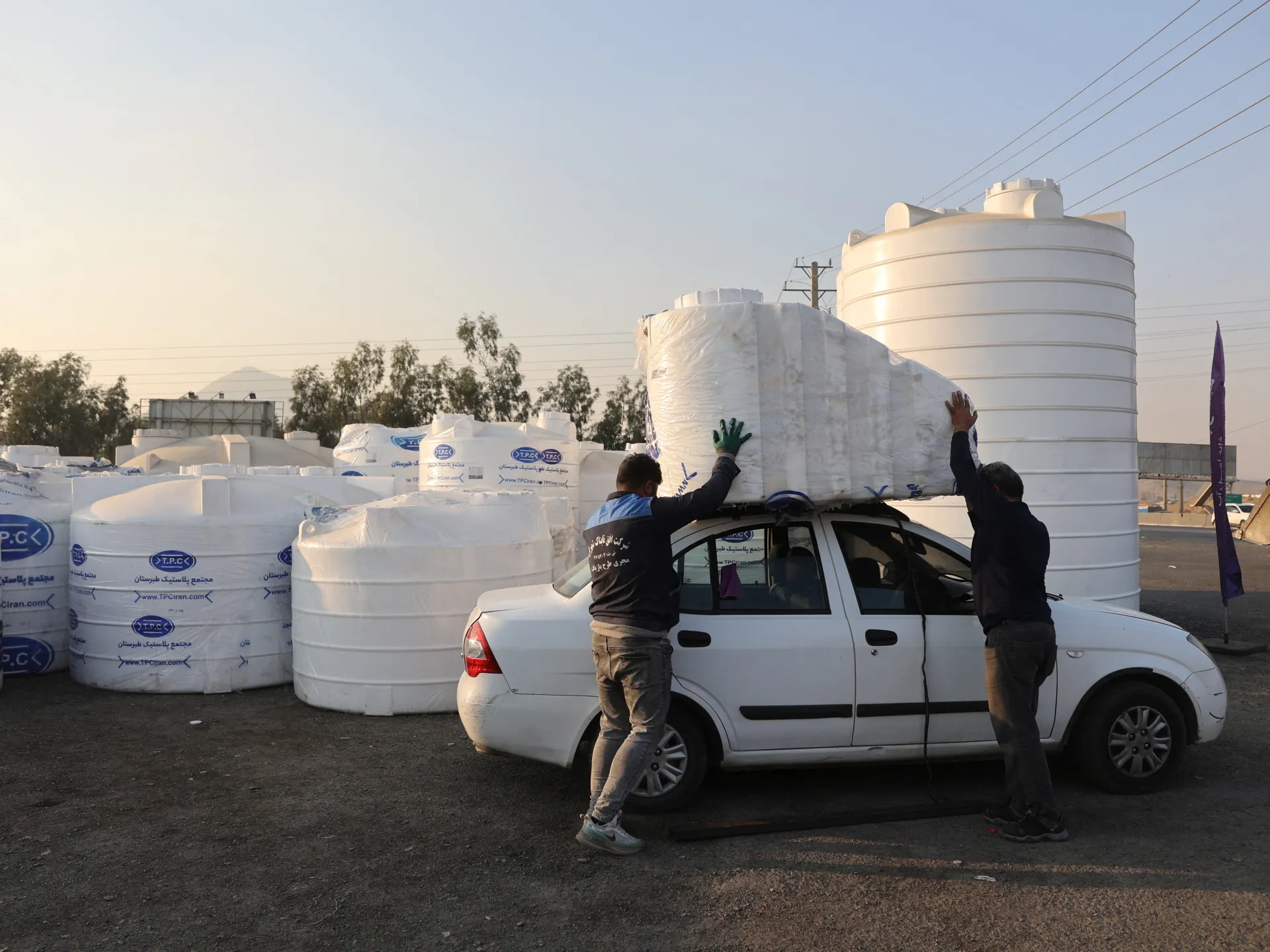
Iran’s ongoing water crisis has been significantly exacerbated by military attacks from the United States and Israel on civilian water infrastructure, compounding a humanitarian emergency driven by years of drought and mismanagement. As Tehran engages in negotiations with Washington to conclude the three-month conflict, the destruction of critical assets has diverted resources away from reconstruction and environmental remediation, further straining supplies for a population already facing “extremely high” baseline water stress.
The most recent escalation occurred on March 7, when Iranian Foreign Minister Abbas Araghchi confirmed that the United States had bombed a freshwater desalination plant on Qeshm Island in the Strait of Hormuz. The strike disrupted water supplies for 30 villages, illustrating the vulnerability of Iran’s civilian infrastructure to military action. While the full impact of attacks on energy and water pipelines remains to be assessed, the timing coincides with a period when the government’s focus and financial resources are heavily directed toward the war effort.
This military dimension adds to a pre-existing crisis characterised by five consecutive years of drought and declining precipitation. By November 2025, Iran was experiencing its worst water shortage in decades, with water reserves nearly empty. Tehran’s Amir Kabir Dam held only 8 percent of its capacity, and 19 major dams across the country had run dry. The severity of the situation prompted President Masoud Pezehkian to warn that rationing might be necessary, and that Tehran could face evacuation if rainfall did not return by December.
Structural inefficiencies have long undermined Iran’s water security. According to the World Resources Institute’s Aqueduct Data, the country utilises more than 80 percent of its renewable water supplies annually. This pressure is driven by a self-sufficiency policy that accounts for approximately 90 percent of water use, subsidised pricing that encourages excessive irrigation, and poor agricultural practices. International sanctions since the 1979 Islamic Revolution have further hindered the modernisation of water infrastructure, leaving the system unable to cope with climate change impacts such as increased evaporation and altered rainfall patterns.
The environmental toll of the conflict has also accelerated ecological degradation. An analysis by LiveScience indicates that between February 28 and March 14, the destruction of infrastructure released approximately 5.6 million tonnes of carbon dioxide and other greenhouse gases. In response to the dual pressures of war and scarcity, Iranian authorities have initiated cloud seeding operations and announced penalties for excessive water consumption. President Pezehkian has called for the adoption of modern agricultural technologies, including hydroponic and aeroponic farming, while condemning unauthorised groundwater drilling as the nation seeks to stabilise its resources during the ongoing diplomatic negotiations.