US and Iran tensions escalate after strikes in Strait of Hormuz
Washington cites self-defence for attacks on Iranian air defence systems, while Tehran asserts its right to retaliate in a critical global oil chokepoint.
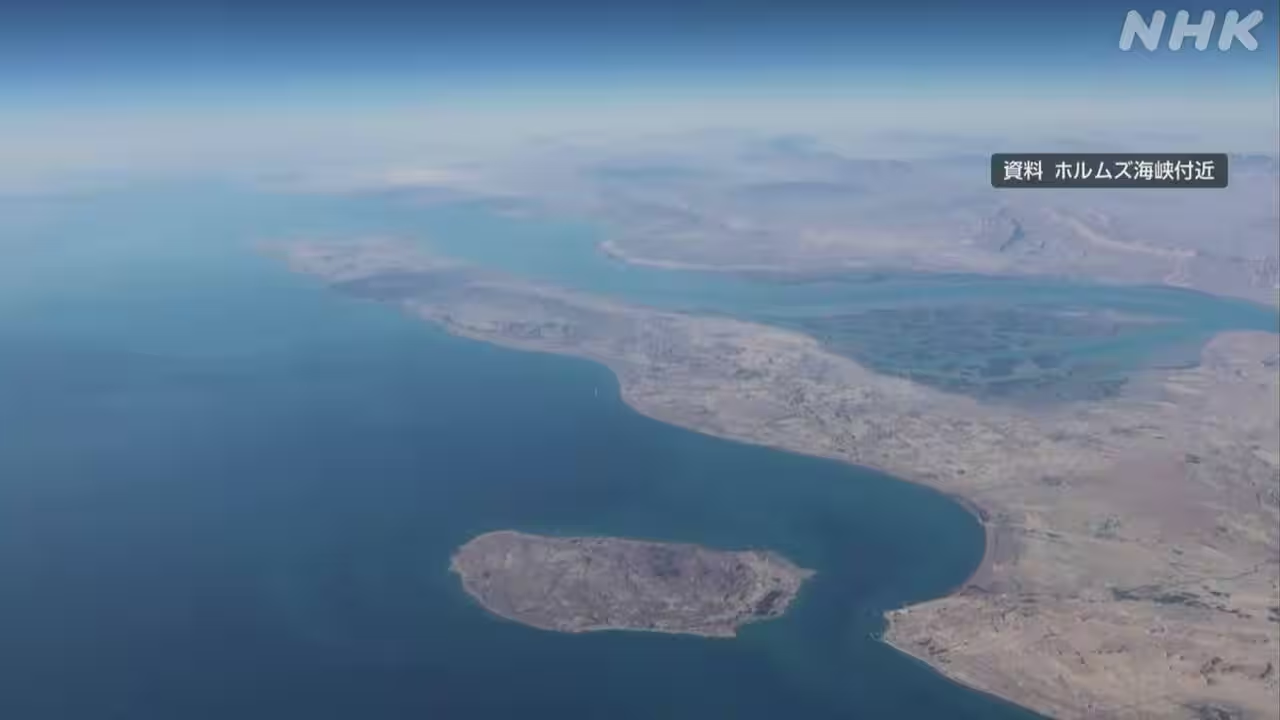
The United States military has completed strikes against Iranian air defence facilities and surveillance radar in the Strait of Hormuz, marking a significant escalation in regional hostilities. The US Central Command announced the operation on 10 June 2026, characterising the action as an act of self-defence following the shooting down of a US helicopter in the same airspace.
According to the US military, the targeted infrastructure included air defence systems and surveillance radar installations. The decision to launch the strikes was directly linked to the incident involving the helicopter, although specific details regarding the identity of the aircraft or the precise circumstances of its destruction were not provided in the initial reports.
Iran has responded to the US offensive by asserting its right to retaliate. This declaration signals a potential for further military engagement between the two nations, heightening geopolitical tensions in a region that serves as a vital chokepoint for global oil supplies. The strategic importance of the Strait of Hormuz means that any disruption to security in the area carries broader economic and diplomatic implications.
The incident underscores the volatile nature of US-Iran relations, which have historically been strained by disputes over regional influence and nuclear programme concerns. While the immediate trigger for the current crisis was the helicopter shoot-down, the broader context involves long-standing institutional and policy disagreements that continue to shape military posturing in the Middle East.
As of the latest updates from NHK News Japan, the full scale of Iranian retaliatory actions remains unclear. The assertion of the right to retaliate represents a political stance rather than a confirmed military operation, leaving the international community monitoring the situation for further developments in this critical maritime corridor.