US and Iran set for working-level talks on 30 June amid Hormuz Strait tensions
Diplomatic channels are reopening between Washington and Tehran, with Pakistan’s foreign ministry indicating that working-level discussions are expected to resume on 30 June, following heightened rhetoric over the strategic waterway.
Pakistan’s Ministry of Foreign Affairs has indicated that working-level talks between the United States and Iran are expected to resume on 30 June. The mediation comes at a critical juncture in regional diplomacy, as tensions over the Strait of Hormuz have escalated into direct diplomatic confrontations between the two nations.
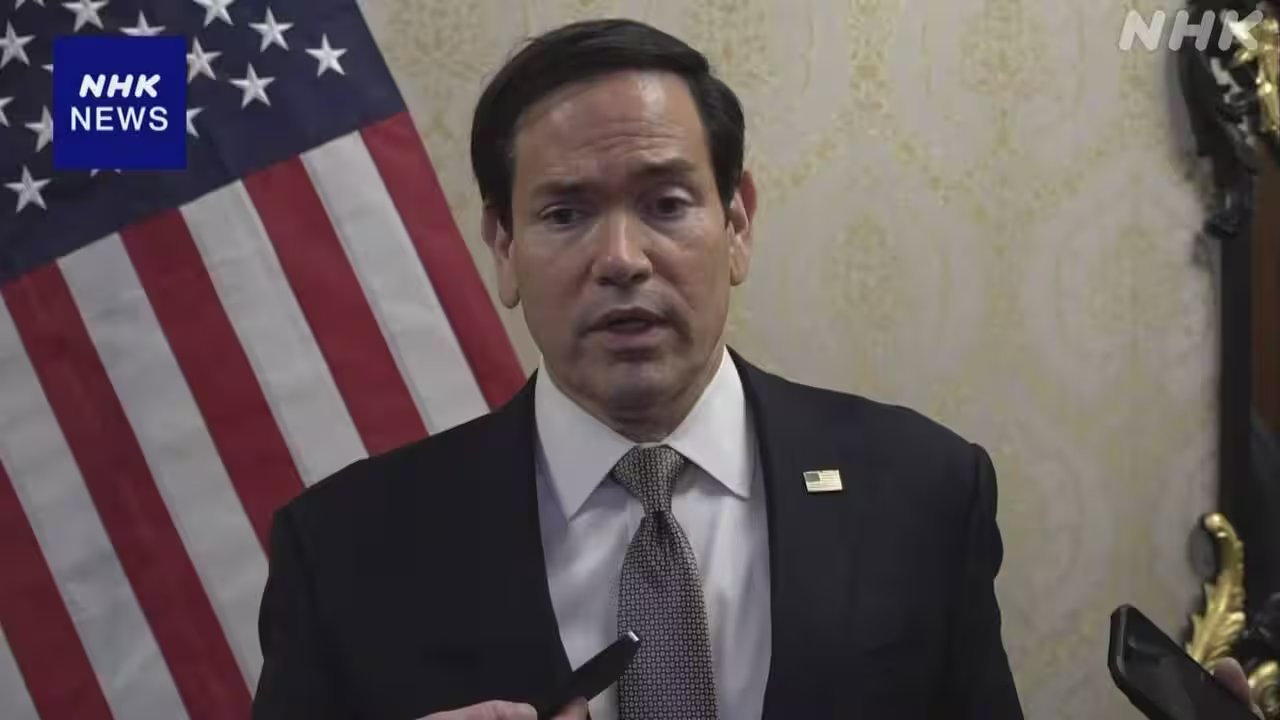
The immediate catalyst for this diplomatic development follows US Secretary of State Marco Rubio’s public rejection of Tehran’s assertion that it intends to charge fees for ships transiting the Strait of Hormuz. Rubio reiterated the United States’ opposition to the proposed tolls, marking a firm stance against Iran’s latest demands regarding the strategic maritime route.
Iran’s military command has previously declared the waterway closed to all traffic, stating it would target any vessel attempting to pass through. This declaration followed Iranian strikes on two ships and recent US airstrikes in southern Iran. The threat to commercial shipping has drawn sharp rebukes from Washington, with US Central Command denying the closure and maintaining that commercial vessels continue to transit the strait.
The resumption of talks, facilitated by Pakistan, suggests a shift from military posturing to diplomatic engagement. While the specific agenda for the 30 June meeting remains undefined, the timing coincides with a period of intense scrutiny over freedom of navigation in the Persian Gulf.
International observers are watching closely to see if these working-level discussions can de-escalate the current standoff. The involvement of a third-party mediator highlights the complexity of the geopolitical landscape and the urgent need for a mechanism to address the conflicting claims over maritime sovereignty and security.