US and Iran exchange fire as Strait of Hormuz blockade tightens and peace talks stall
Washington enforces naval restrictions on Iranian shipping while Tehran claims retaliatory strikes on US assets, even as diplomatic efforts to end the months-long conflict remain deadlocked.
The United States military has launched what it described as "self-defence" strikes against Iranian targets, including a ground control station on Qeshm Island in the Strait of Hormuz. US Central Command (Centcom) stated the actions were a direct response to Iranian ballistic missiles and drones fired at commercial ships and Gulf states, specifically Kuwait and Bahrain. The escalation marks a significant intensification of hostilities as ceasefire negotiations for the months-long conflict have stalled following failed talks over the weekend.
Centcom reported that Iranian forces fired two missiles at Kuwait and three at Bahrain, all of which broke apart or were intercepted before reaching their targets. The command also confirmed the downing of three attack drones launched toward civilian mariners transiting regional waters. In retaliation, Iran claimed it had struck US bases and helicopters in a regional country using missiles and drones. The Islamic Revolutionary Guard Corps (IRGC) issued a warning that disrupting security in the Strait of Hormuz would carry a "heavy price" for the US military.
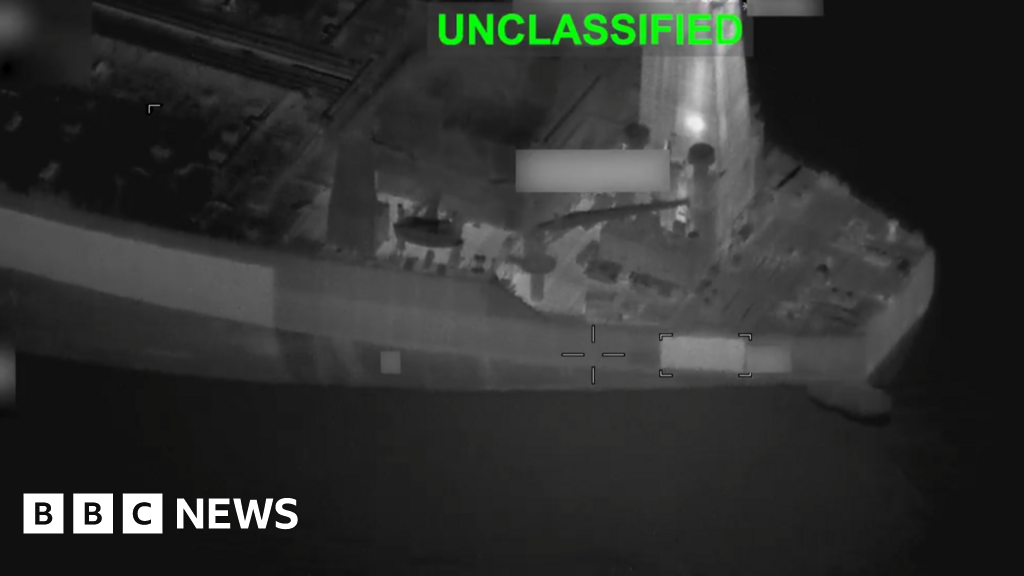
Parallel to the aerial exchanges, the US military disabled an unladen, Botswana-flagged oil tanker, the M/T Lexie, in international waters. Centcom stated that a US aircraft fired a Hellfire missile into the vessel’s engine room after the crew ignored repeated warnings over a 24-hour period while sailing towards Iran’s Kharg Island. Footage purportedly showing the moment of the strike was released by the command. Iran has not publicly commented on the incident, and the BBC has contacted the Botswana government for a response.
The disabling of the tanker is part of a broader naval blockade enforced by the US since 13 April, which targets all vessels entering or exiting Iranian ports. Centcom noted that six commercial vessels have been disabled and 122 redirected since the blockade began. The US strategy aims to restrict Iranian maritime activity, though the military continues to engage targets that pose an immediate threat to shipping and allied nations hosting US forces.
Amidst the military escalation, US Secretary of State Marco Rubio testified before Congress for the first time since the war began. Rubio clarified that Washington has not offered sanctions relief to Iran in exchange for reopening the strait, stating that any such relief would be conditional on progress regarding Iran’s nuclear programme. Despite the ongoing conflict, Rubio declared to lawmakers that "the war is over," a statement made during a tense exchange regarding the US strategy for ending the hostilities.