US and Iran agree to communication mechanism for Strait of Hormuz amid ceasefire talks
Washington and Tehran establish a liaison system to de-escalate tensions following recent military exchanges, while the US asserts Tehran has not yet accepted International Atomic Energy Agency inspectors.
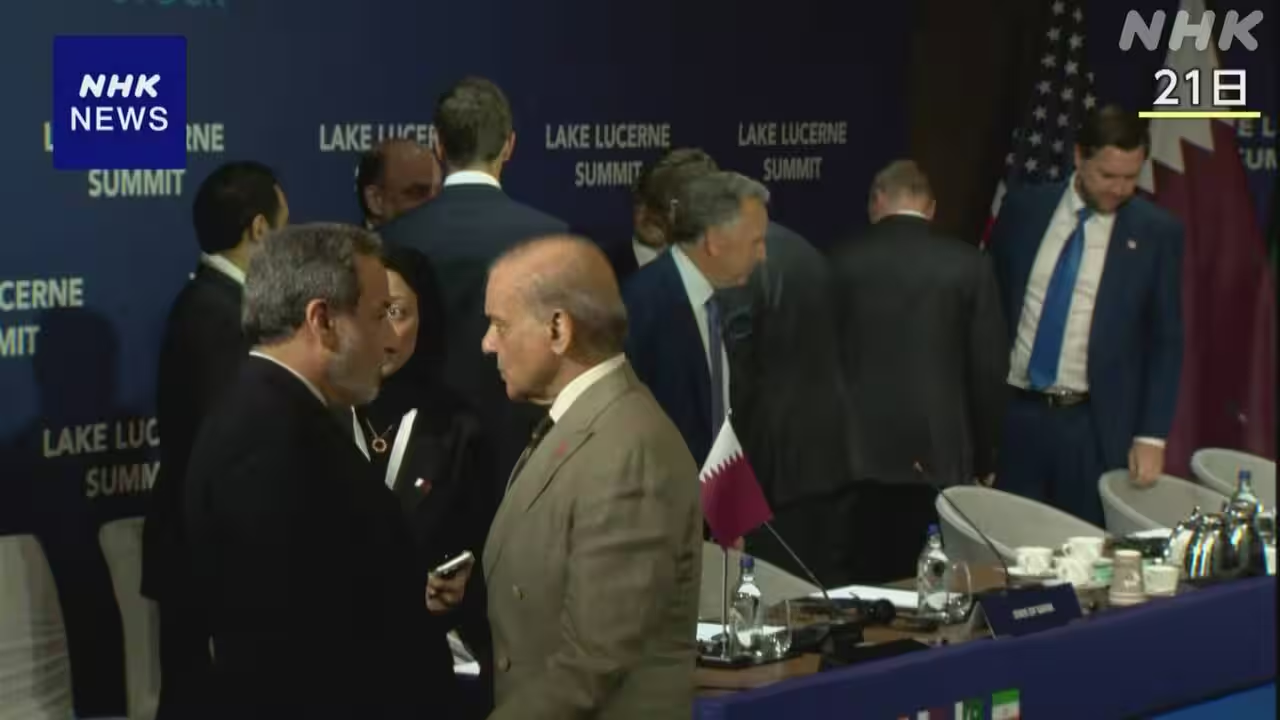
The United States and Iran have concluded high-level consultations grounded in a memorandum designed to end hostilities, resulting in a formal agreement to establish a communication mechanism for the Strait of Hormuz. According to reports from NHK News Japan, the parties focused their discussions on de-escalating regional tensions and ensuring the safety of maritime navigation through the strategically vital waterway.
The newly agreed-upon liaison system aims to guarantee safe passage for vessels transiting the Strait, a critical shipping route that had recently become the focal point of military threats. This development follows a period of heightened instability, during which Iran’s military command declared the waterway closed to all traffic and threatened to target any ships attempting to pass. The agreement represents a significant step toward stabilising the area, which had seen Iranian strikes on two vessels and subsequent US airstrikes in southern Iran.
Despite the progress on maritime security, the consultations highlighted ongoing friction regarding nuclear oversight. The US side noted during the talks that Iran has not yet accepted inspections by the International Atomic Energy Agency (IAEA). This assertion underscores the broader complexities of the negotiations, where security concerns and nuclear non-proliferation issues remain intertwined.
The context of these talks is marked by conflicting narratives regarding the status of the Strait. While Iranian authorities had previously threatened closure, US Central Command had denied the waterway was shut, stating that commercial ships continued to transit the area. The new communication mechanism seeks to bridge these operational gaps and prevent further incidents that could escalate into broader conflict.
Observers note that the full details of the ceasefire memorandum and its specific terms have not been fully elaborated in public reports. The long-term viability of the new communication channel remains uncertain given the recent history of hostilities and the unresolved issues surrounding IAEA access. The outcome of these high-level discussions will likely depend on the subsequent implementation of these agreements at the working level.