US and China issue divergent accounts of Beijing summit outcomes
Post-summit statements from the White House and the Chinese Foreign Ministry reveal significant discrepancies regarding trade figures, nuclear policy, and strategic stability following President Donald Trump’s visit.
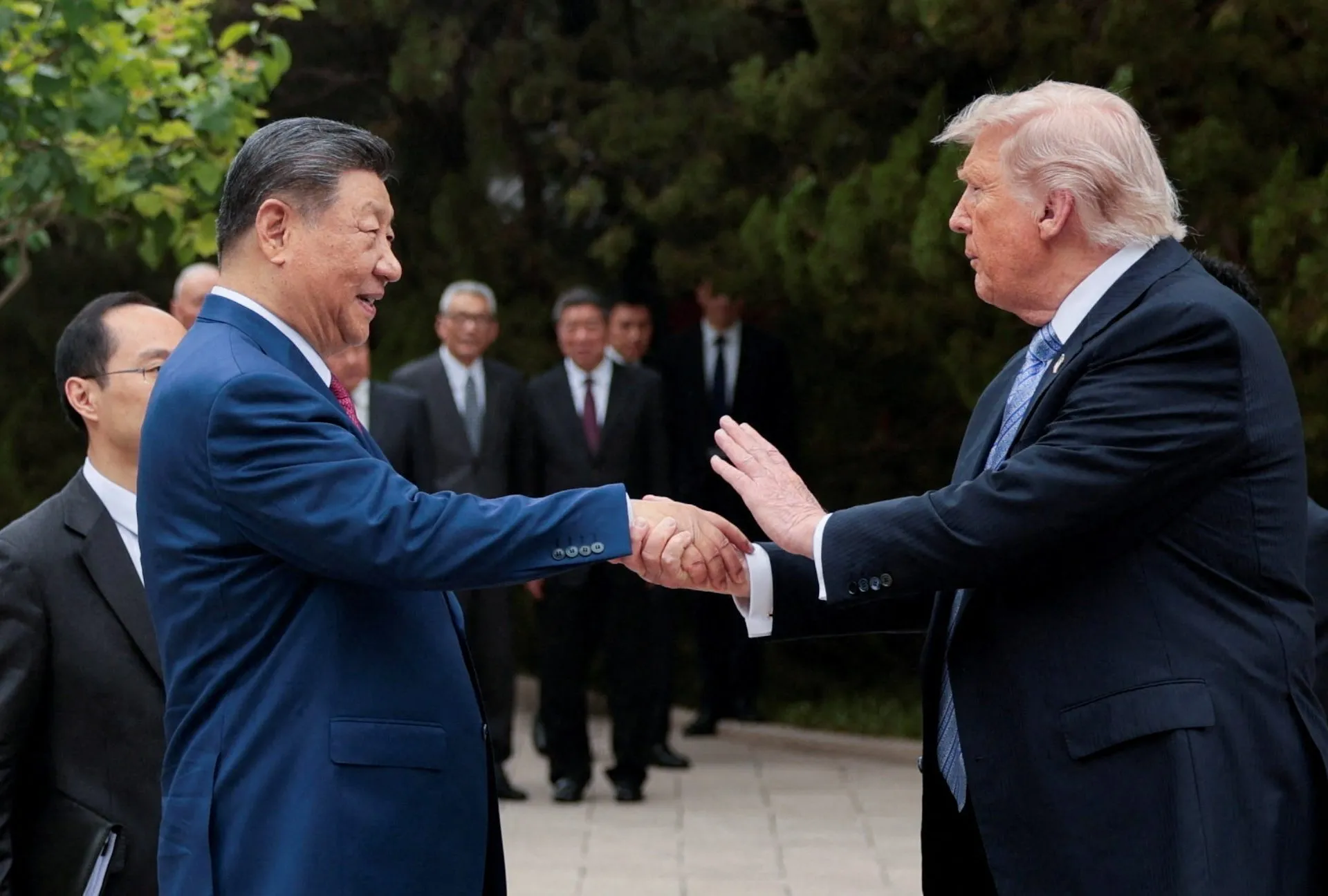
US President Donald Trump and Chinese President Xi Jinping concluded a two-day summit in Beijing on 15 May 2026, marking the first visit by an American president to China since 2017. While both leaders issued post-summit statements highlighting a new vision for "strategic stability" in bilateral relations, the texts diverged significantly on specific economic and security outcomes. The White House emphasised trade agreements and security commitments, whereas Beijing’s statement omitted specific trade figures and instead focused on diplomatic warnings regarding Taiwan.
The White House claimed agreements on trade deals, including a reported purchase of 200 Boeing jets by China. Trump told Fox News that this figure was significantly lower than the 500 predicted by markets, a discrepancy that caused Boeing shares to fall by more than 4 percent on Friday. If confirmed, this would mark China’s first purchase of US jets in almost a decade. However, the Chinese Foreign Ministry statement made no reference to this deal or any other specific business agreements, and Boeing has not independently confirmed the transaction.
On security matters, the two sides presented conflicting narratives regarding Iran. The White House stated that both countries agreed Iran must never possess nuclear weapons. In contrast, the Chinese statement did not explicitly mention the nuclear stance, instead describing the ongoing conflict as one that "should never have happened" and calling for a political settlement that accommodates all parties. Beijing also noted that Iran has approximately 440kg of uranium enriched to 60 percent, falling short of the 90 percent threshold required for a weapon.
Discussions on the Strait of Hormuz also yielded divergent public accounts. The White House reported that Xi opposed the militarisation of the strait and expressed interest in purchasing more US oil to reduce dependence on the waterway. These points were absent from the Chinese readout, which instead acknowledged that the conflict had put a heavy strain on global economic growth and energy supply stability. Both sides did, however, acknowledge the need for the strait to remain open to support the free flow of energy.
The summit agenda also covered artificial intelligence and Taiwan, areas where institutional alignment remained elusive. Nvidia CEO Jensen Huang made a last-minute addition to the trip, but there was no indication of a breakthrough deal allowing the sale of advanced AI chips to China. Regarding Taiwan, the Chinese Foreign Ministry stressed that the issue is the most important in bilateral relations, warning that mishandling it could lead to conflict. Trump reportedly told Xi he does not discuss whether the US would defend Taiwan, a claim not reflected in the official Chinese readout. Despite these differences, both sides agreed on a new vision of strategic stability to guide relations for the next three years.