University CubeSat SNAPPY Launches to Test Solar Neutrino Detector in Orbit
NASA-supported launch from Vandenberg marks first step in studying solar neutrinos in low Earth polar orbit.
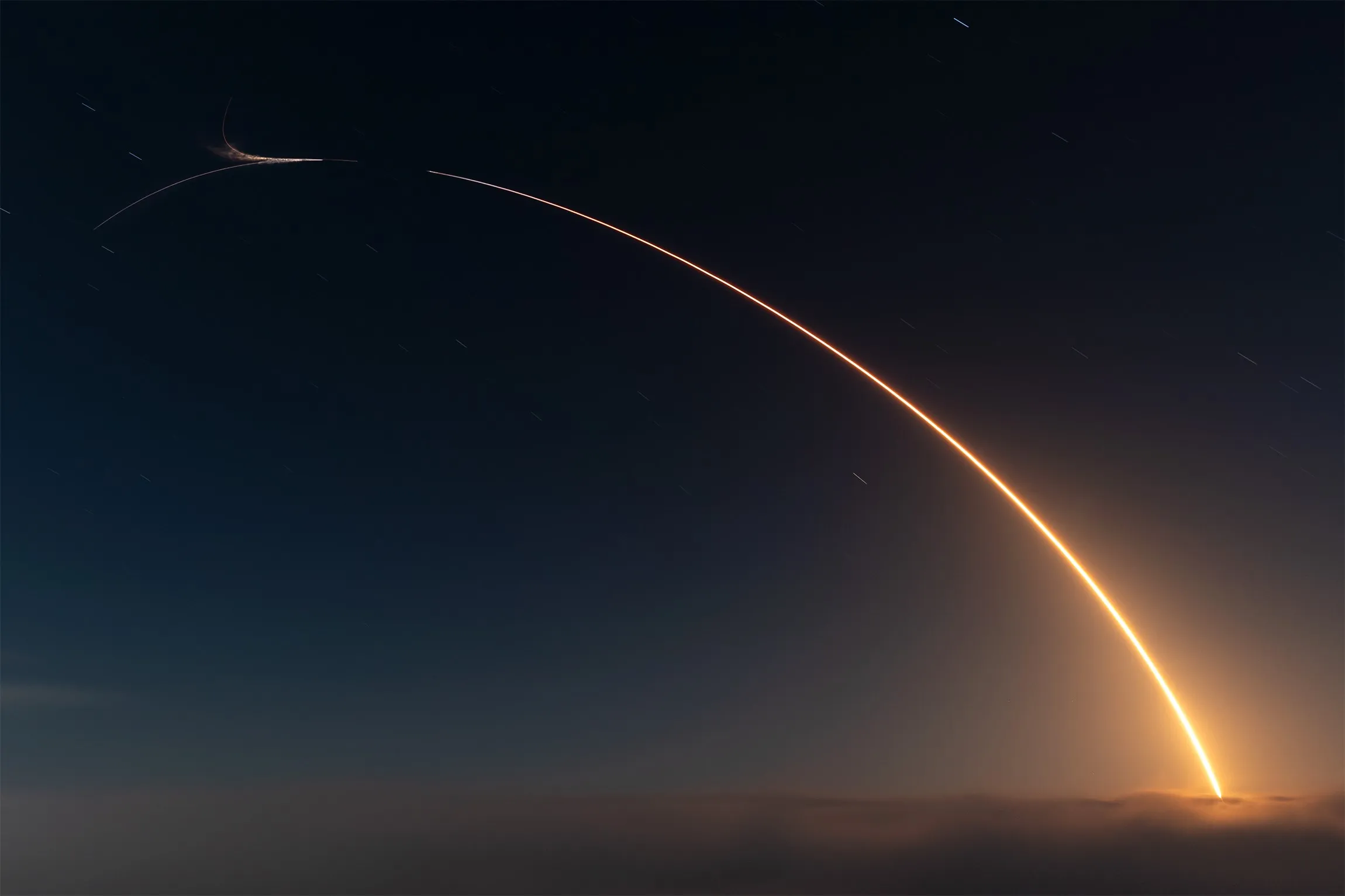
A university-designed CubeSat named SNAPPY successfully launched from Vandenberg Space Force Base aboard a SpaceX Falcon 9 rocket on Sunday at 12 a.m. PDT. The spacecraft departed from Space Launch Complex 4 East in California and was deployed via the Exolaunch integration system. Its primary objective is to test a prototype solar neutrino detector in low Earth polar orbit, marking the first mission of its kind to validate such technology in space.
The project was selected for NASA's Innovative Advanced Concepts program, progressing through Phase I in 2018, Phase II in 2019, and Phase III in 2021. This funding trajectory helped mature the project from initial study to a flight demonstration. The detector itself consists of four crystals encased in a shielding block made of epoxy loaded with tungsten dust, designed to match the density of steel. Weighing approximately half a pound, the unit is housed inside a CubeSat platform provided by Kongsberg NanoAvionics.
The mission concept was inspired by NASA's Parker Solar Probe, which is set to fly through the Sun's corona. Professor Nick Solomey of Wichita State University noted that the probe will pass an area where the solar neutrino flux is nearly 1,000 times stronger than what reaches Earth. While the current mission focuses on validating detector performance in orbit, the long-term goal is to determine if future missions can place detectors closer to the Sun to study these particles in a completely new way.
Neutrinos are believed to be the second most abundant fundamental particles in the universe and are crucial for understanding the Sun's core, the origin of mass, and the structure of the universe. On Earth, detecting these particles requires burying instruments deep underground to filter out background noise. SNAPPY aims to prove that such detectors can operate reliably in the space environment without this shielding, eliminating signatures from other activities that could mimic a true neutrino interaction.
Development of the spacecraft involved thirty-six graduate and undergraduate students from various institutions. Key collaborators include NASA Marshall Space Flight Center, which designed and built the dedicated electronic readout cards, and Wichita State University, which led payload programming. Additional contributions came from NASA's Jet Propulsion Laboratory, the University of Minnesota, the University of Michigan, and South Dakota State University.
The data collected during this mission will be critical for determining the feasibility of future large-scale detectors positioned closer to the Sun. By proving the detector can function in orbit and distinguishing true neutrino signals from background noise, researchers hope to pave the way for observing solar neutrinos with unprecedented clarity.