UNESCO protections fail to shield Lebanese heritage sites from demolition, activists claim
The Israeli military denies targeting cultural landmarks, asserting that demolitions are necessary to dismantle Hezbollah infrastructure in southern Lebanon’s forward defence zone.
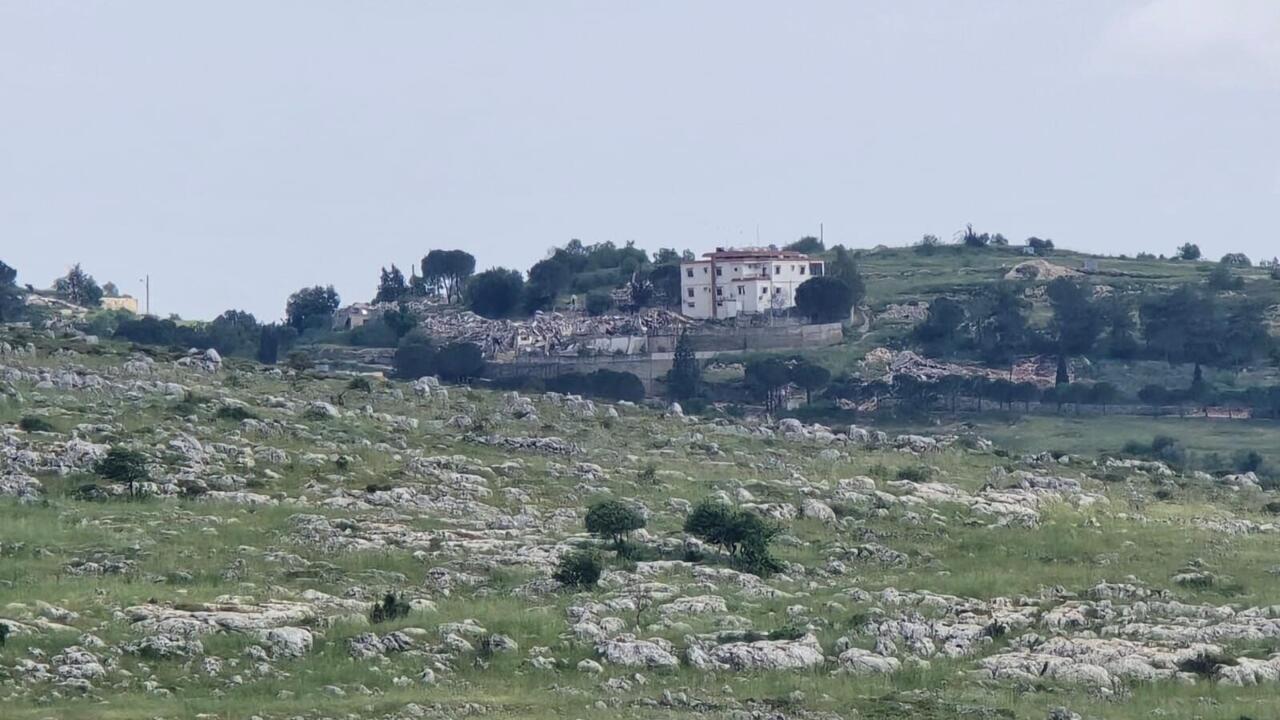
The Israeli military is facing accusations of destroying significant cultural and religious heritage in southern Lebanon, a campaign that the Lebanese NGO Green Southerners describes as an assault on the historic bond between residents and their land. The organisation has documented the demolition of the Yaroun convent, run by Catholic nuns, and the 11th-century Shia shrine of Shamoun al-Safa, arguing that these acts undermine the region's identity.
Video evidence shared by Green Southerners shows an Israeli excavator demolishing the convent in Yaroun. The footage was captured from a distance, as residents have been barred from returning to the village since the destruction. The site, which also housed a school, was reduced to rubble. The Israeli foreign ministry disputed claims of damage, providing an image that showed only a neighbouring medical clinic untouched, while the convent itself lay in ruins.
The destruction of the Shamoun al-Safa shrine was confirmed by satellite imagery taken on 16 April, following an air strike on 13 April. The shrine had already sustained damage from Israeli troops in 2024 and was partially restored by local residents before being totally destroyed. Hicham Younès, founder of Green Southerners, noted that the shrine and the citadel of Chamaa were already on UNESCO’s list for enhanced protection, yet this status did not prevent their demolition by excavators.
Since Israel agreed to a ceasefire with Hezbollah in April, the army has maintained positions in what it terms a “forward defence zone,” continuing to demolish buildings it alleges are used by the militant group. The Israeli army states that its operations target Hezbollah infrastructure, such as observation posts and weapons storage, and denies blowing up a historic spiral-shaped well in Taybeh that remains at risk between detonations.
Activists remain concerned about the vulnerability of protected sites despite international listings. Younès highlighted that 39 Lebanese sites are on UNESCO’s enhanced protection list, but this has not altered the situation on the ground. The Israeli army maintains that it takes extensive efforts to avoid damaging sensitive sites, though it asserts that the Shamoun al-Safa shrine and the Al-Qantara mosque were used by Hezbollah, and that the Yaroun convent suffered only minor damage.