Uncertainty lingers over the fate of Iran's 440kg uranium stockpile
Russian President Vladimir Putin has offered to store the enriched uranium, yet significant technical and security hurdles remain for any retrieval under IAEA supervision
The future of Iran's nuclear program remains in a state of flux, centred on an estimated stockpile of over 440 kilograms of uranium enriched to 60%. This quantity is sufficient to be further processed into weapons-grade material, a prospect that has drawn intense scrutiny from the United States. President Donald Trump has publicly pledged to seize this material, which he has referred to as "nuclear dust", though the method of retrieval remains a subject of contradictory statements ranging from diplomatic handover to physical excavation.
Tehran has not confirmed any agreement to surrender the stockpile. Iranian Foreign Minister Abbas Araghchi stated to US broadcaster CBS that the material remains under rubble following last year's "Operation Midnight Hammer". He clarified that Iran has "no program" to actively recover the uranium, although he did not rule out the possibility of diluting the stockpile as part of a future diplomatic arrangement.
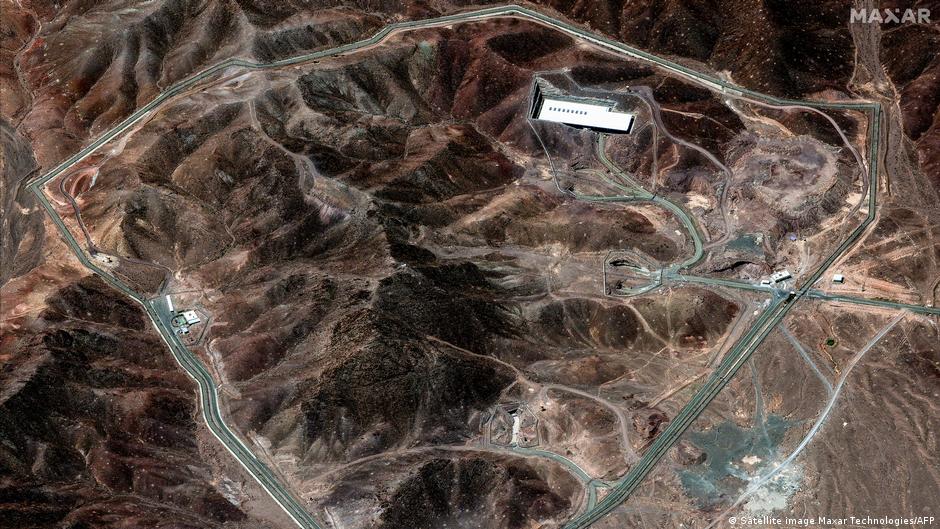
The precise location of the enriched uranium remains unconfirmed, with estimates placing it underground at the Isfahan, Fordow, or Natanz facilities. All three sites sustained heavy damage during the recent military conflicts. Rafael Grossi, Director General of the International Atomic Energy Agency (IAEA), indicated in late April 2026 that the majority of the highly enriched uranium was likely still located at the Isfahan nuclear complex, noting that containers entered a tunnel there shortly before the start of the 12-day war.
Any attempt to remove the material would require strict supervision by the IAEA and would face formidable technical challenges due to the underground storage conditions. Roland Wolff, a specialist in medical physics and radiation protection, noted that while removing the material is not technically impossible, physical access at Fordow is particularly difficult. Russia has indicated it is ready to store Iran's enriched uranium, offering a potential solution to the logistical impasse, yet significant security and technical hurdles persist in the conflict zone.
Former US National Security Advisor John Bolton highlighted the complexities of such an operation, contrasting the current situation with the dismantling of the Libyan nuclear weapons program in the early 2000s. He argued that while removal was feasible in a permissive environment, the current conditions of uncertainty within Iran would require isolating key locations to prevent the material from falling into the hands of terrorists or rogue states.
Ultimately, the fundamental reality remains that Iran retains the capacity to press ahead with nuclear weapons development. While there may be temporary concessions or inhibitions on the program, the structural capacity to enrich uranium further persists. The international community now faces the difficult task of navigating these technical and political obstacles to ensure the material does not destabilise the region.