UN official reflects on Muhammad Ali’s peace legacy a decade after death
A United Nations staffer describes how a watercolour painting gifted by Muhammad Ali in 1978 serves as a daily reminder of the cost of speaking out against injustice and the urgency of service in an era of global conflict.
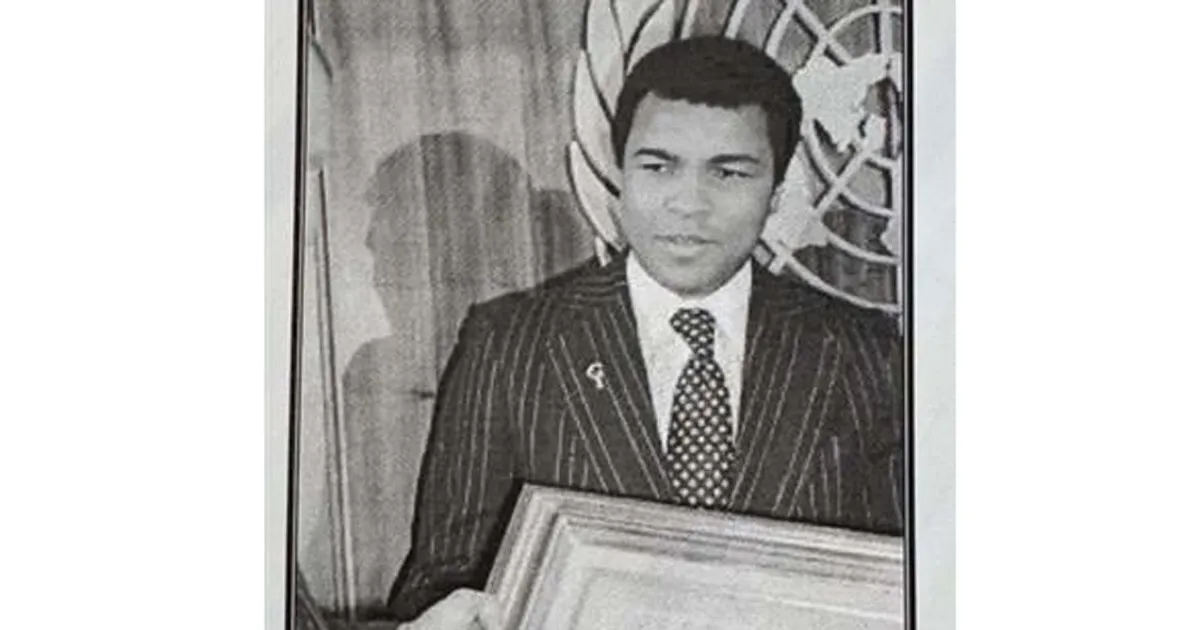
An opinion piece published by Al Jazeera on 3 June 2026 commemorates the tenth anniversary of the death of American boxer Muhammad Ali, reflecting on his enduring legacy of peace and human rights. The article centres on a 1978 watercolour painting of the United Nations headquarters gifted by Ali, which the author states hangs in a UN hallway. The piece draws parallels between Ali’s historical stand against the Vietnam War and contemporary challenges, including global conflicts, inequality, and threats to women and girls.
Ali, who died on 3 June 2016 at the age of 74, presented the watercolour to UN officials as a “gift of peace”. Accompanying the artwork was a letter citing his mantra, “Service to others is the rent we pay for our room here on Earth.” This sentiment is widely promoted by the Ali Centre and was cited by his widow, Lonnie Ali, as a reflection of his commitment to kindness and empathy.
The author of the piece, who identifies as working within the United Nations, describes seeing the painting daily in a hallway outside their office. They characterise the artwork not merely as a depiction of the UN building, but as a bridge between Ali’s public courage and his private conviction that peace is humanity’s highest calling. The article argues that the sincerity of the brushstrokes serves as a testament to a man who understood the fight for dignity far beyond the boxing ring.
The opinion piece links Ali’s message to current global tensions, specifically citing rising hatred, unchecked technological expansion, and threats to the rights and safety of women and girls. The author suggests that Ali’s message of service and courage remains urgent amid these fractures, arguing that peace is fragile and requires personal responsibility to maintain.
Ali is noted for the significant personal cost of his activism. He was vilified for refusing to fight in the Vietnam War and punished for standing up to racism and injustice in the United States. The article posits that by entrusting his painting to the UN, Ali was reinforcing the point he made with his life: that peace requires the courage of the peacemaker, not just the fighter.
Marking the decade since his passing, the author reflects on what Ali would demand of the world today. The piece concludes that Ali would urge people to fight for each other rather than against one another, to defend human rights with resolve, and to choose peace even when indifference seems more convenient. The views expressed in the article are those of the author and do not necessarily reflect Al Jazeera’s editorial stance.