Ukraine’s drone campaign stalls Russia’s Black Sea grain and oil exports
Intensified strikes on key terminals in Novorossiysk and the Sea of Azov have effectively blocked the primary route for Russian wheat, forcing a costly and limited rerouting of exports.
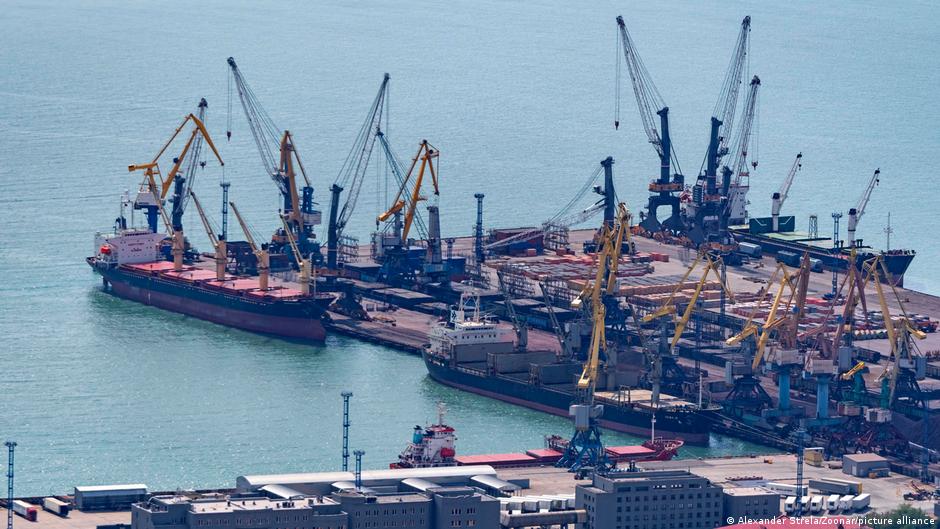
Ukrainian drone strikes have severely disrupted Russia’s ability to export grain and oil from the Black Sea, with major terminals in Novorossiysk, Taman, and the Sea of Azov ceasing operations. The attacks have effectively blocked virtually all Russian grain exports via the Azov-Black Sea basin, a route that typically handles approximately 90 per cent of the country’s shipments. As the world’s largest wheat exporter, Russia faces significant logistical challenges in maintaining its global market share.
The disruption began in earnest on 12 August, when the Novorossiysk Bread Products Plant and the Novorossiysk grain terminal ceased operations. The following day, the KSK deep-water grain terminal also halted operations. Prior to these strikes, operations at a major grain terminal in Taman had already come to a standstill at the end of July, while shallow-water ports in the Sea of Azov had been paralysed. At the time of reporting, only Tuapse, the smallest of Russia’s deep-water grain terminals, remained in operation.
Oil exports have also faced frequent interruptions, although they have not reached the same level of paralysis as grain shipments. The Sheskharis terminal, Russia’s main oil export facility on the Black Sea with a capacity of around 700,000 barrels per day, halted loadings on 14 August before resuming two days later. According to the Helsinki-based think tank the Center for Research on Energy and Clean Air, the port of Novorossiysk loaded 30 per cent less oil in the first two weeks of August compared with the same period last year.
Analysts warn that the inability to reroute significant volumes through alternative routes will have a tangible impact on global markets and the Russian budget. While Baltic ports such as Primorsk and Ust-Luga, or Danube River ports, offer alternative options, they have limited capacity and higher costs. Isaac Levi, an energy analyst at CREA, noted that while Russia can reroute barrels, it cannot easily reroute infrastructure, and the available capacity in alternative ports is too small to replace significant volumes from Novorossiysk.
The situation is further complicated by the timing of the disruptions, as August is typically when shipments peak. Andrei Sisov, head of the research firm SovEcon, estimated that many Russian producers may not survive the season, particularly after several years of deteriorating financial conditions. With exports stalled, surplus grain is being sold on the domestic market, which is already putting downward pressure on prices.
London-based energy agency Argus Media estimates that Russia could have 45 million metric tons of wheat for export in the 2026 to 2027 season. However, the current state of the Black Sea makes it almost impossible to supply the global market efficiently. The escalation of hostilities has also affected Ukrainian grain exports, with attacks on both sides’ ports and ships blocking good harvests from reaching international buyers.