Ukraine targets Russian oil 'shadow fleet' in southern port strike
Kiev claims the attack on suspected tankers is part of a broader strategy to degrade the war machine's logistical capabilities
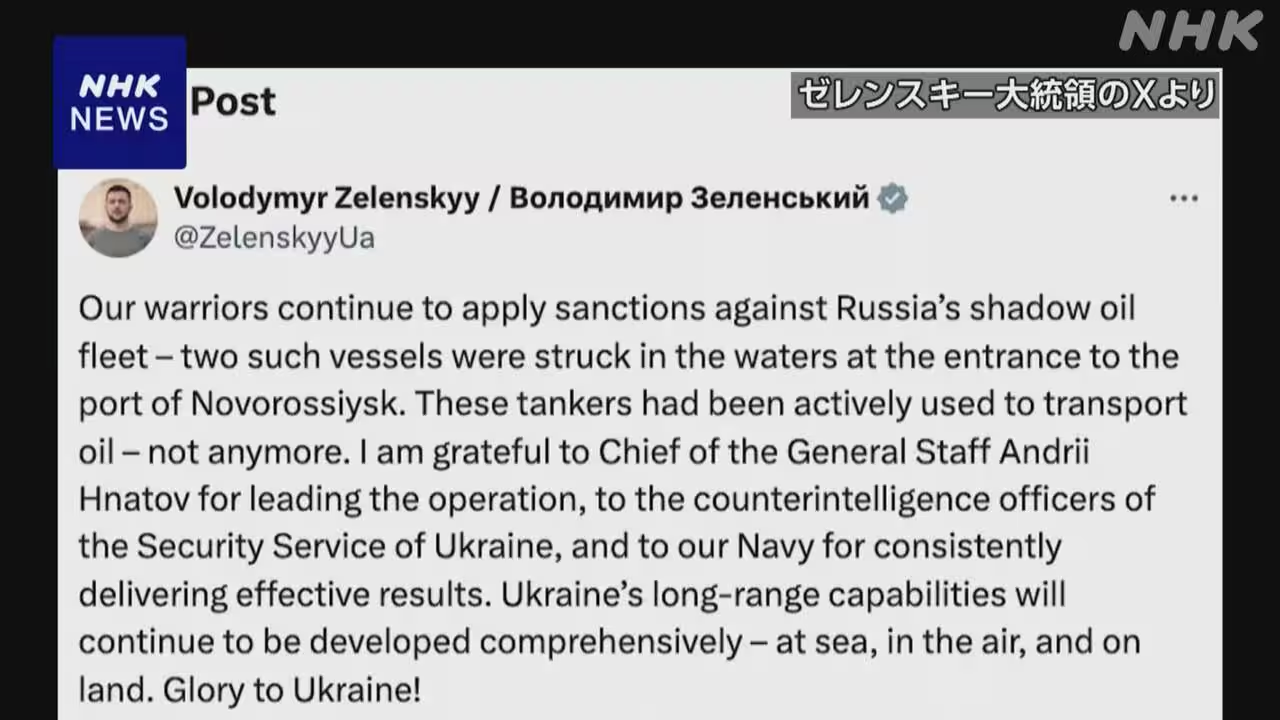
Ukrainian President Volodymyr Zelenskyy has confirmed that Ukrainian military forces launched an attack on tankers suspected of belonging to a shadow fleet transporting Russian crude oil. The operation took place near a port in southern Russia, marking a direct engagement with vessels identified by Kyiv as part of a covert logistical network used to move energy resources.
According to the announcement made on 4 May 2026, the specific objective of the strike was to disrupt critical energy infrastructure, including refineries. President Zelenskyy stated that the operation was conducted to degrade the fuel supply chain, thereby impacting the operational capacity of the Russian war machine. The move underscores a continued policy focus on targeting the logistical arteries that sustain Russia's military efforts.
The term shadow fleet refers to a network of tankers often utilised to transport Russian oil while attempting to bypass sanctions or operate under the radar. By striking these vessels, Ukraine aims to sever the link between production and export, preventing crude from reaching global markets or domestic processing facilities. This approach aligns with historical strategies employed to degrade the war machine's fuel supply through precision targeting of energy assets.
Despite the confirmation of the attack, several details regarding the operation remain unquantified in the available reporting. The specific location of the southern Russian port has not been detailed, and the exact number of tankers targeted or the volume of oil disrupted has not been disclosed. Furthermore, the operational status of the attacked vessels, such as whether they were sunk, damaged, or intercepted, is not explicitly confirmed beyond the fact that an attack was launched.
The announcement arrives amidst ongoing geopolitical tensions involving Russia, Ukraine, and global energy markets. While the source text cuts off mid-sentence regarding the full scope of the claimed damage to energy facilities, the stated intent remains clear: to strike at the heart of the Russian energy export apparatus. The use of the term suspected regarding the tankers' affiliation indicates that while Ukraine claims this, independent verification of the vessels' specific cargo or ownership is not provided in the immediate snippet.
This development highlights the evolving nature of the conflict, where kinetic actions are increasingly directed at maritime logistics and energy infrastructure rather than solely on front-line troop engagements. As the war continues, such operations against the shadow fleet represent a significant policy shift in how Ukraine seeks to impose costs on the Russian state through the disruption of its economic lifelines.