Ukraine appoints Drapatyi as army chief amid political turbulence and NATO reform debates
President Volodymyr Zelenskyy’s appointment of Mykhailo Drapatyi signals a shift toward Western military tactics, yet systemic institutional contradictions and domestic political tensions persist.
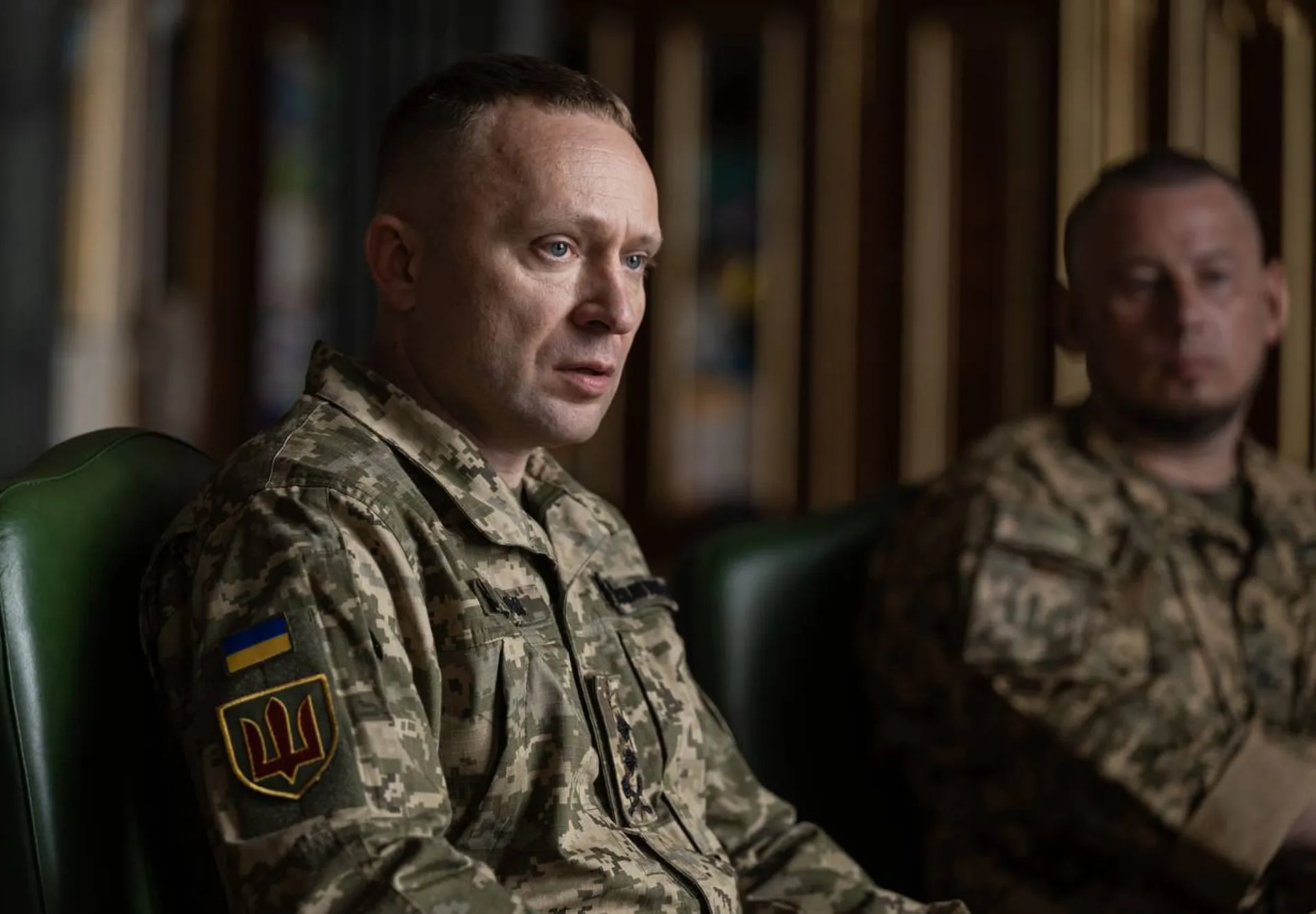
Ukrainian President Volodymyr Zelenskyy has appointed Colonel Mykhailo Drapatyi as the new Commander of the General Staff of the Armed Forces, replacing General Oleksandr Syrskii. The announcement, made on Tuesday, follows a period of significant political instability triggered by the recent dismissal of Defence Minister Mykhailo Fedorov. President Zelenskyy stated that he and Drapatyi share a common objective: achieving victory over the enemy.
Drapatyi, 43, is widely recognised for his actions in Mariupol in 2014, where he led a daring armoured vehicle breakthrough to rescue hostages held by pro-Russian separatists. His military career has since progressed through the ranks of Ukraine’s land and joint forces. Unlike his predecessor, who was educated at a Moscow military academy in the 1980s and often associated with Soviet-era stratagems, Drapatyi is noted for his preference for Western military tactics. This includes a focus on drone and robotic warfare, which has become increasingly critical due to the omnipresence of surveillance technology on the modern battlefield.
The leadership change occurs against a backdrop of domestic unrest. Fedorov, a 35-year-old civilian and former minister of digital transformation, was sacked last week following clashes with General Syrskii. Fedorov’s tenure was marked by a Silicon Valley-style approach to warfare, including a highly effective campaign of mid and long-range drone strikes that targeted Russian supply routes and infrastructure. His dismissal sparked daily protests in Kyiv and other key cities, with critics viewing the move as politically motivated. Although Fedorov declined an offer to serve as a presidential adviser on technological reforms, the appointment of Drapatyi has only partially calmed the protests, leaving underlying political tensions unresolved.
Military analysts and officials have highlighted the structural challenges facing the Ukrainian armed forces. Lieutenant General Ihor Romanenko, former deputy head of the General Staff, noted that Drapatyi is trusted by his peers and is seen as caring for soldiers. However, Romanenko pointed out that a systemic contradiction remains between the General Staff and the Ministry of Defence. This dual-reporting structure, which mirrors the Soviet model, persists despite Ukraine’s long-standing efforts to join NATO. Romanenko argued that true institutional reform will only be achieved when Ukraine aligns its military governance with NATO standards, where the General Staff and Defence Ministry report independently to the head of state.
International reactions to the appointment have been mixed. The Kremlin, through spokesman Dmitry Peskov, dismissed the change as insignificant, claiming that Russian forces are advancing along the entire front line and that the move is causing internal instability in Kyiv. Conversely, analysts such as Nikolay Mitrokhin of Bremen University suggest that the war’s direction may shift depending on Ukraine’s mobilisation efforts, technological breakthroughs, and Russian actions. Mitrokhin indicated that the outcomes of these strategic adjustments would likely be visible by the end of the year. Meanwhile, Fedorov publicly congratulated Drapatyi, describing the appointment as bringing a new wind and hope for the military.