UAE-Israel ties ‘cold and pragmatic’, says King’s College London expert
A senior academic suggests the strategic partnership between Abu Dhabi and Jerusalem lacks ideological depth, while internal tensions between emirates complicate regional stability.
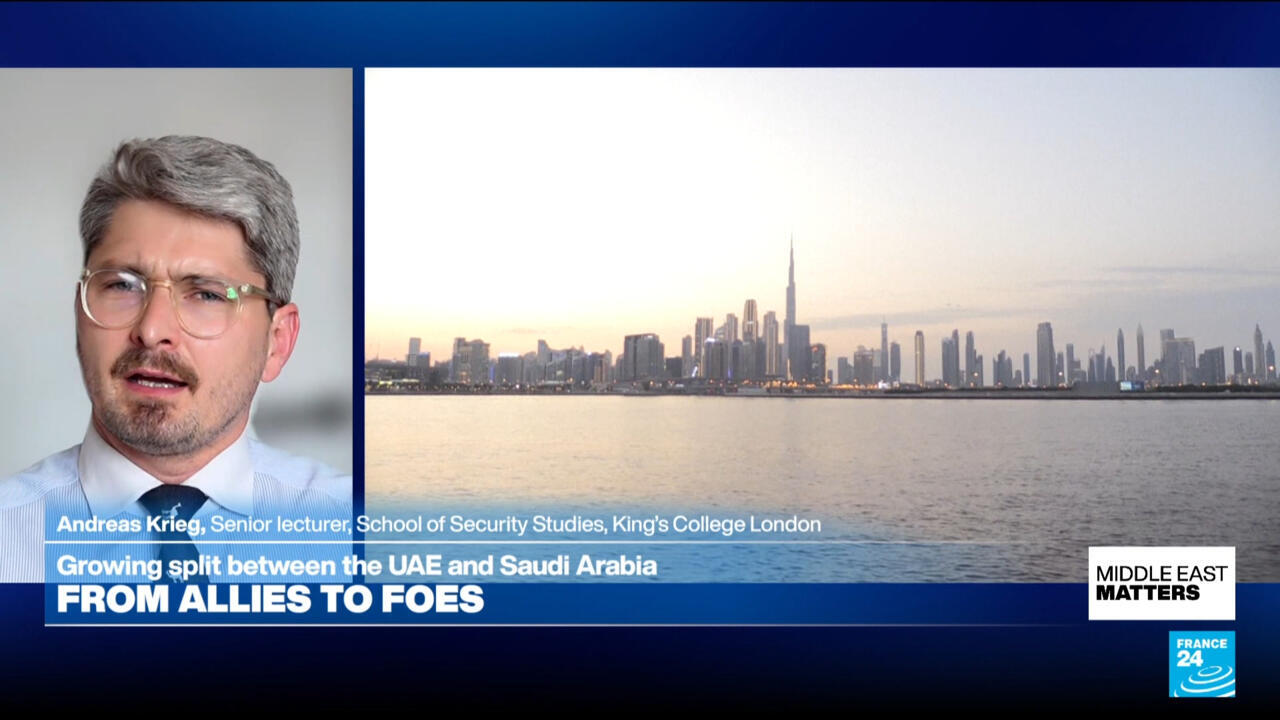
Dr Andreas Krieg, a Senior Lecturer at the School of Security Studies at King’s College London, has characterised the diplomatic relationship between the United Arab Emirates and Israel as “very cold” and “pragmatic.” Speaking on the France 24 program Middle East Matters, hosted by Nadia Massih, Krieg argued that the alliance is driven by operational interests in defence, technology, and intelligence rather than any ideological convergence.
Krieg challenged the narrative of a grand strategic realignment between the two nations, suggesting that the depth of their cooperation is often overstated. He described Israel’s role in the current regional conflict as akin to an “arsonist who then appeared as a firefighter,” implying that while Jerusalem offers tactical support, the conflict itself has profoundly destabilised Emirati interests.
The academic highlighted that Iran is actively targeting the UAE to exploit its hyperconnected financial and logistical infrastructure. Krieg described the UAE as the “Achilles heel” of the international system due to its exposure, noting that Tehran is fighting a war against the global economy by targeting the Gulf’s role in trade, commodities, and data.
Internal dynamics within the UAE further complicate the geopolitical landscape. Krieg pointed to growing tensions between Abu Dhabi and Dubai, emphasising that Dubai’s service economy and merchant networks remain deeply dependent on regional stability and historic commercial ties with Iran. This interdependence suggests that the emirates are not entirely autonomous in their foreign policy decisions.
Ultimately, Krieg argued that Gulf geopolitics remain constrained by regional proximity and interdependence. Despite narratives of independence, he asserted that the region’s states are “prisoners of geography,” unable to escape the security order imposed by their neighbours and the economic realities of the Middle East.