Turkiye expands civilian oversight a decade after coup, but democratic concerns persist
Ten years on from the failed July 2016 attempt, Turkiye has fundamentally reshaped its civil-military relations. While experts agree conventional coups are now unlikely, the Justice and Development Party’s consolidation of power has sparked intense debate over the state of democratic consolidation and judicial independence.
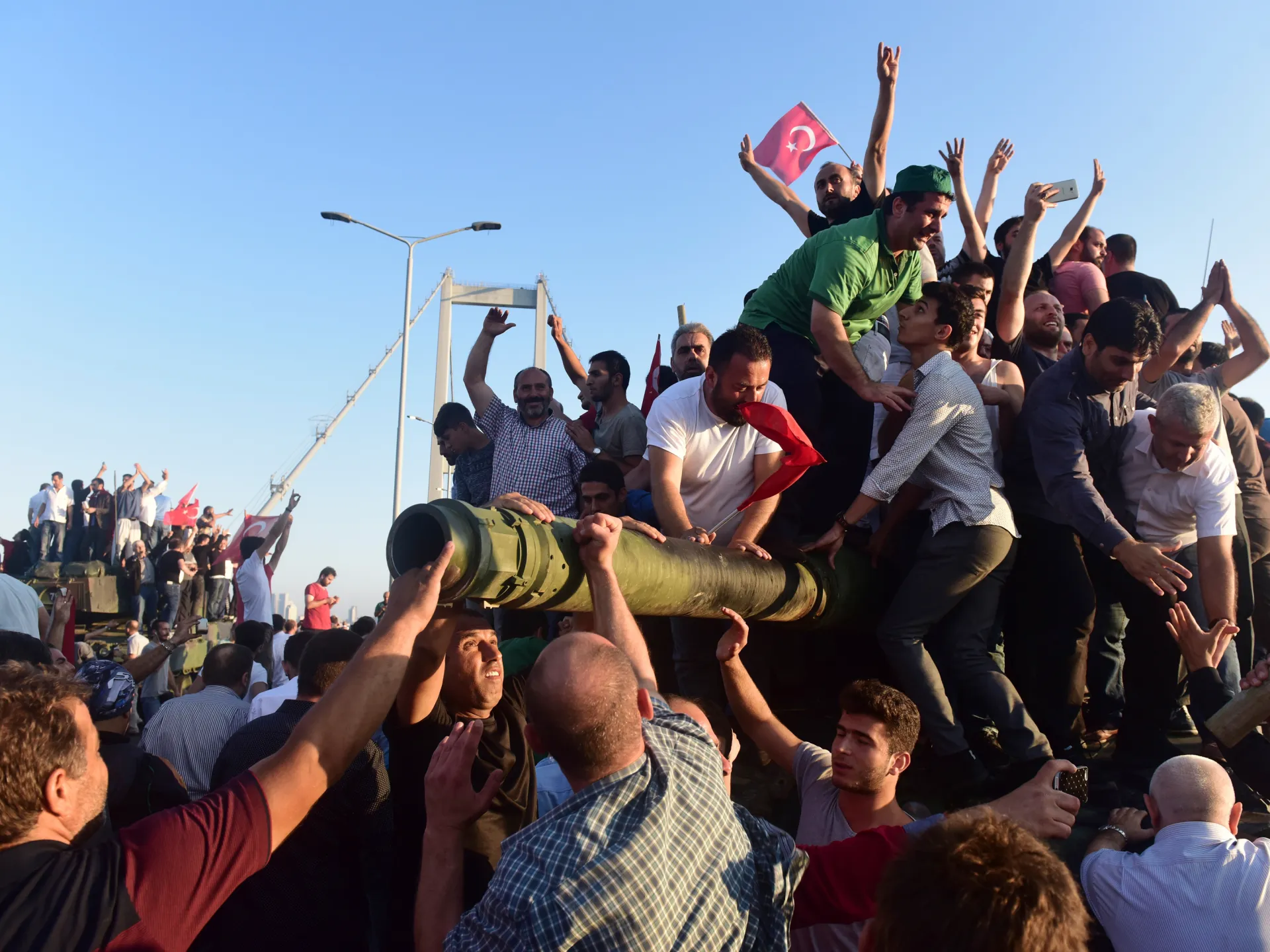
A decade after the failed July 15, 2016 coup attempt, Turkiye has significantly expanded civilian oversight of the armed forces, a structural shift that experts say has effectively reduced the likelihood of future military interventions. The attempt, which resulted in approximately 250 deaths and over 2,200 injuries, accelerated the Justice and Development Party’s (AK Party) long-standing efforts to curb the military’s historical political influence.
Retired Colonel Unal Atabay attributes the failure of the putsch to three pillars: public resistance, loyalty within the armed forces, and the institution’s internal reflex. In the aftermath, military academies were replaced by the National Defence University, and command structures were overhauled to strengthen internal oversight against infiltration. These changes have fundamentally reshaped the relationship between the military, the state, and society, with authorities maintaining that such measures are necessary to prevent state infiltration by external centres of power.
While the military’s political role appears to have receded, the broader consequences of the post-coup transformation remain a subject of significant debate. Political scientist Ali Carkoglu argues that while civilian supremacy over the military is a success, it does not automatically equate to democratic consolidation if it comes at the expense of free expression and competitive politics. He notes that institutions derive legitimacy from citizen trust, which requires the possibility of free expression, suggesting that the current trajectory may undermine institutional credibility.
Critics, including Human Rights Watch, point to emergency powers introduced post-2016 that have evolved into broader restrictions on civil liberties. The organisation reports that many dismissed public employees are unable to rebuild their careers even after acquittal. Furthermore, the arrests of opposition figures, including Istanbul Mayor Ekrem Imamoglu, have fuelled accusations that judicial processes are being used against political rivals. The government rejects these claims, asserting that investigations are independent and based solely on evidence of criminal wrongdoing.
The government maintains that the events of 2016 remain an active national security issue rather than a closed chapter. On Monday, two days before the anniversary, Turkish authorities launched coordinated operations across all 81 provinces targeting nearly 1,000 suspects over alleged links to the Fethullah Terrorist Organisation (FETO). For Ankara, these ongoing security operations underscore the commitment to dismantling clandestine networks and preventing a recurrence of the 2016 threat.
Howard Eissenstat, a Turkiye specialist at St Lawrence University, noted that while one should never say never, betting on a military coup in Turkiye is now a losing proposition. However, the political landscape continues to be defined by the tension between security imperatives and democratic norms, with the AK Party retaining its parliamentary majority following the 2023 elections. The legacy of the coup thus remains a defining feature of Turkiye’s governance, balancing institutional stability against questions of civil liberty and political competition.