Turkey parliament approves conditional amnesty for PKK militants in historic vote
The bill, supported by the ruling AK Party, MHP allies, and pro-Kurdish DEM group, suspends sentences for approximately 3,500 detainees while excluding those convicted of intentional killings and founder Abdullah Ocalan.
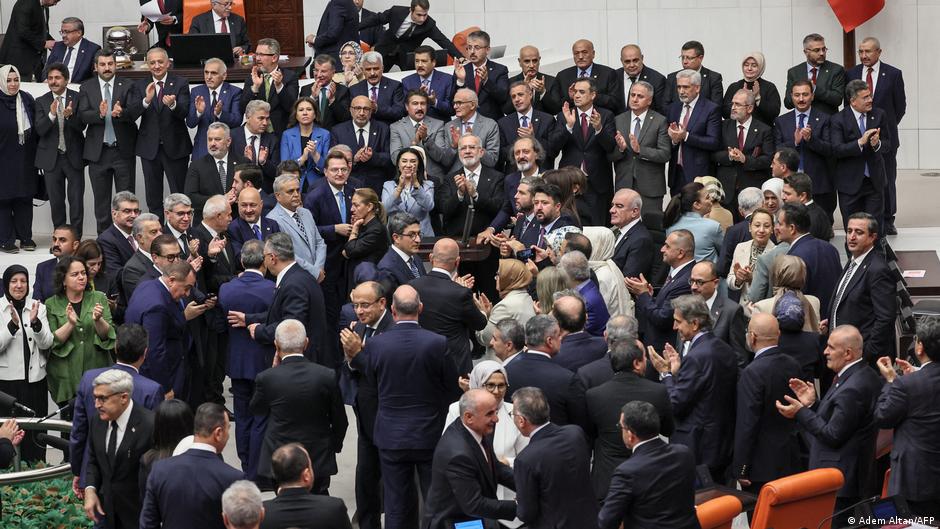
Turkey’s parliament has approved legislation offering conditional pardons and legal protections to members of the Kurdistan Workers’ Party (PKK), marking a significant legislative step in efforts to end the four-decade conflict. After 12 hours of debate, lawmakers voted 468 to 88 in favour of the 12-article bill, with six abstentions. The measure was backed by President Recep Tayyip Erdogan’s AK Party, its nationalist MHP allies, and the pro-Kurdish DEM party.
The law establishes procedures for the PKK’s disarmament and dissolution, as well as the reintegration of some militants into civilian life. It is not a general amnesty; instead, it suspends prison sentences and postpones investigations and trials for five or 10 years, depending on the offence. If individuals covered by the measure do not commit terrorism-related crimes during this suspension period, their cases will be dropped and sentences considered served. Approximately 3,500 PKK-linked detainees could initially be released under these provisions.
Implementation is strictly contingent upon Turkey’s National Security Council confirming that the PKK has dissolved and surrendered all weapons. Once this verification occurs, those seeking to benefit from the law have six months to apply. Ministerial and parliamentary committees are tasked with monitoring the process. Media reports suggest that exiled members and fighters in Iraq and Syria may also be eligible for the measures, although people convicted of intentional killings and some serving life sentences are explicitly excluded.
Vice President Cevdet Yilmaz described the vote as a “historic step,” emphasising that the 468 ‘yes’ votes represented a significant political consensus. However, the legislation does not cover Abdullah Ocalan, the 77-year-old PKK founder who has been imprisoned on Imrali island since 1999. Yilmaz stated that Ocalan’s case falls outside the scope of the law but noted he could remain in a position to contribute to the peace process. Ocalan had urged the PKK to disarm and pursue Kurdish rights through democratic means in February 2025, following the group’s announcement of dissolution in May 2025.
The PKK has described the legislation as a “beginning” but cited “serious shortcomings,” demanding Ocalan’s release and guarantees that fighters can engage in politics without prosecution. Nationalist opposition lawmakers, including from the Iyi party, accused the government of making concessions to terrorists. Meanwhile, political analysts note that if parliament calls an early election, Erdogan could potentially run for re-election during his current term. The conflict, which began in 1984, has resulted in more than 40,000 deaths and significant economic damage in southeastern Turkey.