Tunisia’s civic space narrows under legal and financial pressure, report finds
Human Rights Watch details a surge in prosecutions and suspensions targeting non-governmental organisations, attributing the crackdown to President Kais Saied’s consolidation of executive power.
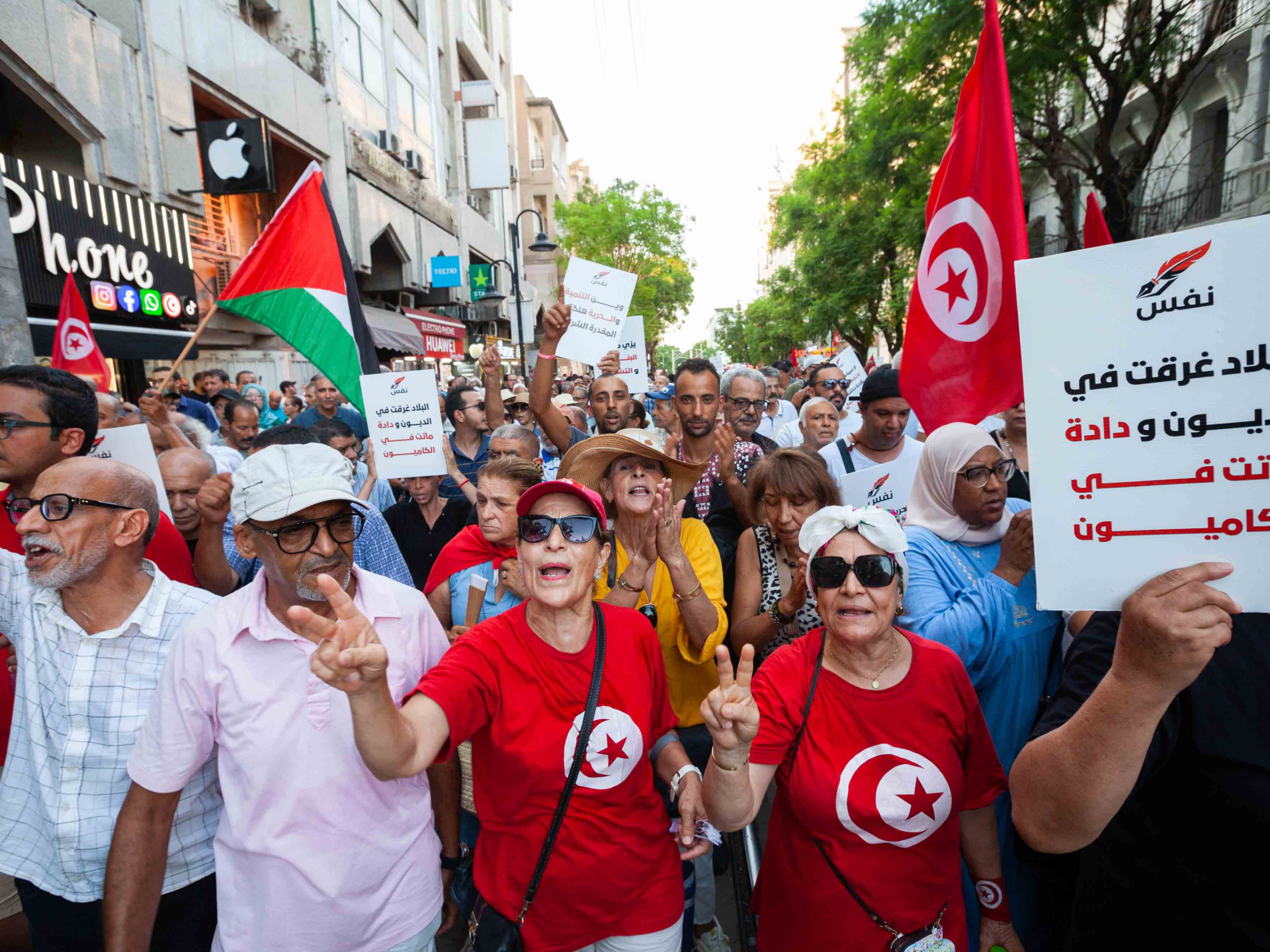
Human Rights Watch has released a 49-page report documenting a significant contraction of civic space in Tunisia, driven by an escalation in legal and administrative measures against civil society. The report, published on Wednesday, outlines a pattern of arrests, lengthy preventive detentions, and financial investigations that have placed intense pressure on local and international non-governmental organisations.
According to the findings, Tunisian authorities have prosecuted at least 47 individuals connected to non-governmental organisations. Of these, at least 14 have been convicted and sentenced to prison following trials conducted in 2025 and 2026. Notable among the convictions is human rights defender Saadia Mosbah, who received an eight-year prison sentence and a substantial fine on financial crime charges in March. The report also notes that at least 10 individuals have been held in preventive detention for periods exceeding 14 months, a duration that surpasses the maximum limit permitted under Tunisian law.
The institutional response has extended to the suspension of organisations through the use of Decree-Law 2011-88. Human Rights Watch identified at least 20 suspended civil society associations, with the exact number potentially higher due to a lack of official data. The report highlights procedural irregularities in these suspensions, including cases where formal warnings were not issued or appeals were dismissed. Groups such as Al Khatt and the antiracism organisation Mnemty are currently facing dissolution proceedings, a risk that looms large once avenues of appeal are exhausted.
Financial mechanisms have also been deployed to constrain independent groups. At the end of 2024, the Tax Evasion Investigation and Prevention Brigade notified at least a dozen associations, including Amnesty International’s regional office and the anticorruption group I Watch, that they were under investigation. These probes have resulted in the freezing of bank accounts for at least two associations and have prompted private banks to restrict access to hard currency or convertible dinar accounts. Human Rights Watch argues that these financial and criminal procedures are being used to intimidate civil society organisations.
The rights group attributes the narrowing of civic space to President Kais Saied’s concentration of power and the strategic use of counter-terrorism and money-laundering laws to target activists and journalists. Since 2022, the judiciary has been under the control of the executive, a shift that Human Rights Watch says has undermined judicial independence. The report notes that Saied has publicly portrayed civil society and NGOs as threats to national sovereignty, while his government defends these measures as necessary to combat corruption and stabilise the country.
In response, Human Rights Watch has called on Tunisian authorities to end what it describes as abusive investigations and the criminalisation of legitimate civil society work. The organisation urges the release of arbitrarily detained NGO workers and activists, the overturning of unjust convictions, and the withdrawal of legislation that undermines freedom of association. It has also called on the European Union and its member states to press Tunisia to end the crackdown, citing the country’s obligations under the International Covenant on Civil and Political Rights and the African Charter on Human and Peoples’ Rights.