Tucker Carlson breaks with Trump on Israel policy as Washington speculates on White House run
The shift marks a significant departure from previous conservative orthodoxy, yet observers in Washington, DC, caution that the move may be a strategic calculation rather than a genuine ideological conversion.
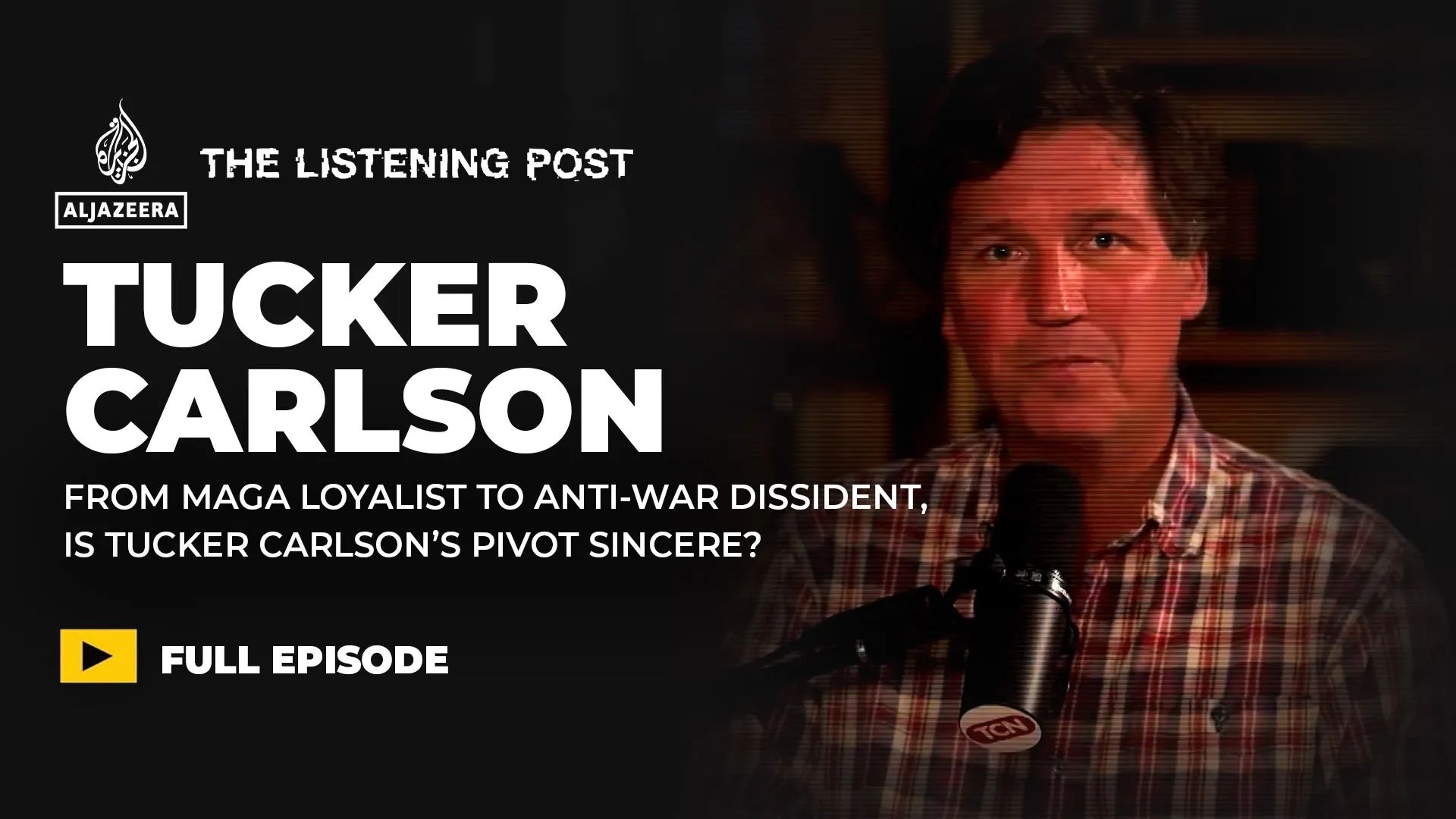
Longtime Donald Trump supporter Tucker Carlson has publicly distanced himself from the President, adopting a staunchly critical stance regarding the United States relationship with Israel. This development signals a notable fracture within the conservative establishment, as Carlson moves from a position of MAGA loyalty to that of an antiwar dissident.
In a marked departure from his previous media habits, Carlson is now engaging with outlets he once dismissed, including The New York Times. This willingness to dialogue with voices previously criticised suggests a recalibration of his approach to governance and foreign policy, though the underlying motivations for this shift remain a subject of intense scrutiny.
The authenticity of Carlson's pivot is currently unverified, with many analysts describing the transition as a potential savvy reinvention rather than solely a sincere change of heart. While his rising popularity has generated significant speculation in Washington, DC, regarding a potential bid for the White House, no formal announcement has been made to confirm his candidacy.
Concurrently, the broader political landscape is marked by the recent assassination attempt on President Trump during a state dinner attended by King Charles III. Despite the gunman's intent to assassinate the President and top officials, the state visit proceeded as planned, underscoring the resilience of diplomatic protocols in the face of security incidents.
In the United Kingdom, a separate political narrative has emerged following a knife attack in north London that left two Jewish men in hospital. Much of the country's political and media class has settled on a narrative blaming anti-genocide protests and Zack Polanksi, the only Jewish leader in British politics, for the incident.
Meanwhile, developments within Israel suggest that the settler movement has moved from the fringes to influencing key institutions, including the media. A constellation of voices within these institutions is reportedly pushing for the concept of a Greater Israel, a trend that has led to the rapid normalisation of the idea among certain sectors.