TSMC’s $200 billion US expansion strains margins under political pressure
Taiwan-based chipmaker TSMC has announced a cumulative $200 billion investment in US manufacturing facilities, a move linked to political pressure for domestic AI chip production that is impacting the company’s profit margins.
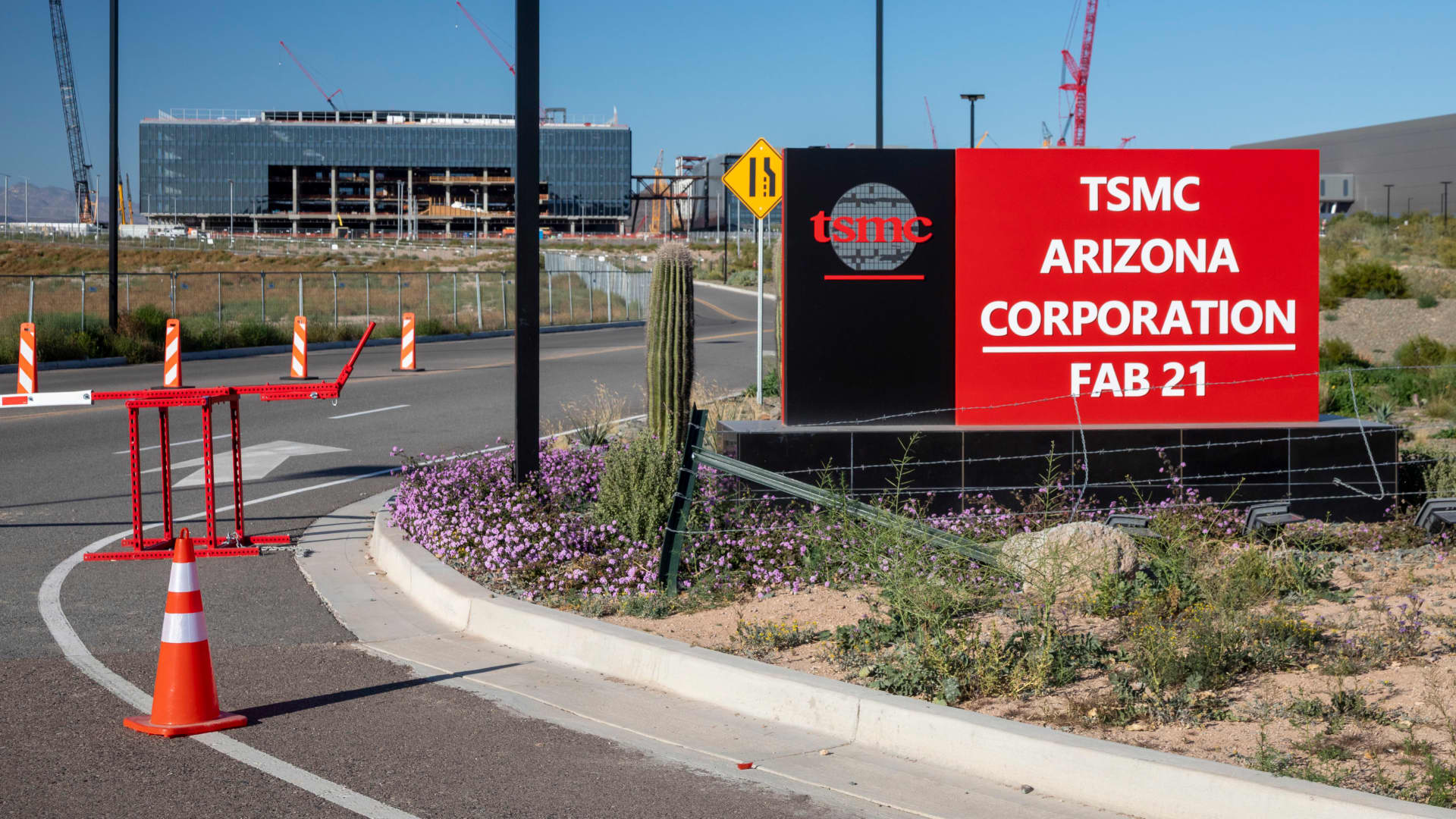
Taiwan-based semiconductor manufacturer TSMC has announced a cumulative $200 billion investment into US manufacturing since Donald Trump returned to power in 2025, according to reporting by CNBC. The substantial capital expenditure is directly linked to political pressure to accelerate the production of American-made AI chips, a shift in strategy that is currently impacting the company’s profit margins.
The investment marks a significant realignment of TSMC’s global supply chain, driven by the policy environment established following Trump’s return to the presidency. While the specific breakdown of the $200 billion figure, distinguishing between capital expenditure and operational costs, is not detailed in the source material, the scale of the commitment underscores the intensity of the push for domestic semiconductor production in the United States.
CNBC reports that the move to manufacture AI chips within the US is occurring under direct political pressure, which has resulted in measurable effects on TSMC’s financial performance. The source notes that these margins are being impacted, although it does not provide comparative data or specific percentage declines to quantify the extent of the contraction. The causal link between the political pressure and the investment is presented as the source’s interpretation of the geopolitical influence on corporate strategy.
This development unfolds against a backdrop of heightened tensions between the US and China regarding trade and artificial intelligence. Recent diplomatic engagements, including a summit in Beijing between President Trump and Chinese President Xi Jinping, have highlighted the complex interplay between geopolitics and technology markets. During this period, US stock markets have shown volatility, with indices such as the Dow Jones Industrial Average and the Nasdaq Composite reacting to diplomatic news and semiconductor export approvals.
The broader market context includes specific reactions to US-China trade dynamics, such as the approval for Nvidia to sell H200 chips to Chinese firms, which previously triggered a surge in Nvidia’s share price. However, TSMC’s current focus remains on the domestic US manufacturing base, a strategic pivot that carries significant financial implications for the world’s largest contract chipmaker as it navigates the intersection of national security policy and corporate profitability.