Crossbench bill targets Australian defence exports over human rights concerns
The proposed “red lines” legislation would cover F-35 components, settlement-linked investment and genocide-risk reporting.
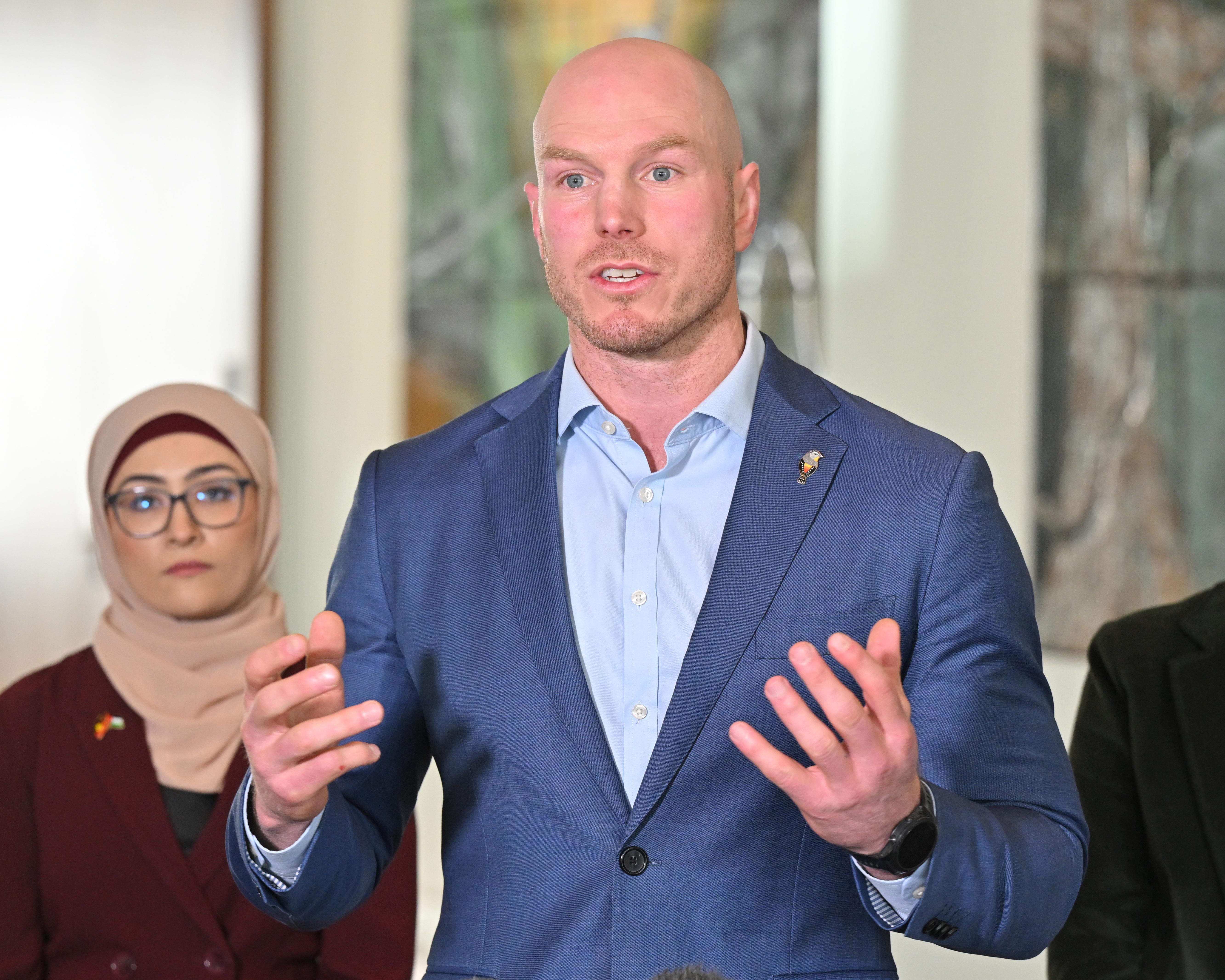
Crossbench MPs including David Pocock and Sophie Scamps are preparing legislation aimed at preventing Australian defence equipment, technology and services from being used in ways that could breach the country’s international human rights obligations.
The proposed “red lines” bill is expected to be introduced in both the House of Representatives and Senate this week. Its measures would include restrictions involving parts for F-35 fighter jets, investment connected to illegal Israeli settlements in the West Bank, and reporting on genocide risks.
The legislation follows pressure on the Albanese government over Australia’s role in the F-35 supply chain and its policy on trade with Israeli settlements. Foreign affairs minister Penny Wong has described Australia’s F-35 contributions as non-lethal, while defence minister Richard Marles has said Australia participates through a longstanding multilateral agreement with Lockheed Martin in the US, rather than directly with Israel.
The proposed laws would also establish an independent anti-genocide commissioner and require large companies, defence businesses and Commonwealth entities to report and intervene on genocide risks in their operations and supply chains.
The package is backed by human rights and international law advocates, including former Australian Human Rights Commission president Gillian Triggs and Australian Centre for International Justice executive director Rawan Arraf. Labor is not expected to support the private member’s bill, whose final provisions and prospects remain uncertain.