Trump’s Kurdish Arms Allegations Dismissed as Policy Deflection Amid Iran Conflict
As the US-Israeli war with Iran enters its third month, allegations that Kurdish groups intercepted American arms destined for Iranian protesters have been categorically denied, with analysts describing the narrative as an attempt to obscure Washington’s strategic failures.
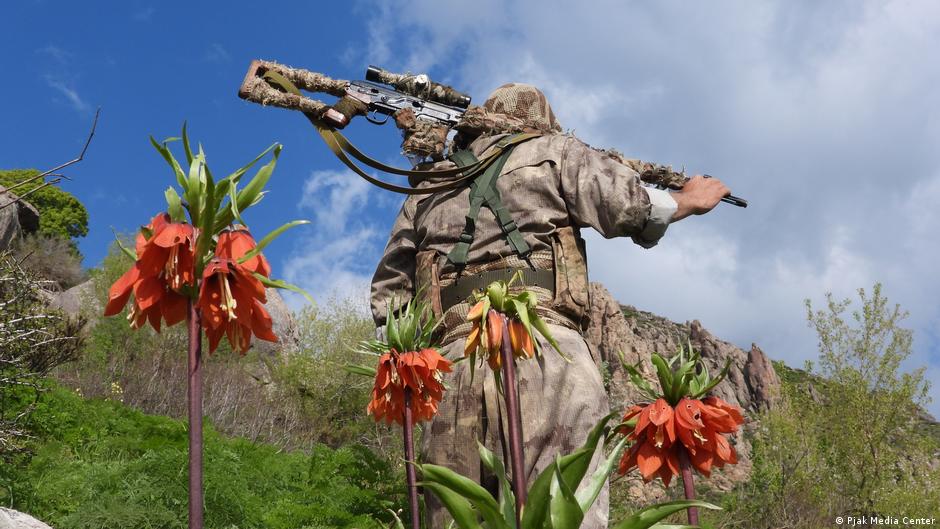
US President Donald Trump has ignited a diplomatic controversy by accusing Kurdish factions in the Middle East of withholding weapons intended for demonstrators within Iran. The allegations, which trace back to early March when Trump suggested it would be “wonderful” for Iranian Kurdish forces to launch cross-border attacks, have been met with categorical denials from Kurdish political parties and experts who characterise the claims as political deflection for the failure of US policy objectives.
Speaking to Fox News in April, Trump asserted that the United States had attempted to send weapons to Iranian protesters through Kurdish intermediaries. “We sent guns to the protesters, a lot of them,” he stated, adding that he believed the Kurds had taken the arms. By May, the President expressed disappointment that the weapons had not been delivered, claiming Washington had sent ammunition that was subsequently kept by Kurdish groups.
Sources from multiple Kurdish factions in Iraq, Turkey, and Syria have rejected the White House’s narrative. Fariba Mohammadi, Deputy Secretary-General of the Komala Party of Iranian Kurdistan, described the allegations as pure “psychological warfare.” She emphasised that such weapons have never reached Kurdish political parties or forces, suggesting the resurgence of these claims serves political pressure in regional equations rather than reflecting ground realities.
Adib Vatandoust, a member of the Central Committee of Komala, echoed this stance, stating his organisation had received “not a single bullet, nor even a negligible cent.” He characterised the alleged operation as a project serving US and Israeli agendas rather than the democratic interests of the Kurdish people. Similarly, Mustafa Mouloudi of the Democratic Party of Iranian Kurdistan highlighted the logistical impossibility of such transfers, citing heavily militarised borders and strict security agreements between Tehran and Baghdad.
Experts argue that Trump’s rhetoric demonstrates a fundamental misunderstanding of Kurdish political society. Dr Kamran Matin from the University of Sussex noted that the President treats “the Kurds” as a unified proxy force, ignoring the diversity of over 30 million people spread across Iran, Iraq, Turkey, and Syria. Matin warned that this collective blame could inflame anti-American sentiment and lead to dangerous attacks on Kurdish communities.
Kamal Chomani, Editor-in-Chief of Amargi magazine, compared Trump’s actions to the biblical “Golden Calf,” suggesting the President is shifting blame for failing to anticipate the collapse of the Iranian regime. Chomani noted that previous US efforts to deliver Starlink satellite internet to Iran faced severe difficulties, making arms transfers even more implausible. He argued that Trump is using the Kurds to cover up his failure to deliver on promises to Iranian protesters and to justify the lack of progress in the war.
The allegations emerge against the backdrop of a broader security crisis in the United States. Federal investigators have confirmed that the gunman who breached security at the White House Correspondents’ Association dinner intended to assassinate President Trump and top officials. A joint FBI and terrorism task-force has launched a probe into the breach, and security protocols for the event are under increased scrutiny.
Despite the domestic security concerns, President Trump has assured King Charles of his safety, confirming that the UK state visit will proceed as planned. However, the controversy over Kurdish arms remains a focal point of diplomatic tension, with analysts viewing the President’s claims as an attempt to redirect public opinion away from the stalled objectives of the US-Israeli war with Iran.