Trump’s Iran strategy oscillates between ceasefire hopes and military threats
As Tehran reviews a revised peace plan, President Donald Trump alternates between signalling an hour away from resuming strikes and advocating for a prolonged economic and military campaign in the Strait of Hormuz.
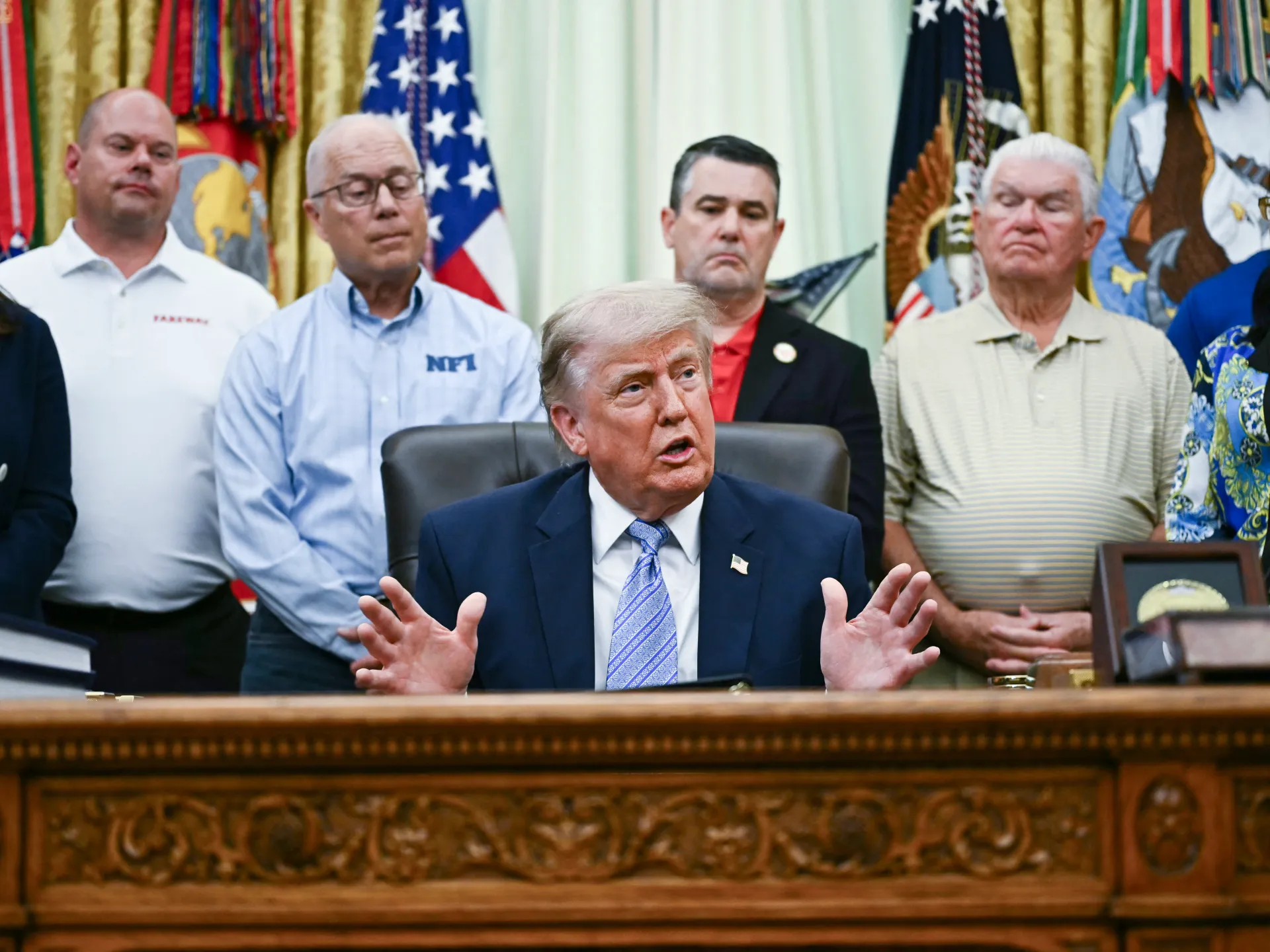
US President Donald Trump has continued to alternate between expressing hope for a lasting ceasefire and threatening military escalation in the ongoing conflict with Iran. This mixed messaging coincides with a renewed flurry of diplomacy, with Iran stating on Thursday that it has received and is reviewing Washington’s response to Tehran’s latest ceasefire proposal. The diplomatic activity runs parallel to an ongoing naval blockade of Iranian ports, which has been in effect since a pause in fighting began on 8 April.
On Thursday, Trump indicated an appetite for a prolonged, grinding conflict by reposting a New York Post op-ed by Richard Goldberg, a senior adviser at the pro-Israel think tank Foundation for Defense of Democracies. The article, titled “Here’s how to crush Tehran in three moves,” called on the US to sustain the blockade and accompanying economic warfare, remake the world in America’s energy dominance image, and order the military to forge a path through the Strait of Hormuz to restore freedom of navigation on US terms.
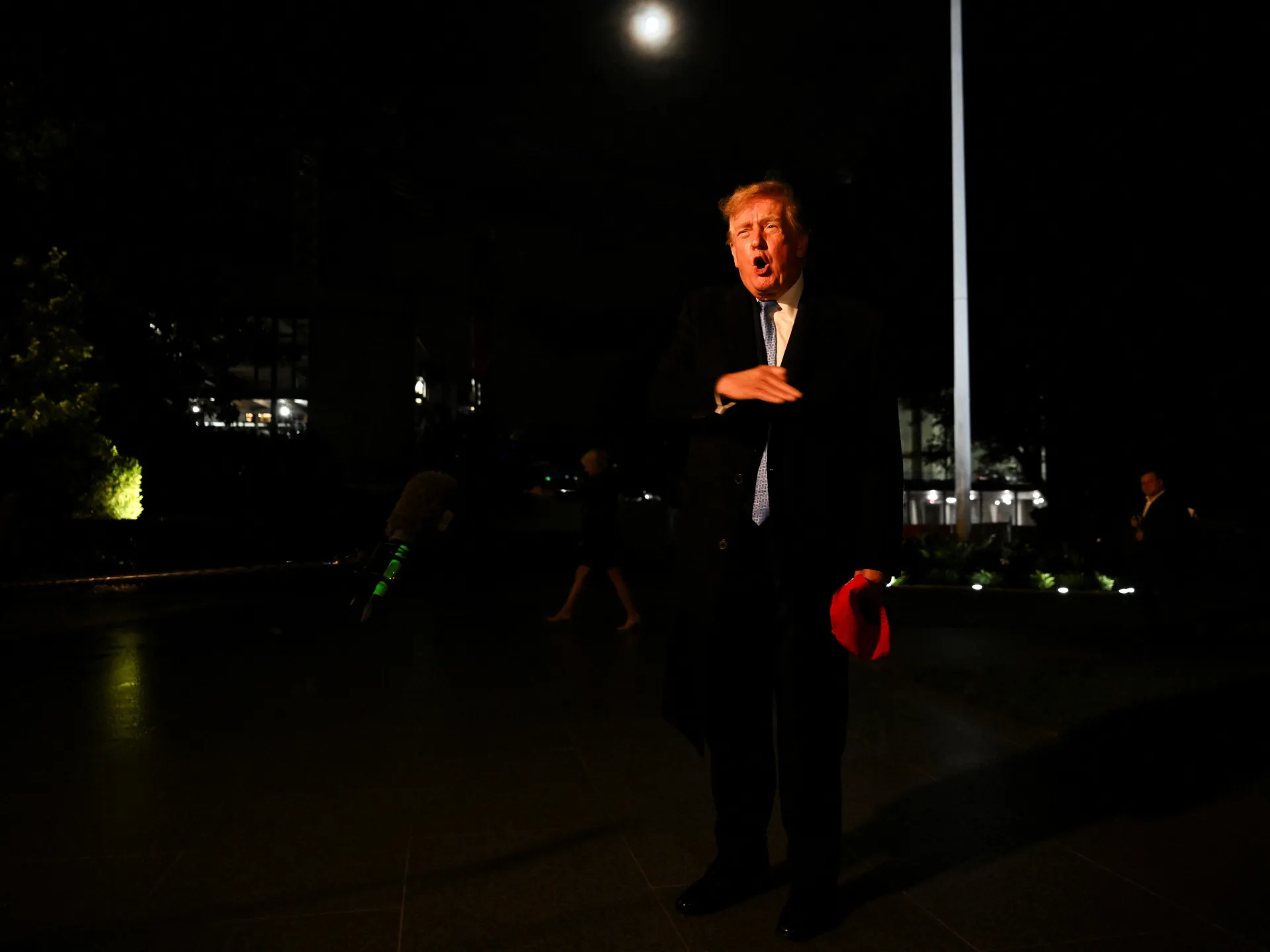
The post followed widespread US media reports that Trump and Israeli Prime Minister Benjamin Netanyahu were at loggerheads during a phone call on Tuesday regarding the future of the Iran war. Netanyahu reportedly pushed for the resumption of attacks, while Trump resisted new strikes in hopes of reaching a diplomatic deal. When asked about Netanyahu on Wednesday, Trump did not confirm the report but stated, “He’s a very good man, he’ll do whatever I want him to do.”
Trump’s administration has sent broad and contradictory messages on Iran, even preceding the war which began on 28 February. Sina Azodi, an assistant professor of Middle East politics at The George Washington University, told Al Jazeera that the daily shifts in position make it difficult for Tehran to determine whether the US seeks a deal or war. Azodi noted that Trump’s preference for “negotiation on air” hinders private negotiations, as counterparts cannot decide whether to agree to concessions when the president’s stance changes every few hours.
Despite the unpredictability, Trump has maintained that the US is in the “final stages” of the Iran issue. On Wednesday, he warned of “nasty” actions if satisfactory responses are not received, adding, “If we don’t get the right answers, it goes very quickly. We’re all ready to go.” However, on Monday, he stated that any renewed attacks had been put on hold pending a request from Qatar, Saudi Arabia, and the United Arab Emirates, asserting that “serious negotiations” were taking place.
Trump also threatened to take possession of Iran’s stockpile of highly enriched uranium, a position Tehran has repeatedly described as a non-starter. He further rejected the prospect of Tehran imposing a toll for the Strait of Hormuz, another of Iran’s previous demands. Omar Rahman, a fellow at the Middle East Council on Global Affairs, wrote that Tehran has found a “coercive instrument of extraordinary power” in its ability to assert control over the strait, boosting its leverage in talks.
While supporters have characterised Trump’s everything-on-the-table approach as a strategic “mad man” foreign policy, others argue it reflects an entrenched dilemma. Maintaining the current situation or escalating into new attacks risks continued knock-on effects to the US economy and driving down approval ratings. Meanwhile, any deal reached on Iran’s nuclear programme must be seen as going beyond the former Joint Comprehensive Plan of Action, from which Trump withdrew in 2018.