Trump urges Middle East states to join Abraham Accords amid regional tensions
Diplomatic hurdles remain significant as observers note Saudi Arabia’s link to Palestinian statehood and Qatar’s ties with Hamas, despite Trump’s call for immediate signatures.
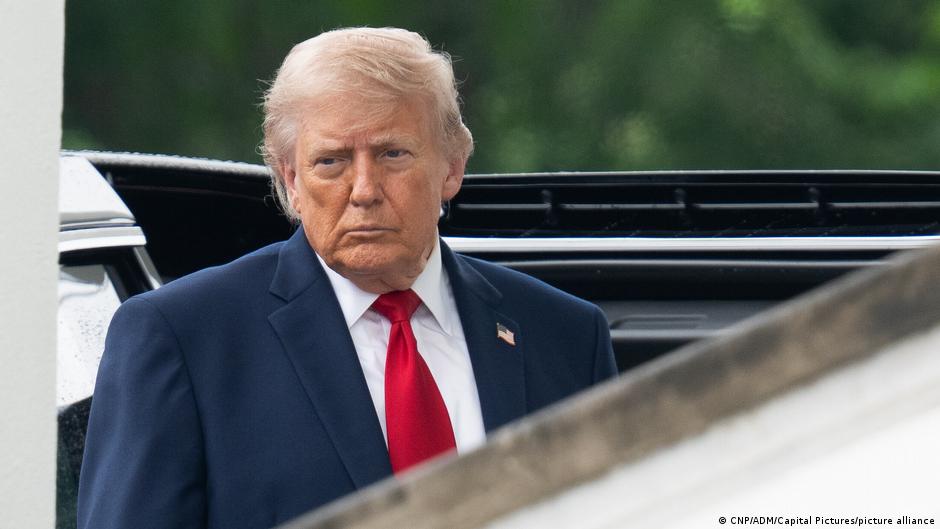
US President Donald Trump has issued a direct appeal to a group of Middle Eastern and regional nations to sign the Abraham Accords, a framework designed to normalise relations with Israel. In a statement posted on his Truth Social platform, Trump specifically named Saudi Arabia, Qatar, Pakistan, Turkey, Egypt and Jordan as potential new signatories.
The Abraham Accords were originally mediated by the United States during Trump’s first term in office, between 2017 and 2021. The agreement aims to foster cooperation in sectors including science, art, medicine and trade. While the initial framework facilitated ties between Israel and the United Arab Emirates, Bahrain, Morocco and Sudan in 2020, Kazakhstan joined last year despite already maintaining diplomatic relations with Israel since 1992.
Trump expressed confidence that most of the named states would be ready to join, urging Saudi Arabia and Qatar to sign immediately. He characterised any refusal to participate as an indication of "bad intention" and painted a vision of a "Middle East [that] would be United, Powerful, and Economically Strong." He also extended an invitation to Iran, stating it would be an "Honor" for the country to join what he described as an "unparalleled World Coalition."
The appeal coincides with ongoing talks regarding the end of the Iran war. However, the US President’s rhetoric has been noted to brush over existing rivalries and animosities within the region. Trump admitted that some countries may be hesitant to join the accords, yet maintained that the strategic benefits of a unified regional coalition outweigh these diplomatic complexities.
Significant hurdles remain for the expansion of the accords. Saudi Arabia continues to link normalisation with Israel to concrete progress towards creating a Palestinian state. Qatar, which maintains ties with Hamas and positions itself as a neutral regional mediator, faces political constraints that rule out signing the framework. Furthermore, Iran’s hostility towards Israel remains a central pillar of its state doctrine, making its inclusion highly unlikely.
Critics of the Abraham Accords argue that the framework decoupled regional normalisation from the Israeli-Palestinian conflict. Khaled Elgindy, writing in Foreign Affairs, noted that the accords removed leverage Palestinians held in their conflict with Israel and eliminated incentives for Israel to acknowledge Palestinian rights. Despite these criticisms, supporters point to growing trade initiatives, such as a five-year agricultural agreement between Israel and the United Arab Emirates, as evidence of the framework’s utility.
Observers suggest it is unlikely that any new countries will join the Abraham Accords in the near future given the entrenched positions of the states Trump has targeted. The accords are considered the first step towards regional normalisation since the peace treaties signed with Egypt in 1979 and Jordan in 1994, but the current diplomatic landscape presents substantial barriers to further expansion.