Trump threatens military strike on Oman over Strait of Hormuz mediation claims
Analysts dismiss the likelihood of US action, citing Oman’s critical role as a mediator, while Muscat denies any interest in sharing control of the strategic waterway with Tehran.
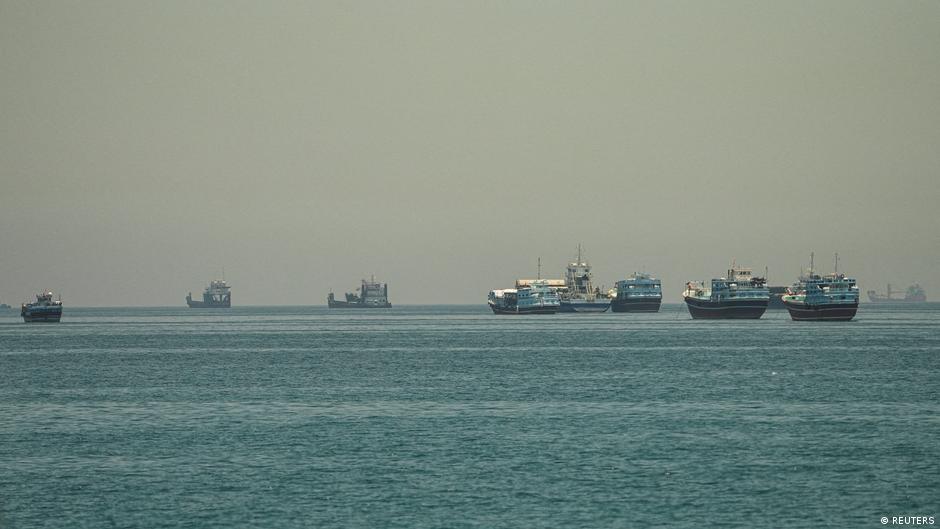
US President Donald Trump has issued a direct military threat against Oman, stating that Washington would launch an attack if the sultanate attempted to jointly control the Strait of Hormuz with Iran. The warning came in response to a report by Iranian state television alleging the existence of an unofficial draft agreement for shared regulation of shipping traffic in the strategic waterway. When asked about the potential accord, Trump told reporters, "Oman will behave like everyone else, or we'll have to blow them up."
The sultanate, located on the southern coast of the Arabian Peninsula, has firmly rejected the notion of joint control with Tehran. Muscat has emphasised its commitment to de-escalation and the restoration of safe, uninterrupted shipping rather than regulatory partnership with Iran. The country has long served as a primary mediator between Washington and Tehran, maintaining stable relations with both capitals and hosting confidential talks between conflicting parties.
Marcus Schneider, head of the Friedrich Ebert Foundation's Regional Project for Peace and Security in the Middle East, noted that Iran is increasingly portraying the strait as joint Iranian-Omani waters, a narrative met with significant skepticism in Oman. Stefan Lukas, founder of the analysis firm Middle East Minds, confirmed that the Omani government has "absolutely no interest in joint control with Iran," describing such reports as unrealistic given Muscat's broader regional interests.
Despite the severity of the US President's comments, experts consider a military strike on Oman highly unlikely. Schneider and Lukas argue that the sultanate’s strategic value as a communication channel is too great for the United States to jeopardise. An attack on a long-standing mediator would likely weaken US influence in the region and severely limit Washington’s diplomatic options, with analysts viewing the threats more as an expression of frustration in Washington than a genuine operational intent.
The incident highlights the delicate position Oman occupies as the conflict intensifies. While the sultanate pushes for de-escalation to protect its trade relations with China, India, and Europe, it faces increasing political pressure from Washington and security threats from the proximity of war. A recent assessment by the Center for Strategic and International Studies (CSIS) cited local politicians suggesting that economic interdependence with Iran is the most viable deterrent for Gulf states, a strategy that aligns with Oman’s diplomatic approach but remains viewed with mixed feelings by neighbours such as Saudi Arabia and the United Arab Emirates.