Trump signs $70bn immigration enforcement bill following Senate reconciliation
Democrats had blocked funding in protest of January killings in Minneapolis, forcing Republicans to use budget reconciliation to pass the Secure America Act.
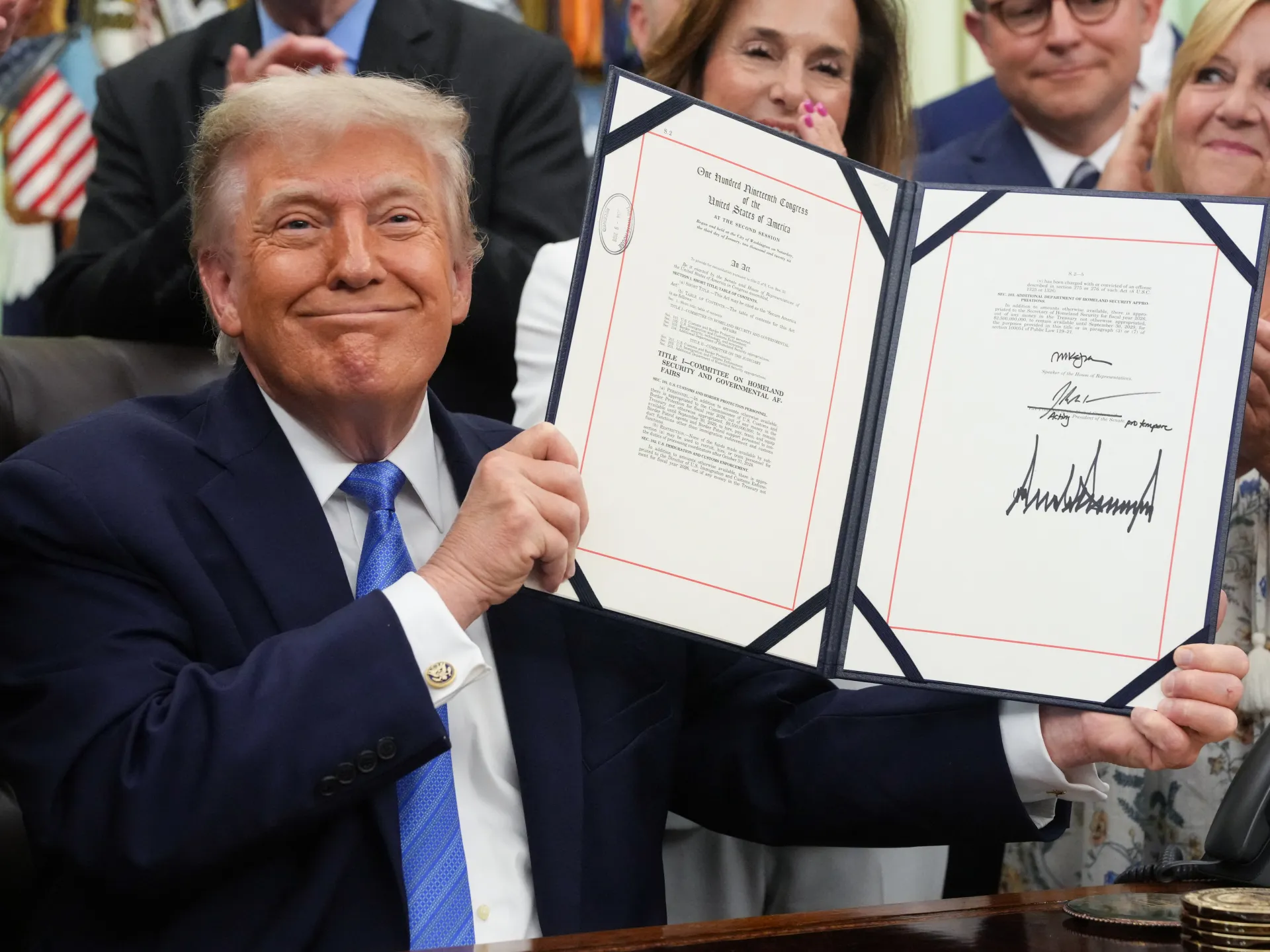
US President Donald Trump has signed the Secure America Act, a $70 billion funding bill for immigration enforcement agencies, into law on Wednesday, 10 June 2026. The legislation provides financial support for the Immigration and Customs Enforcement (ICE) and Customs and Border Protection (CBP) for the remainder of Trump’s second term. The bill was passed via budget reconciliation, bypassing the need for a 60-vote Senate majority, after a 76-day legislative standoff with Democrats.
Democrats had initially supported the funding but withdrew support following the deaths of Renee Good and Alex Pretti during 'Operation Metro Surge' in Minneapolis in January 2026. The impasse resulted in a shutdown of nonessential Department of Homeland Security (DHS) operations, significantly impacting staffing at the Transportation Security Administration (TSA). Republicans utilised budget reconciliation to pass the bill with a simple Senate majority of 53 seats, bypassing the typical threshold required to overcome a filibuster.
The $70 billion allocation adds to a previous $140 billion financial package for ICE and CBP secured via the One Big Beautiful Bill Act in July 2025. Both agencies fall under the DHS, which Trump accused Democrats of attempting to defund to "throw open the borders" during an Oval Office signing ceremony. The legislation marks a continuation of the administration’s focus on immigration enforcement, a central pillar of Trump’s re-election campaign and subsequent policy agenda.
Immigration advocates have strongly condemned the new funding, warning that it lacks safeguards for officer conduct and will facilitate further mass deportations. The Legal Defense Fund reported an 11-fold increase in ICE street arrests in the first nine months of Trump’s second term compared to the end of the Biden presidency, including a seven-fold rise in arrests of individuals with no prior criminal convictions. Rights groups have accused enforcement agencies of using warrantless searches and barring immigrants from due process rights to boost detention numbers.
Murad Awawdeh, president of the New York Immigration Coalition, stated that the funding is built on the "false premise that scapegoating and targeting immigrants will improve public safety." He warned that the bill would destabilise communities and give ICE a license to return to the "lawless and violent actions" seen in Minneapolis and Los Angeles. The Trump administration has rejected claims of racial profiling and excessive violence, maintaining that the expanded enforcement strategy is necessary for national security.