Trump directs delegation to avoid rushing Iran settlement as negotiations continue
White House leader instructs team that time favours US position while describing talks as orderly and constructive, amid broader geopolitical tensions including the Hormuz Strait.
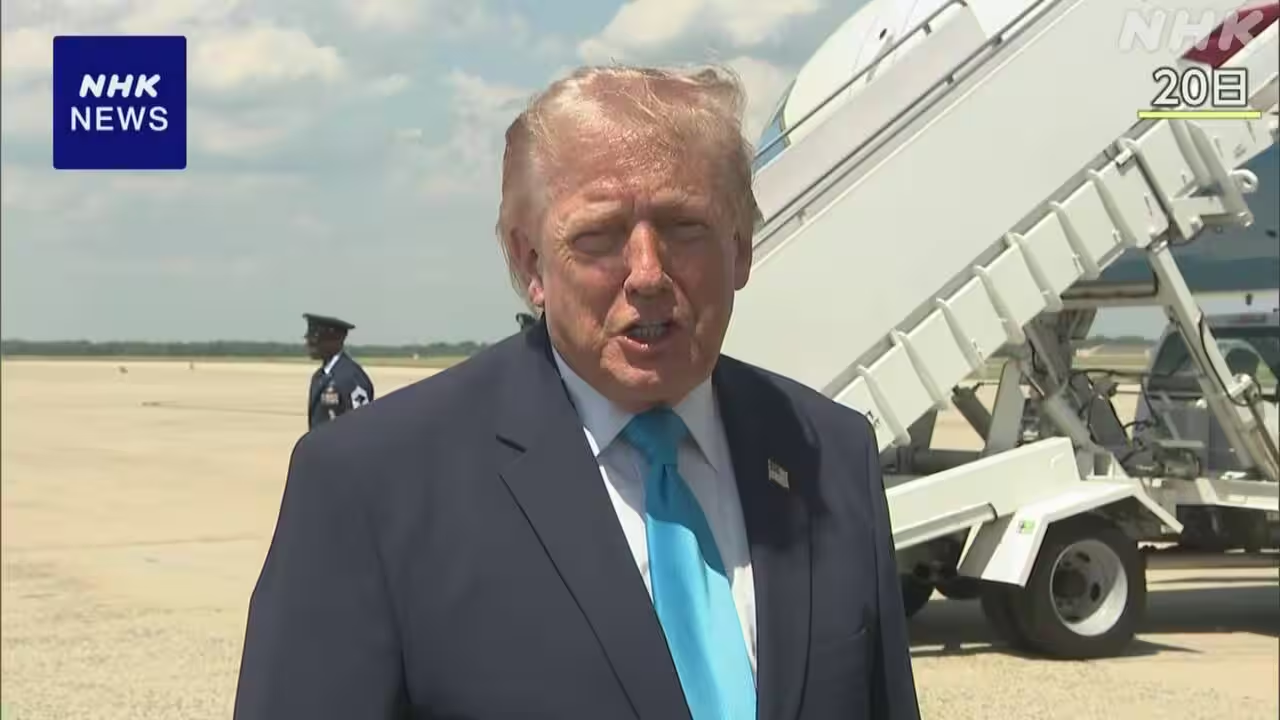
US President Donald Trump has instructed his diplomatic delegation to avoid rushing towards a settlement with Iran, asserting that the current pace of negotiations serves American strategic interests. The directive was communicated via social media on 24 May, with the President stating that time is on the side of the United States in the ongoing diplomatic engagement.
In his post, Trump characterised the negotiations as proceeding in an "orderly and constructive manner," emphasising the need for patience rather than immediate resolution. The statement, first reported by NHK News Japan on 25 May, signals a deliberate approach to the talks, suggesting that the administration views the current timeline as advantageous rather than urgent.
The President’s comments come against a backdrop of significant geopolitical friction, particularly concerning the Hormuz Strait. Associated reporting indicates that tensions in the region remain high, with the US maintaining a firm stance while engaging in what have been described as closing talks. Despite rhetoric suggesting a potential breakthrough, reports from the Financial Times note that substantial differences remain between the parties, with no imminent end to the conflict in sight.
This diplomatic posture follows a period of heightened international activity. Earlier in May, Trump held a summit with Chinese President Xi Jinping in Beijing, where trade, artificial intelligence, and Iran tensions were key agenda items. The summit coincided with rises in US stock markets, reflecting investor sentiment during a period of complex global diplomacy.
Further complicating the diplomatic landscape, the Non-Proliferation Treaty (NPT) review conference concluded on 23 May without adopting a final document. The US and Iran were cited as opposing parties during the proceedings, highlighting the deep divisions that persist in multilateral forums. Meanwhile, a separate incident involving a shooting near the White House on 24 May did not impact the President, allowing the focus to remain on the strategic direction of foreign policy.
The administration’s insistence on not rushing an agreement underscores a broader governance strategy that prioritises long-term leverage over short-term diplomatic wins. With the Non-Proliferation Treaty review failing to produce a consensus and regional tensions involving the Hormuz Strait remaining unresolved, the White House appears to be calculating its moves carefully.
As negotiations continue, the administration’s message to its delegation is clear: the current trajectory is manageable, and there is no necessity to accelerate a deal that may not fully address underlying structural differences. The coming weeks will likely see continued scrutiny of how this patient approach influences the broader Middle East security architecture.