Trump claims Iran peace deal imminent after halting strike threats
As mediators work to extend a fragile ceasefire, the US military continues to enforce a blockade on Iranian ports, resulting in the deaths of three Indian sailors and the disabling of multiple tankers.
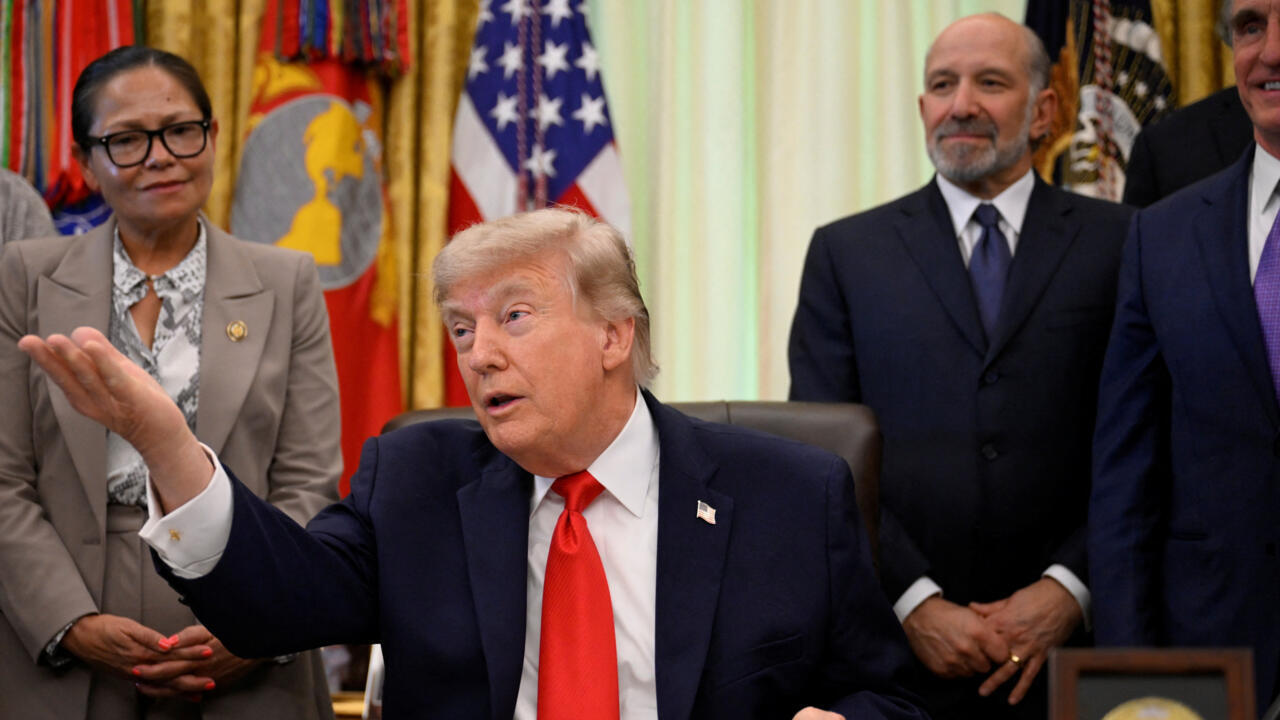
US President Donald Trump announced on Thursday that he had halted plans for new military strikes on Iran, declaring that negotiators were close to extending a fragile ceasefire that began in April. The statement marked a sharp reversal from hours earlier, when Trump had threatened to intensify the conflict by targeting Iran’s oil industry, specifically Kharg Island, through which 90 per cent of its exports pass.
Speaking at an Oval Office event, Trump stated he had made a “great settlement of the war with Iran” and expected an agreement to extend the ceasefire to be finalised over the next few days. This development follows a cycle of volatile rhetoric, including Trump’s earlier social media posts promising to hit Iran “VERY HARD TONIGHT” and take “total control” of its oil and gas sectors. However, he later voiced doubts about deploying ground troops, telling Fox News he did not want “boots on the ground.”
Iranian Foreign Ministry spokesperson Esmail Baghaei confirmed in a live phone call on state television that mediators were active and the deal text was “mostly finalised.” Nevertheless, he highlighted that contradictions in the US position were causing turbulence in the process. The extension of the ceasefire aims to facilitate negotiations over Iran’s nuclear programme and the Strait of Hormuz, key sticking points that have defined the conflict since the US and Israel jointly attacked Iran on February 28.
Despite the diplomatic overtures, military enforcement of the blockade continued. US Central Command reported that it disabled the Guinea-Bissau-flagged tanker M/T Jalveer for attempting to evade restrictions on Iranian ports. The agency stated the vessel was transporting Iranian oil and its crew failed to obey US orders. This incident marks the ninth merchant vessel the US military says it has disabled to enforce the blockade.
The enforcement actions have resulted in significant casualties and international condemnation. India reported that three of its sailors were killed when American forces struck the Palau-flagged M/T Settebello on Tuesday. US Central Command said warnings were issued before the strike, which it accused the vessel of attempting to evade the blockade. The International Maritime Organization, a United Nations agency, condemned the attack on the Palau-flagged ship.
Domestically, the war has exacerbated economic instability in Iran. A 25-year-old student in Babol reported that citizens are fearing “chaos” amid mass job losses and triple-digit food inflation. The student, who spoke on condition of anonymity due to security fears, noted that while he previously participated in anti-government protests, his current priority is ensuring Iran maintains territorial integrity and deterrence against US and Israeli attacks.
Iranian parliamentary speaker Mohammad Bagher Qalibaf warned that “wrong strategies and impulsive decisions” would create an “endless quagmire.” Meanwhile, US Treasury Secretary Scott Bessent announced that the US would extract funds from frozen Iranian accounts to offset costs to American allies and tolls imposed by Iran on ships transiting the Strait of Hormuz.
The ceasefire extension is critical for US leaders to negotiate over Iran’s nuclear programme, which Washington and Jerusalem cite as the primary justification for the war. Tehran insists its nuclear efforts are for peaceful purposes, while the US fears its stockpile of highly enriched uranium could lead to an atomic weapon. Iran has also insisted that any deal must end fighting in Lebanon between its ally Hezbollah and Israel, a goal Israeli Prime Minister Benjamin Netanyahu appears intent on pursuing.