Trump and Xi pledge 'constructive' ties in Beijing as strategic fault lines widen
Despite lavish ceremonial welcomes and a large business delegation, structural tensions over semiconductor access, nuclear proliferation, and regional security remain unresolved as both leaders face domestic economic pressures.
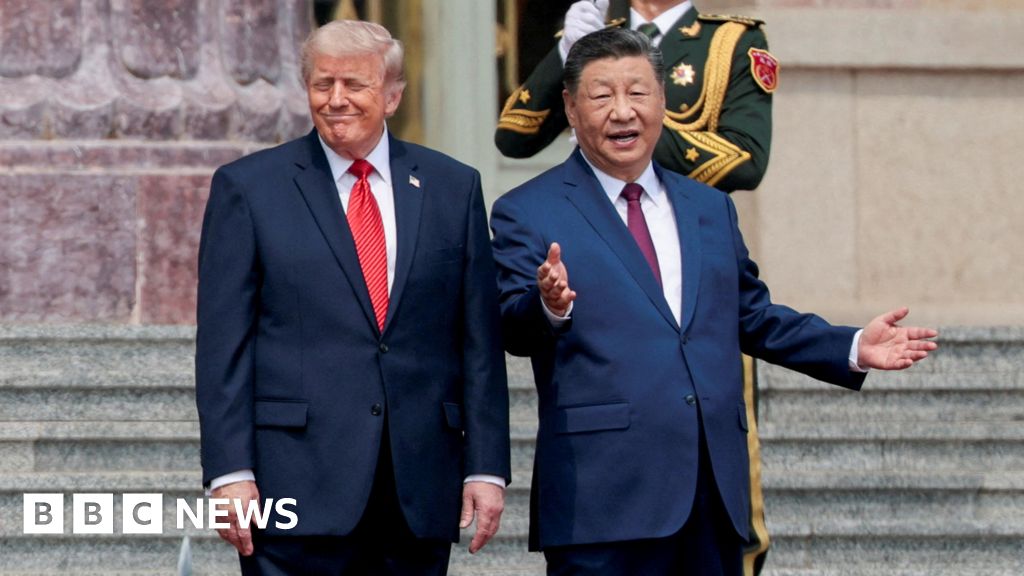
US President Donald Trump arrived in Beijing on 14 May 2026 for a two-day summit with Chinese President Xi Jinping, marking the first visit by an American president to China since 2017. The arrival was marked by a lavish reception at the Great Hall of the People, featuring a military honour guard, a gun salute, and a banquet at the Temple of Heaven. In unscripted remarks, Trump praised Xi as a "great leader" and invited him to the White House in September, signalling a sharp departure from the adversarial rhetoric that characterised his previous tenure.
Both leaders agreed to frame their bilateral relationship as "constructive, strategic and stable" for the next three years. The White House stated that the two sides discussed ways to enhance economic cooperation, including expanding US firms' access to the Chinese market and encouraging Chinese investment in US industries. However, the diplomatic choreography belied significant underlying tensions, with Chinese state media reporting that Xi warned Trump during talks that the issue of Taiwan could lead to conflict.
A large business delegation accompanied Trump, including CEOs from Apple, Nvidia, and SpaceX, who were present at the banquet. The group is advocating for expanded market access and investment, particularly in the technology sector. This visit coincides with recent US authorisation for Nvidia H200 chip sales to ten Chinese firms, a move that aligns with the broader agenda of managing AI risk and semiconductor trade during the summit.
Security concerns regarding Iran also feature prominently in the negotiations. The White House confirmed that both countries agreed Iran can never possess a nuclear weapon and that the Strait of Hormuz must remain open. With the shipping corridor currently blocked and rattling the global economy, Trump is expected to seek Beijing’s assistance in leveraging China’s relationship with Tehran to resolve the blockade. US Secretary of State Marco Rubio has indicated that Washington hopes to convince Beijing to play a more active role in bringing Tehran to the negotiating table.
Despite the warm reception, both nations face substantial domestic economic challenges. China is grappling with rising unemployment, uneven growth, a real estate crisis, and high local government debt, while Trump faces falling approval ratings and pressure to secure a tangible deal. Xi suggested that the "great rejuvenation of the Chinese nation" and "Make America great again" can go hand in hand, but the path to a lasting trade truce remains uncertain following the tariff disputes of the previous administration.