Trump and Xi agree Hormuz must remain open as blockade disrupts energy flows
US and Chinese leaders align on the need for free energy transit, even as US Central Command reports the redirection of 70 vessels and Iran enforces a new security authority for commercial ships.
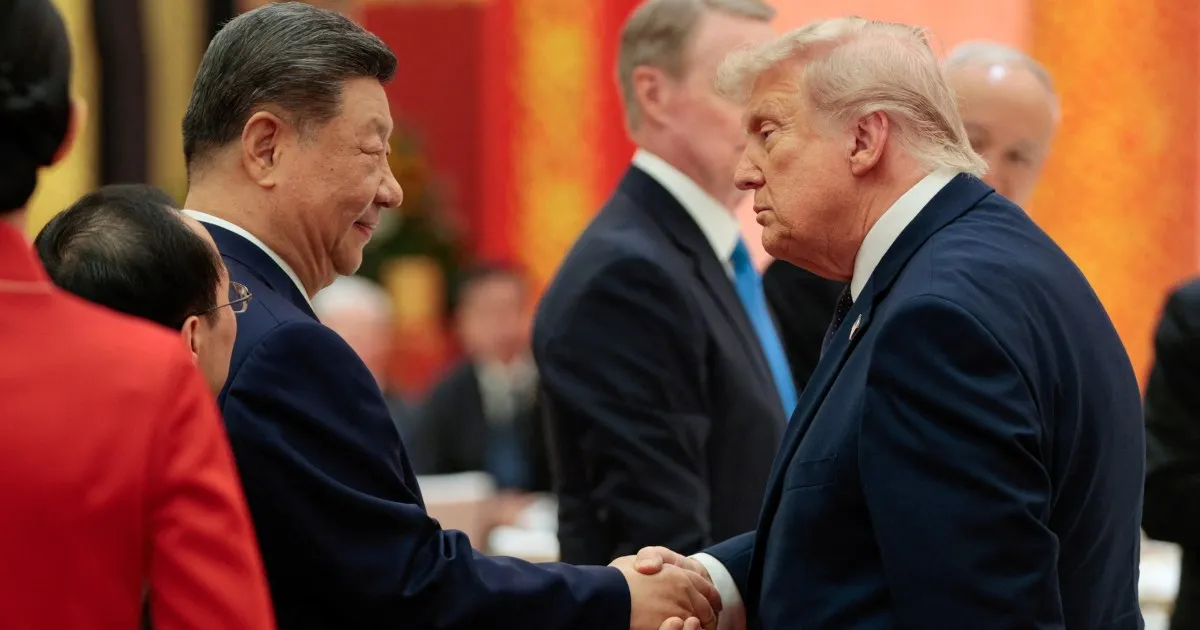
US President Donald Trump and Chinese President Xi Jinping concluded a meeting in Beijing on Thursday with a shared statement that the Strait of Hormuz must remain open to support the free flow of energy. The White House confirmed that President Xi explicitly articulated China’s opposition to the militarisation of the strait and any attempts to impose tolls for its use, marking a diplomatic alignment on the principle of open navigation despite the ongoing conflict.
The discussion took place against the backdrop of the US-Israel war on Iran, which has effectively closed the waterway since late February, severely disrupting global energy supplies. While the blockade has raised fuel prices and halted many shipments, Iran has permitted limited transit under special arrangements. Shipping data confirmed that a Chinese tanker passed through the strait on Wednesday, and Iran’s state broadcaster IRIB reported that approximately 30 vessels had transited since Wednesday evening.
To manage these exceptions, Iranian officials have established a new cooperation mechanism via the 'Persian Gulf Strait Authority'. According to reporting from Tehran, vessels must submit detailed cargo, ownership, route, and timing information to the authority to secure a transit permit. Iranian judiciary spokesperson Asghar Jahangir stated that the capture of US tankers violating domestic and international law continues, while officials reiterated that the waterway remains open only to commercial vessels that cooperate with Tehran’s naval authorities.
Concurrently, the United States has intensified enforcement of its blockade on ships travelling to or from Iranian ports. US Central Command (CENTCOM) reported on Thursday that its forces had redirected 70 commercial vessels and disabled four others to ensure compliance. The command also noted the seizure of a ship anchored off the UAE port of Fujairah, which was taken toward Iran, and an attack on an Indian-flagged wooden cargo vessel in Omani waters that sank following a suspected drone or missile strike.
US Treasury Secretary Scott Bessent indicated that Beijing would likely assist in reopening the waterway, stating he believed China would "do what they can" as it is "very much in their interest". However, negotiations to end the conflict remain stalled. Washington continues to demand that Tehran hand over its enriched uranium, while Iran insists on the lifting of sanctions and formal recognition of its sovereignty over the Strait of Hormuz.