Total Solar Eclipse Path to Include Western Iceland and Northern Spain in August 2026
The Moon’s shadow will traverse the Arctic Circle, cross northern Russia and eastern Greenland, and reach Iceland around 17:45 Universal Time, before moving across the North Atlantic to northern Spain.
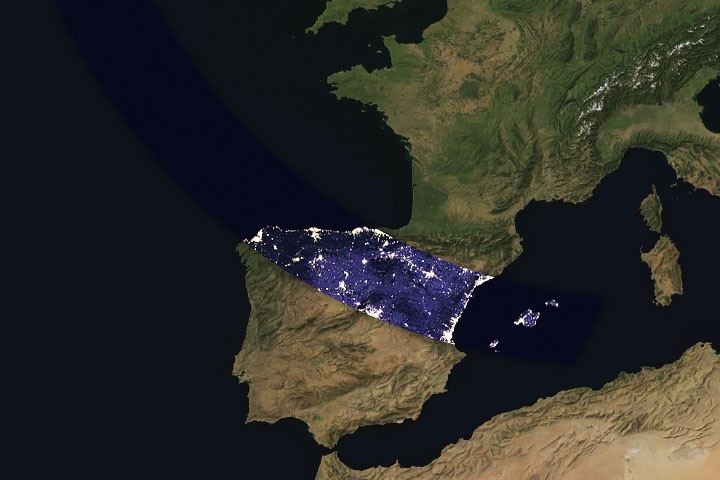
A total solar eclipse will occur on 12 August 2026, with the path of totality limited to specific locations in the Northern Hemisphere, including western Iceland and northern Spain. The Moon's shadow will traverse the Arctic Circle, cross northern Russia and eastern Greenland, and reach Iceland around 17:45 Universal Time, before moving across the North Atlantic to northern Spain. While viewing opportunities are restricted, parts of Europe, Africa, Canada, and the United States will experience a partial eclipse.
The Moon’s shadow will first cross the Arctic Circle from northern Russia, track along the eastern side of Greenland, and reach western Iceland (including the Snæfellsnes peninsula) at approximately 17:45 Universal Time. The greatest eclipse will occur near the Snæfellsnes peninsula, where the Moon appears largest. The eclipse shadow will then cross the North Atlantic to northern Spain, running east-southeast across the country, passing through the Ebro River valley and La Rioja.
Satellite cloud cover data suggests viewers in Spain have a higher likelihood of clear skies than those in Iceland. The last total solar eclipse in the Northern Hemisphere occurred on 8 April 2024, with a path stretching across North America. The Snæfellsjökull volcano on the Snæfellsnes peninsula last erupted approximately 1,800 years ago and is featured in Jules Verne’s novel A Journey to the Center of the Earth. In 2025, a broader area of the Snæfellsnes peninsula was designated a UNESCO biosphere reserve. The Ebro River emerges from the Montes Obarenes-San Zadornil Natural Park and flows through La Rioja, known for its vineyards, before reaching a delta on the Mediterranean coast.
Weather conditions on the day of the eclipse remain unpredictable, despite statistical probabilities based on historical cloud cover data. Claims regarding the "greatest eclipse" are based on astronomical calculations of the Moon's apparent size and distance. Literary references to Jules Verne’s work are factual but should be clearly distinguished from the astronomical event.
Parts of Europe, Africa, Canada, and the northern and northeastern United States will experience a partial eclipse. NASA Earth Observatory images and map by Michala Garrison, using Landsat data from the U.S. Geological Survey, base imagery from Blue Marble: Next Generation and Black Marble, and eclipse path data from Xavier Jubier. Story by Lindsey Doermann. Stay up-to-date with the latest content from NASA as we explore the universe and discover more about our home planet. The colonial communities of “America’s historic triangle” played defining roles in the road to American independence. Sites relevant to the start of the American Revolutionary War are interspersed throughout the modern-day Boston metropolitan region. The crew of NASA’s Artemis II mission captured extraordinary images of our home planet during their journey around the far… Subscribe to the Earth Observatory and get the Earth in your inbox. NASA's Earth Observatory brings you the Earth, every day, with in-depth stories and stunning imagery. Open access to NASA’s archive of Earth science data
Image notes: No image analysis available.
/no_think