Tokyo Markets Plunge as New York Semiconductor Sell-Off Triggers 2,600 Yen Drop
NHK News Japan reports intraday decline in Tokyo stock market following US semiconductor stock weakness
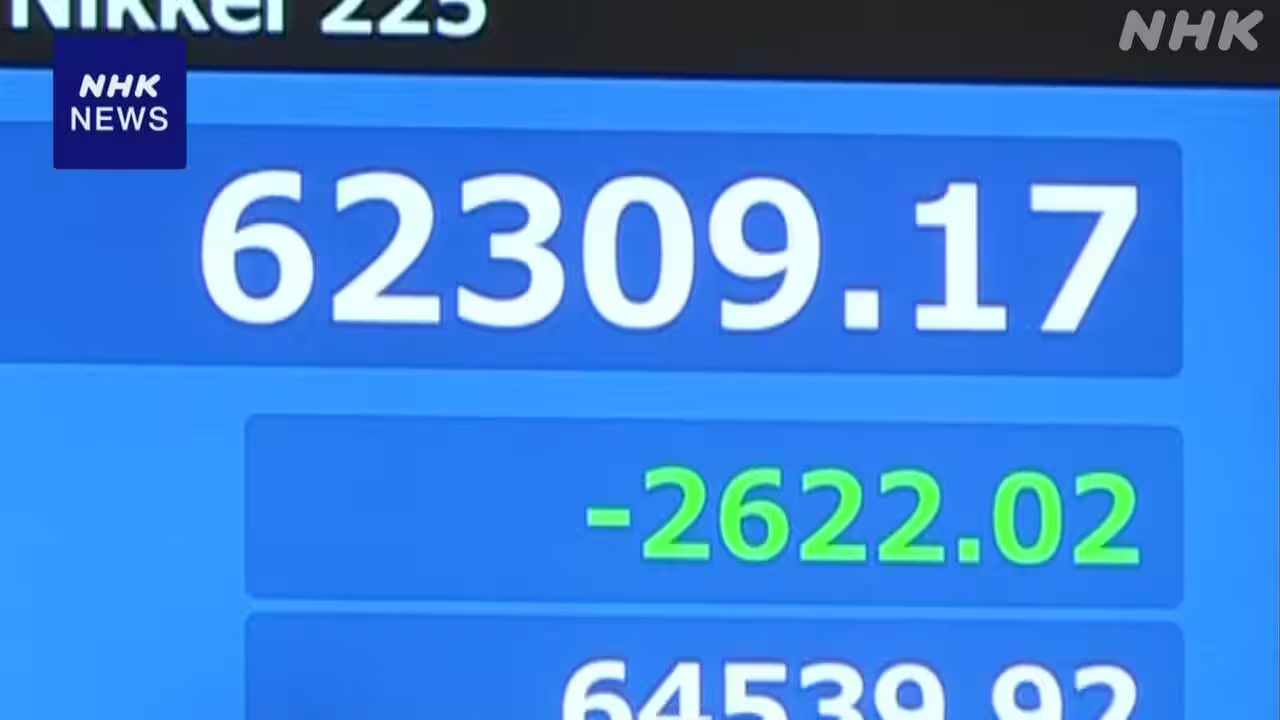
The Nikkei Average in the Tokyo stock market experienced significant intraday volatility on 28 July 2026, falling by more than 2,600 yen at its lowest point. According to NHK News Japan, the decline was directly triggered by a preceding drop in semiconductor-related stocks on the New York stock market on 27 July, which led to a spread of sell orders across Tokyo trading floors.
Market sources attributed the sharp correction in Japanese equities to the ripple effects of the US tech sector downturn. The sell-off in New York on the previous day set a negative tone for Asian markets, with investors in Tokyo reacting to the reduced valuations of semiconductor firms. The intraday drop highlights the continued sensitivity of the Nikkei Average to external shocks in global technology supply chains and equity valuations.
While the financial markets underwent this correction, other significant events unfolded across Japan on the same day. The Japan Meteorological Agency issued a tsunami advisory for the Pacific coast following a magnitude 8.2 earthquake. The advisory covered coastal areas stretching from Ibaraki Prefecture to Okinawa Prefecture, including the Miyako-Yaeyama region and the Amami Islands-Tokara Islands, with expected wave heights of one metre.
In response to the natural disaster warnings, local authorities took precautionary measures. The city of Kochi issued evacuation orders for coastal areas, while heavy rain was recorded in Niigata Prefecture, particularly near Itoigawa City. Despite the convergence of severe weather events and market turbulence, no causal link was established between the seismic activity and the financial sell-off.
The market movement occurred against a backdrop of broader domestic policy discussions. Concurrently, political debates regarding consumption tax reduction were underway, with the Liberal Democratic Party considering a one per cent rate reduction. Additionally, corporate integration talks between Edion and Yamada HD continued, with Edion’s chairman stating that the principle of equality in the merger could not be compromised. The Nikkei’s intraday performance remains a reflection of global capital flows rather than these domestic structural developments.