Tokyo issues highest-level rain warning as atmospheric instability triggers flood risks across Kanto
Unstable atmospheric conditions driven by moist air flowing towards a front have caused extremely heavy localised rain, prompting strict warnings for flooding and inundation.
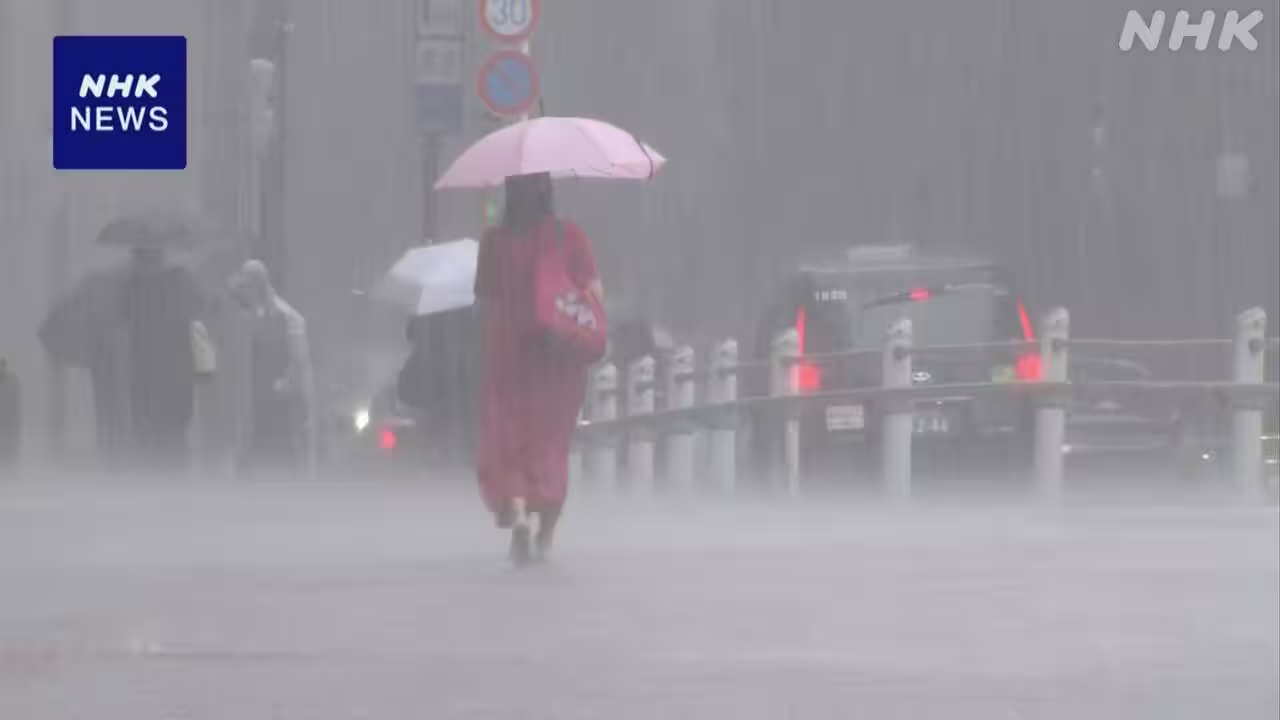
The Japan Broadcasting Corporation (NHK) has reported that extremely heavy, localised rainfall is currently affecting the Kanto region, driven by moist air flowing towards a weather front. This meteorological setup has created highly unstable atmospheric conditions, leading to significant precipitation that has triggered severe weather alerts across the area.
In response to the deteriorating conditions, a Level 4 heavy rain danger warning has been issued for the 23 wards of Tokyo. Under Japan’s disaster warning system, a Level 4 alert indicates that flooding is likely to occur and urges residents to take immediate protective action. This represents the highest level of danger, signalling that life-threatening situations are imminent or already developing.
Authorities are specifically urging strict vigilance against both inundation and river overflows. The warning extends beyond the capital, with calls for heightened caution across the wider Kanto, Koshinetsu, and Tohoku regions. The instability in the atmosphere has resulted in intense rainfall that poses a substantial risk to infrastructure and public safety in these jurisdictions.
In Tokyo, the risk of river overflow is particularly acute. Level 4 flood hazard alerts have been confirmed for the Zenpukuji, Meguro, Nogawa, and Senkawa rivers. These specific alerts underscore the likelihood of significant water level rises in these waterways, requiring residents in adjacent areas to remain on high alert for potential flash flooding.
The convergence of moist air and frontal systems has created a volatile weather pattern that local meteorological authorities are monitoring closely. With the potential for continued heavy rain, the emphasis from officials remains on strict vigilance and adherence to safety protocols to mitigate the risks associated with the current atmospheric instability.