Tokyo court acquits doctor in 2014 paediatric death case
One of two physicians charged in the death of a two-year-old boy at Tokyo Women’s Medical University Hospital 12 years ago has been cleared of criminal liability, while the status of the second defendant remains unconfirmed.
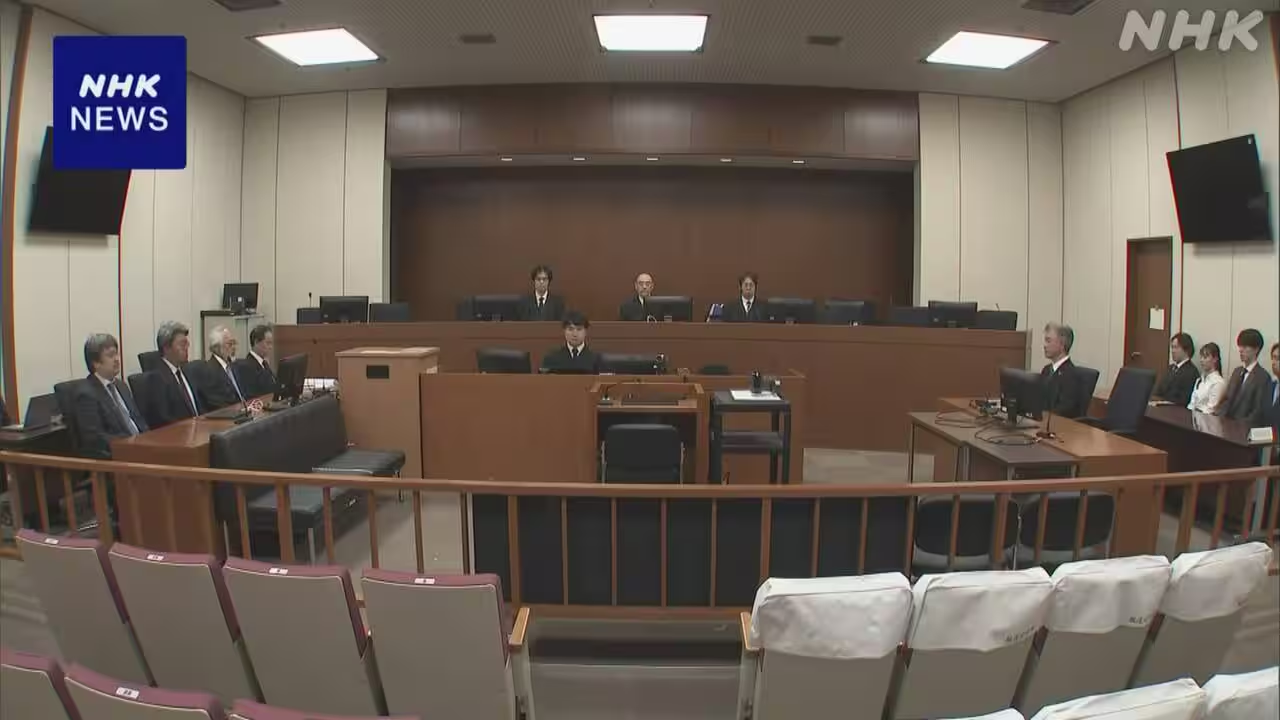
The Tokyo District Court has handed down a not-guilty verdict to one of two doctors charged with professional negligence resulting in death, marking a significant development in a case that has lingered for over a decade. The ruling, delivered on 29 May 2026, concerns the death of a two-year-old boy at Tokyo Women’s Medical University Hospital approximately 12 years prior.
The prosecution had alleged that the child died following surgery due to prolonged administration of sedatives. The charge against the medical practitioners was professional negligence resulting in death, a criminal offence requiring proof that the defendants failed to exercise the standard of care expected of their profession, leading to fatal consequences.
By acquitting one of the two doctors, the court indicated that the evidence presented did not establish criminal negligence beyond a reasonable doubt for this specific defendant. The verdict reflects the judicial threshold for criminal liability in medical malpractice cases, distinguishing it from civil or administrative findings of error.
The case originated around 2014, when the two-year-old patient passed away at the Tokyo Women’s Medical University Hospital. The trial has examined the medical protocols and the specific actions taken by the physicians involved in the child’s post-operative care, particularly regarding the duration and dosage of sedative administration.
While the acquittal resolves the matter for one of the accused, the source material does not specify the outcome for the second doctor charged in the case. It remains unclear whether the second defendant was also acquitted, convicted, or if their proceedings are still pending. The Tokyo District Court’s decision in this instance isolates the legal responsibility to the individual cleared, without necessarily exonerating the broader institutional practices or the co-defendant.
The case highlights the complexities of holding medical professionals criminally liable for adverse outcomes in paediatric surgery. The distinction between medical error and criminal negligence remains a central point of contention in such high-stakes litigation, with courts requiring a high burden of proof to establish guilt in professional negligence cases.