Tiangong Ultra breaks human 100m record at Beijing robot games
China’s strategic push for humanoid robotics gained momentum in Beijing as the Tiangong Ultra clocked 8.86 seconds, surpassing Usain Bolt’s long-standing human benchmark.
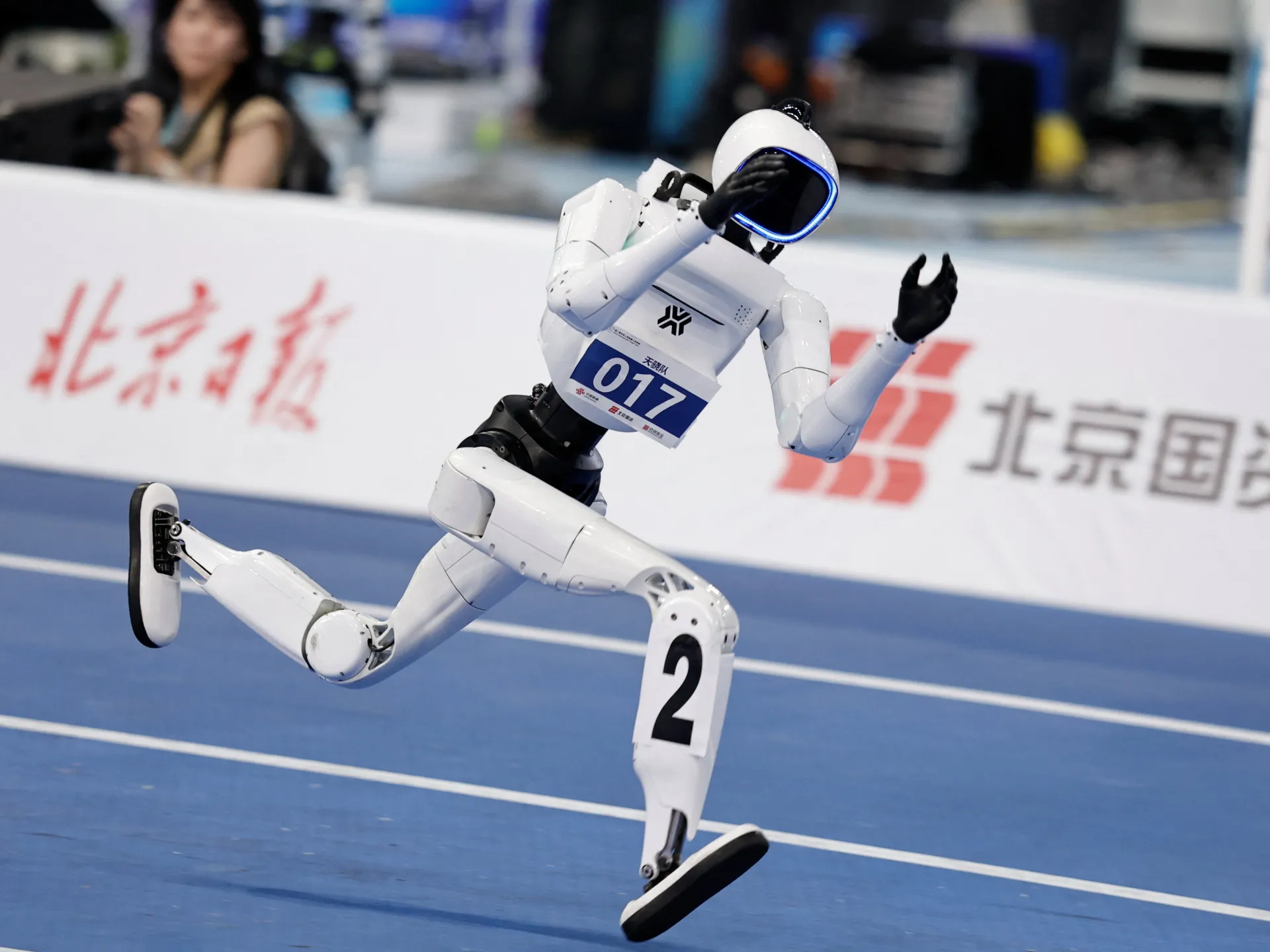
The Tiangong Ultra humanoid robot recorded a 100-metre time of 8.86 seconds during the semifinal of the large-size robot division at the World Humanoid Robot Games in Beijing. The performance, achieved on Tuesday, surpassed the 9.58-second men’s human world record set by Usain Bolt in 2009 by more than seven-tenths of a second.
Developed by the Beijing Humanoid Robot Innovation Center, the machine improved upon its own 9.39-second mark established at the event’s opening. The rapid progression in performance has become a central focus of the second edition of the games, which features over 2,000 robots from 666 teams competing across 51 events, including football, dancing, and industrial-task contests.
The achievement underscores the institutional backing behind the sector, with the Innovation Center’s shareholder list including state-owned enterprises, investment funds, AI and cloud giant Baidu, and Xiaomi’s robotics unit. China has designated humanoid robots a strategic emerging industry, aiming to translate advances in artificial intelligence, motors, and sensors into practical applications for manufacturing, logistics, and services.
The Beijing Humanoid Robot Innovation Center stated that its Tiangong robots have now beaten four human world records. In addition to the 100-metre sprint, the centre cited a 400-metre time of 38.15 seconds, a 1,500-metre mark of 2 minutes 21.64 seconds, and a 2.88-metre high jump.
The competitive landscape remains intense, as Honor’s Lightning robot recorded 9.47 seconds in the same event, also beating Bolt’s record, despite a faster 9.32-second test run. In the other semifinal, a competing robot disassembled mid-race, highlighting the mechanical challenges still present in the division.
Tiangong completed its sub-nine-second sprint by striking a thick mat placed beyond the finish line to stop the machine. A small fire appeared in the robot’s torso after it collapsed from the impact. The result marks a significant leap from last year’s inaugural games, where Tiangong won the 100-metre race with a much slower time of 21.50 seconds.