Thrive Capital’s Kushner warns against AI euphoria, defends concentrated strategy
Joshua Kushner urges discipline amid AI excitement, highlighting Thrive’s 33 per cent net IRR and strategic pivot towards internal transformation via OpenAI.
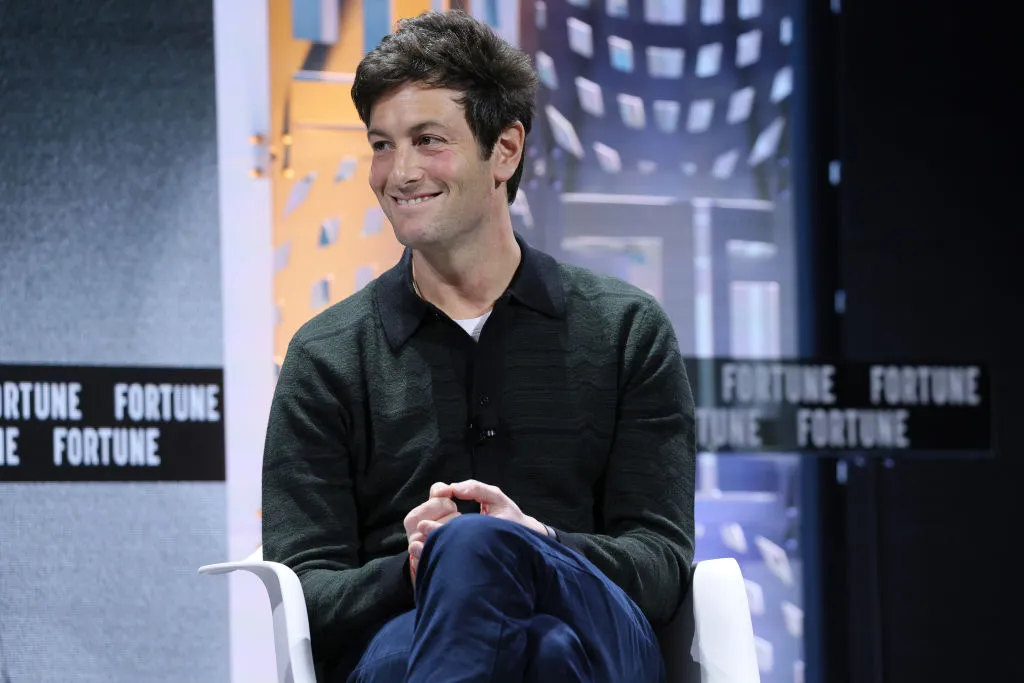
Thrive Capital founder Joshua Kushner has issued his first investor letter, cautioning that the venture capital industry risks weakening its investment discipline due to excessive excitement surrounding artificial intelligence. While acknowledging the massive scale of the AI opportunity, Kushner criticised the prevailing 'spray-and-pray' approach common in Silicon Valley, advocating instead for Thrive’s strategy of concentrating capital on a small number of high-conviction investments.
The letter, which was leaked to Bloomberg, highlights Thrive’s financial performance, reporting a gross internal rate of return (IRR) of 41 per cent and a net IRR of 33 per cent across all funds. The firm has returned more than $1 billion in liquidity to investors in the last 12 months alone. Kushner revealed that Thrive now manages $60 billion in assets, with its $516 million 2022 early-stage fund valued at over $3.7 billion as of the end of June, driven by early stakes in OpenAI, Anduril, and SpaceX.
Kushner argued that the industry’s fixation on hyperincremental technological turns often distracts from where the technology ultimately leads. He contrasted Thrive’s model with the 'outlier' philosophy espoused by Andreessen Horowitz founder Marc Andreessen, which relies on making a large number of bets to find outliers. Instead, Thrive pours approximately 90 per cent of its capital into the top 15 investments in each fund, aiming to build a company of independent thinkers who maintain judgment amidst market swings between fear and enthusiasm.
A central pillar of Thrive’s strategy is its deepening relationship with OpenAI. In December 2025, OpenAI took an ownership stake in Thrive Holdings, the firm’s spinout that acquires businesses and integrates AI technologies. Thrive Holdings has acquired more than 70 companies and employs a team of 35 engineers to work with OpenAI on AI transformations. Specific applications include an accounting platform that produces tax returns 30 per cent faster with 98 per cent accuracy, and an IT services firm where agents independently solve half of its help desk tickets.
Kushner indicated that billions of dollars in additional liquidity may be available in the coming quarters, though he did not specify which companies are heading for exits. He noted that the SpaceX IPO was a recent example of such activity, while OpenAI works toward its own public debut. The firm has also led seed investments in new AI labs, including Essential AI, founded by former Google Brain researcher Ashish Vaswani.
Despite the success of both concentrated and diversified models, Kushner emphasised the need for distinction in valuation. “Not every fast-growing business is exceptional. And not every exceptional company is a great investment at every price,” he wrote. He warned that letting excitement weaken investment discipline would be a grave error, urging firms to maintain their standards regardless of the broader market’s enthusiasm for AI.