The uncanny valley on the menu: Why AI-generated food imagery is turning diners off
Restaurant owners are facing customer backlash over generative AI menu designs that appear overly smooth and symmetrical. Experts point to narrow training datasets and repeated editing as the drivers of this "uncanny" aesthetic.
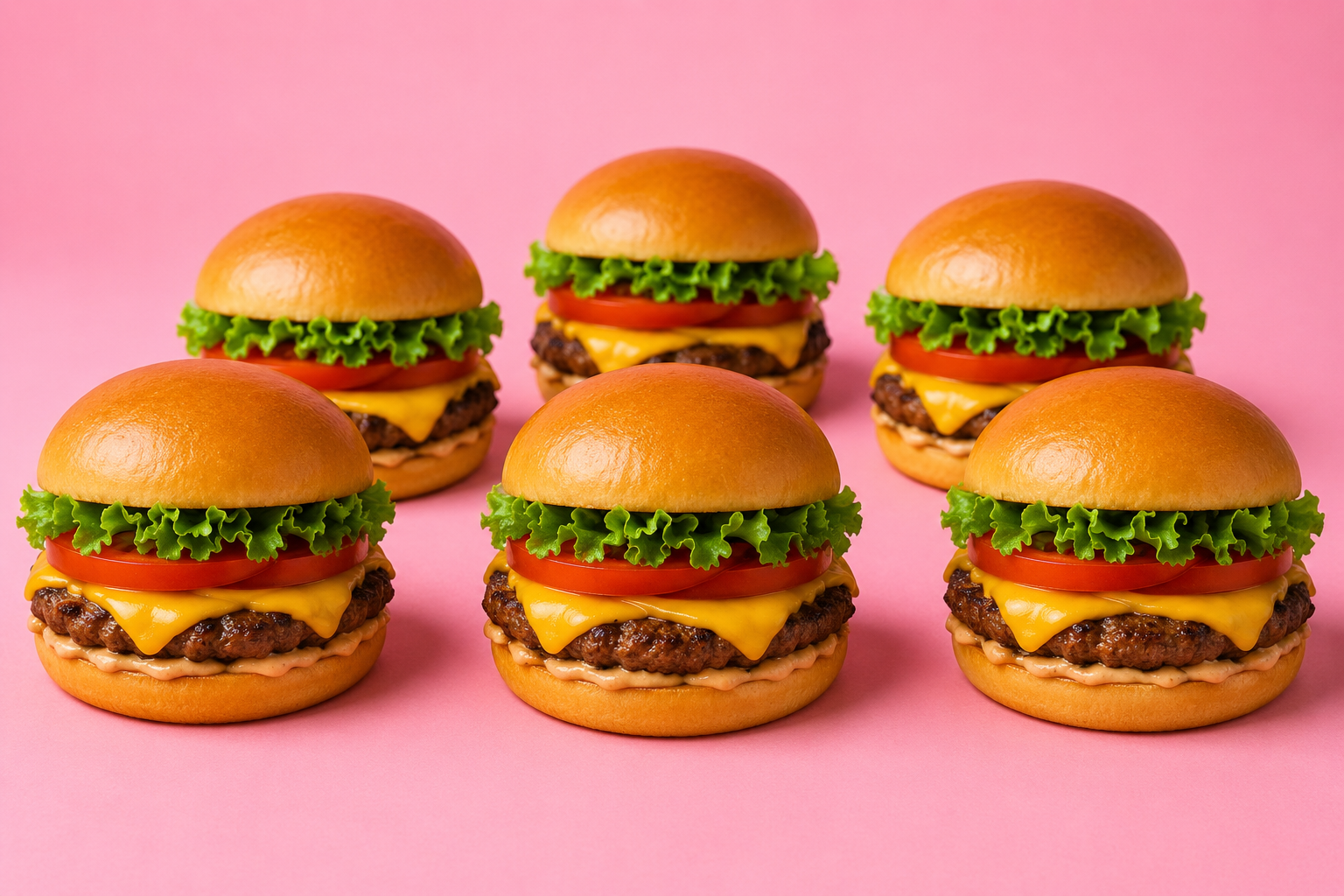
Restaurant owners adopting generative AI for menu design are encountering a wave of customer aversion, driven by what experts describe as the "uncanny valley" effect. While the technology offers a cost-effective shortcut for visual branding, diners are reporting a visceral sense that something is wrong with the food illustrations. The images often appear eerily flawless, precisely symmetrical, and oddly smooth, creating a visual dissonance that is difficult to articulate but impossible to ignore.
Alex Lisle, Chief Technology Officer at Reality Defender, a startup specialising in AI-detection and content-verification tools, attributes this aesthetic to the way underlying models are constructed. Large language models and diffusion models, such as those powering ChatGPT and Midjourney, are trained on vast datasets to identify patterns and predict user requests. Lisle notes that these models often mimic a specific, narrow aesthetic derived from popular chain menus, resulting in outputs where every ice cream scoop is perfectly round and shrimp appear to have been genetically modified to eat their own tails.
"A lot of this stuff looks like a Chili’s menu from 2015, and there’s a reason for that," Lisle said. "That was the corpus of work from which [the models] drew their function." This reliance on existing, homogenised visual data means that AI-generated menus often resemble a generic fast-food standard rather than a unique culinary identity. When these AI-generated outputs are fed back into training data, the risk of "model collapse" or convergence increases, further degrading the quality and realism of future generations.
Lee Rainie, Director of the Imagining the Digital Future Centre at Elon University, explains that the optimisation of these datasets is often for "pleasingness" or a lack of offensiveness, which leads to homogenisation. "What AI is known to do both in images and language is to shave off the edges," Rainie said. This smoothing effect is exacerbated when restaurant owners repeatedly edit AI-generated images to adjust prices or item names. Each iteration tends to make the food images slightly more round and smooth, moving them further away from realistic textures.
The impact of this degradation is tangible. A user named Labtec on X demonstrated the effect by generating a menu in ChatGPT and editing it 100 times, showing how the food images became progressively less realistic and more "slop-like." TechCrunch replicated the experiment and found similar results, with the final images eliciting discomfort rather than appetite. This suggests that the iterative process of refining AI content can inadvertently strip away the visual cues that make food appear natural and appetising.
Scientific research supports this cultural shift in perception. Researchers at the University of Duisburg-Essen in Germany found that AI-generated food images exhibit a pronounced "uncanny valley" effect, where images that look almost real elicit more disgust and unease than those that are obviously fake. This finding indicates that the human brain is particularly sensitive to the subtle imperfections that AI tends to smooth over, leading to a stronger negative reaction than if the image were clearly stylised or cartoonish.
The implications extend beyond the restaurant industry, challenging the long-held assumption that visual evidence is inherently trustworthy. As AI-generated content becomes more prevalent, the "gold standard" of taped confessions and videotaped evidence in court systems may no longer hold. For investors and institutions, this signals a broader cultural recalibration in how visual proof is perceived, with potential ramifications for marketing, legal proceedings, and consumer trust in digital media.