The sartorial politics of the brace: Burnham’s Derbyshire debut
As Andy Burnham appears in navy Oliver Brown with visible button-on braces, fashion historians and political insiders weigh in on the blend of tradition, subversion, and strategic ambiguity.
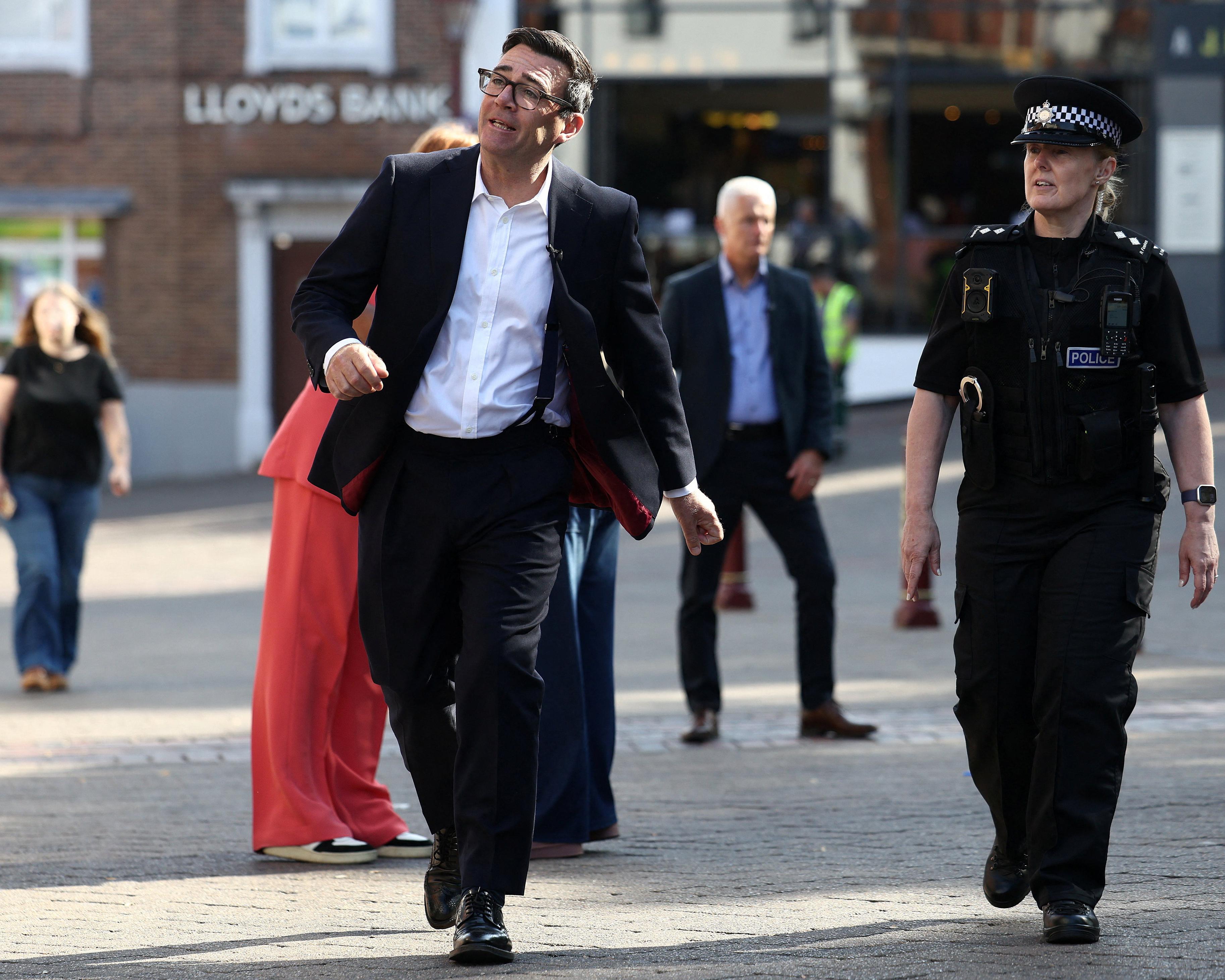
Prime Minister Andy Burnham’s sartorial evolution reached a distinct milestone during a photocall in Ilkeston, Derbyshire, where he appeared in navy suit braces beneath his Oliver Brown Eaton suit. The slimline, button-on braces remained largely concealed while he posed for photographs, only becoming visible when Burnham unbuttoned his jacket to embrace members of the public. The £595 suit, crafted from 100% merino wool woven by Alfred Brown in Yorkshire, is the same style featured in his official portrait. A spokesperson for the traditional tailor confirmed the garment’s provenance but clarified that the braces were not their product.
The decision to wear braces, despite the trousers featuring side fasteners that render them functionally unnecessary, has drawn attention from fashion experts. Chloe Chapin, a fashion historian and author of the forthcoming book Suitable: The Sartorial Revolution and the Fashioning of Modern Men, noted that the choice transcends mere utility. Chapin suggested that the accessory signals a balance between professionalism and tradition, potentially helping to bridge class divisions through its inherent ambiguity.
Political insiders familiar with Burnham’s campaign strategies describe the wardrobe as an intentional component of his public persona. One source, who has worked on the Prime Minister’s campaigns for the past two years, described Burnham as not being a “teleprompter type of politician,” implying that his clothing is an authentic extension of his character rather than a calculated afterthought. The former Greater Manchester mayor and his team consider the context of his attire carefully, aiming to project a capable professional image while differentiating himself from other politicians.
The history of the brace offers a complex backdrop to this display. Originating in France in the 1700s and later popularised in leather form by Albert Thurston in 1820, braces were historically considered undergarments, with their exposure deemed inappropriate until the mid-20th century. They experienced a resurgence in the UK during the 1960s and 1970s, worn by mods and skinheads as a form of subversion. By the 1980s, they had become popular among both Wall Street financiers and punks, representing a heightening of excess and a subversive blending of class aesthetics.
While Winston Churchill and Michael Portillo were known fans of the accessory in politics, Chapin argues that Burnham’s choice reflects a strategic exploitation of fashion’s core tension between function and aesthetics. Much like a Labour politician might wear red to convey strength or blue to appeal to Tory voters, the brace allows for a multifaceted signal. It is simultaneously posh and working-class, traditional and subversive, offering a nuanced visual language for a Prime Minister who has been described as the first TikTok PM and is keenly aware that optics are not divorced from reality.