Tata and ASML commit to $11bn semiconductor facility in Gujarat
The $11 billion agreement, announced during Prime Minister Narendra Modi’s visit to the Netherlands, marks a strategic shift toward domestic chip manufacturing and AI infrastructure development.
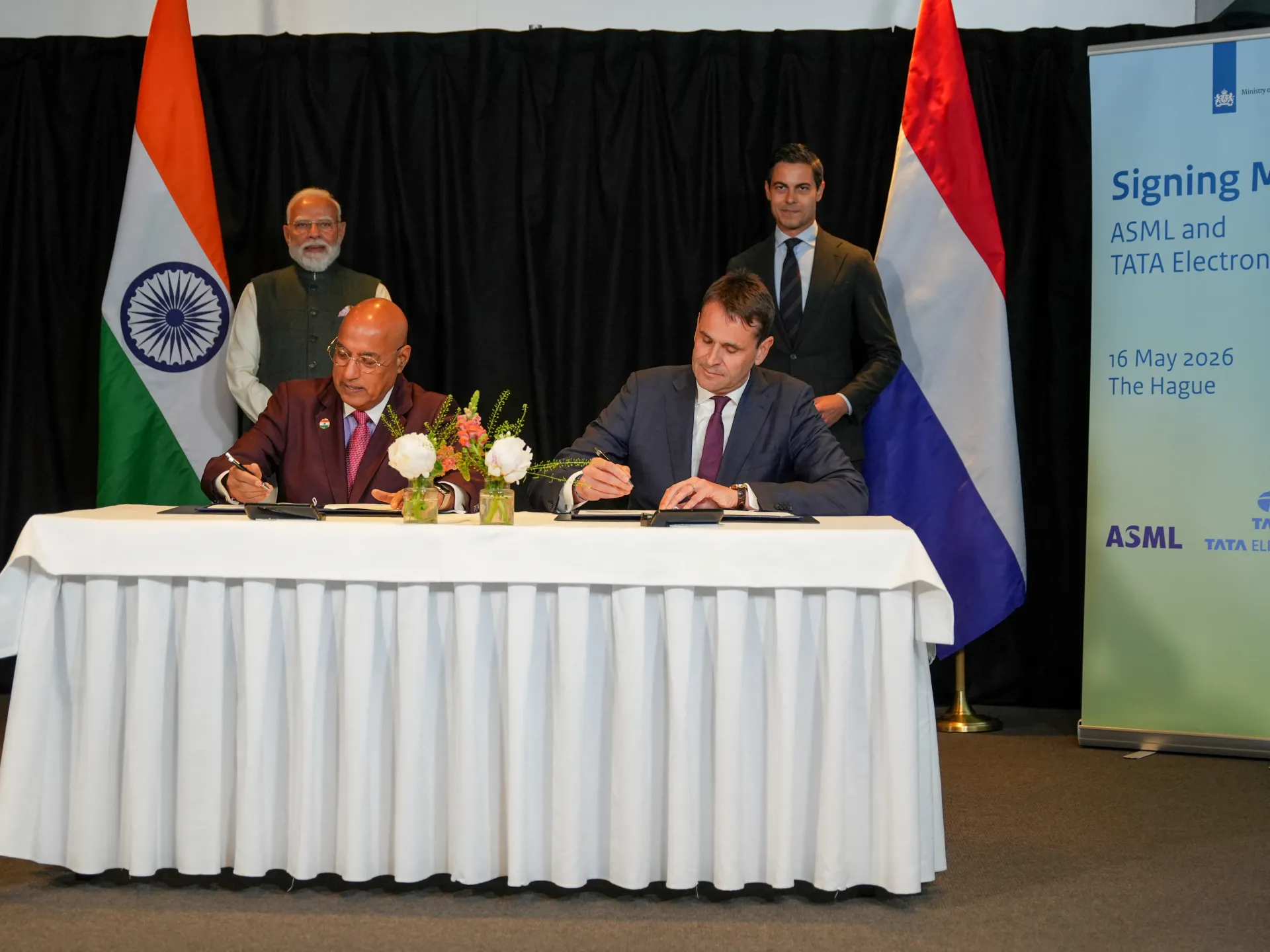
Tata Electronics, a subsidiary of the Tata conglomerate, has entered into a landmark agreement with Dutch technology firm ASML to establish India’s first front-end semiconductor fabrication plant. The project, valued at $11 billion, will be located in Dholera, Gujarat, and is expected to become operational by 2028. The facility aims to manufacture 300mm wafers for use in automotive, mobile, and artificial intelligence applications, representing a significant step in New Delhi’s efforts to build a domestic semiconductor manufacturing base.
Under the terms of the deal, ASML will supply advanced lithography technology to enable the establishment and ramp-up of production at the Dholera site. Union Minister for Electronics and Information Technology Ashwini Vaishnaw confirmed the 2028 timeline for the plant. The initiative aligns with India’s broader strategy to reduce reliance on imported microchips and strengthen ties with European partners, particularly following the recent free trade agreement with the European Union signed in January.
To support technology transfer, Tata Electronics has partnered with Taiwan’s Powerchip Semiconductor Manufacturing Corporation (PSMC). This collaboration will provide access to a technology portfolio including 28nm, 40nm, 55nm, 90nm, and 110nm chip-making capabilities. The partnership reflects growing technological cooperation between India and Taiwan, whose bilateral trade reached $10 billion in 2024, underscoring a shared interest in supply-chain integration and workforce development.
The move signals a potential shift in India’s role within the global artificial intelligence economy, moving from a provider of software services and talent toward owning physical infrastructure. While India currently imports the bulk of its advanced microchips, the government has launched the India AI Mission, earmarking $1.07 billion over five years to expand computing power and support research. The new facility is seen as critical infrastructure for these ambitions, although experts note that challenges regarding power, water, and skilled labour remain.
The announcement coincides with Prime Minister Narendra Modi’s diplomatic tour of Europe and the Middle East, aimed at securing economic and strategic ties amid shifting global dynamics. As overseas investors have pulled more than $20 billion from Indian equities following regional conflicts, the deal with ASML and the ongoing engagement with European leaders highlight New Delhi’s focus on diversifying its economic partnerships and attracting foreign investment to bolster its technological sovereignty.