Former US envoy warns Trump’s Iran strategy mirrors Vietnam-era errors
The former special envoy to Iran suggests that current negotiations have a minimal chance of success unless the administration shifts focus to mutual core interests.
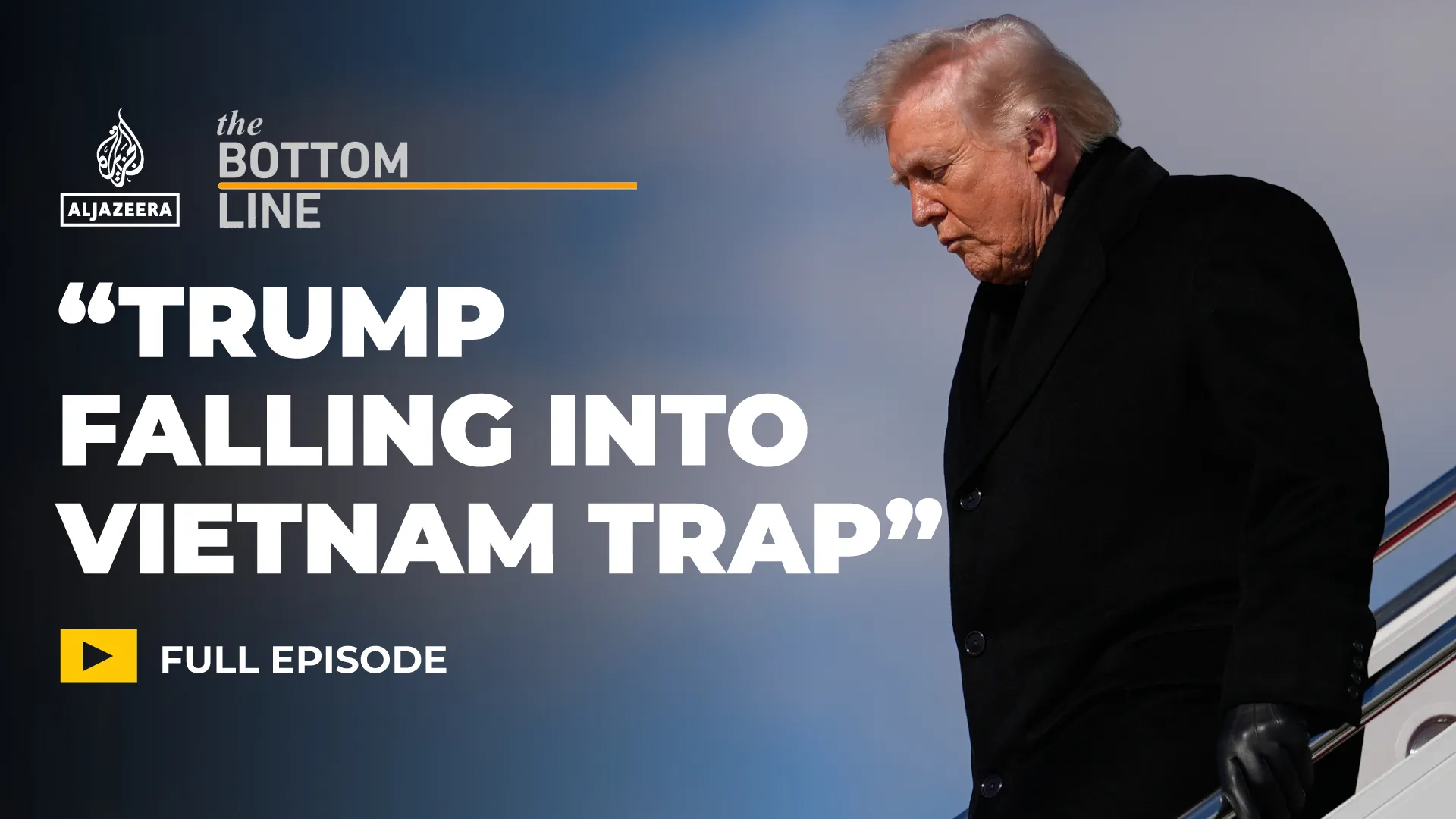
Rob Malley, a former US special envoy to Iran, has issued a stark warning regarding the current diplomatic approach to Tehran, arguing that President Donald Trump is repeating strategic errors reminiscent of the Vietnam era. Speaking on Al Jazeera’s The Bottom Line with host Steve Clemons, Malley contended that the administration’s current metrics for success are fundamentally flawed and counterproductive to achieving a lasting resolution.
Malley identified the primary issue as the administration’s reliance on kinetic measures to gauge diplomatic progress. He argued that focusing on the number of Iranian leaders killed or military assets, such as boats or missile launchers, destroyed by the US and Israel constitutes the wrong metric for success. According to Malley, this approach fails to address the underlying political realities required for a sustainable outcome.
The former envoy asserted that a viable settlement must be grounded in a framework that respects the core interests of both the United States and Iran. He emphasised that the only path out of the current conflict is a negotiated agreement that acknowledges these mutual stakes, rather than one driven by unilateral military pressure or attrition.
Malley offered a sobering assessment of the current diplomatic landscape, stating that the talks have a very small chance of success under the prevailing strategy. He suggested that traditional diplomatic expertise may be insufficient in this context, proposing instead that psychologists might be more useful in calculating the odds of a deal.
This perspective stems from the belief that the outcome of negotiations depends heavily on the mindset of President Trump. Malley indicated that understanding the psychological drivers of the US president is crucial for any potential breakthrough, implying that the current administration’s approach is misaligned with the behavioural realities of the negotiations.
The commentary draws a parallel to historical foreign policy missteps, with the headline noting that Trump risks falling into a Vietnam trap. Malley’s analysis serves as a critique of the administration’s reliance on force as a primary diplomatic tool, suggesting that such tactics may be undermining the potential for a political settlement.
While Malley’s views represent the perspective of a former negotiator rather than verified outcomes of the negotiations themselves, his assessment highlights significant concerns within the diplomatic community regarding the efficacy of the current US strategy towards Iran.